Asking the wrong person, not my images
1 Like
To actually compare render engines you have to have the same scene with the artistic approach from the same person with the same technical level in both engines.
from my experience using various render engines i believe that all of them have their pros and cons since you mentioned vray this render engines needs alot of tweaking to get photorealistic result compared to lets say corona render, some render engine gives you full control others help you to get the fast result of photorealism i could say achieving a stylized look in corona would be hard compared to achieving it in vray.
I believe the main difference in Vray vs Corona or Cycles vs Octane is being a biased render engine or unbiased render engine corona , octane are both unbiased render engines while cycles, vray they are both biased render engines you could read more about them in this article : https://irendering.net/biased-and-unbiased-rendering-algorithms-which-is-better/
From my perspective yes render engines like corona and octane are able to achieve photorealistic results easier than cycles because there is not alot of tweaking to do so they handle lighting and atmospheric effects (what i believe octane excel at) better than cycles immediately .
Currently if there is one thing i would like i to be better in Cycles are dealing with volumetrics if you see the world creator landscape video created by Aaron westwood using octane you will feel about what i’m talking about the atmospheric/volumetric effects are stunning in these
2 Likes
The last time I checked, cycles is unbiased renderer.
5 Likes
Good comparison, I wonder why Cycles seem to have brighter illumination on the right side of the balls.
3 Likes

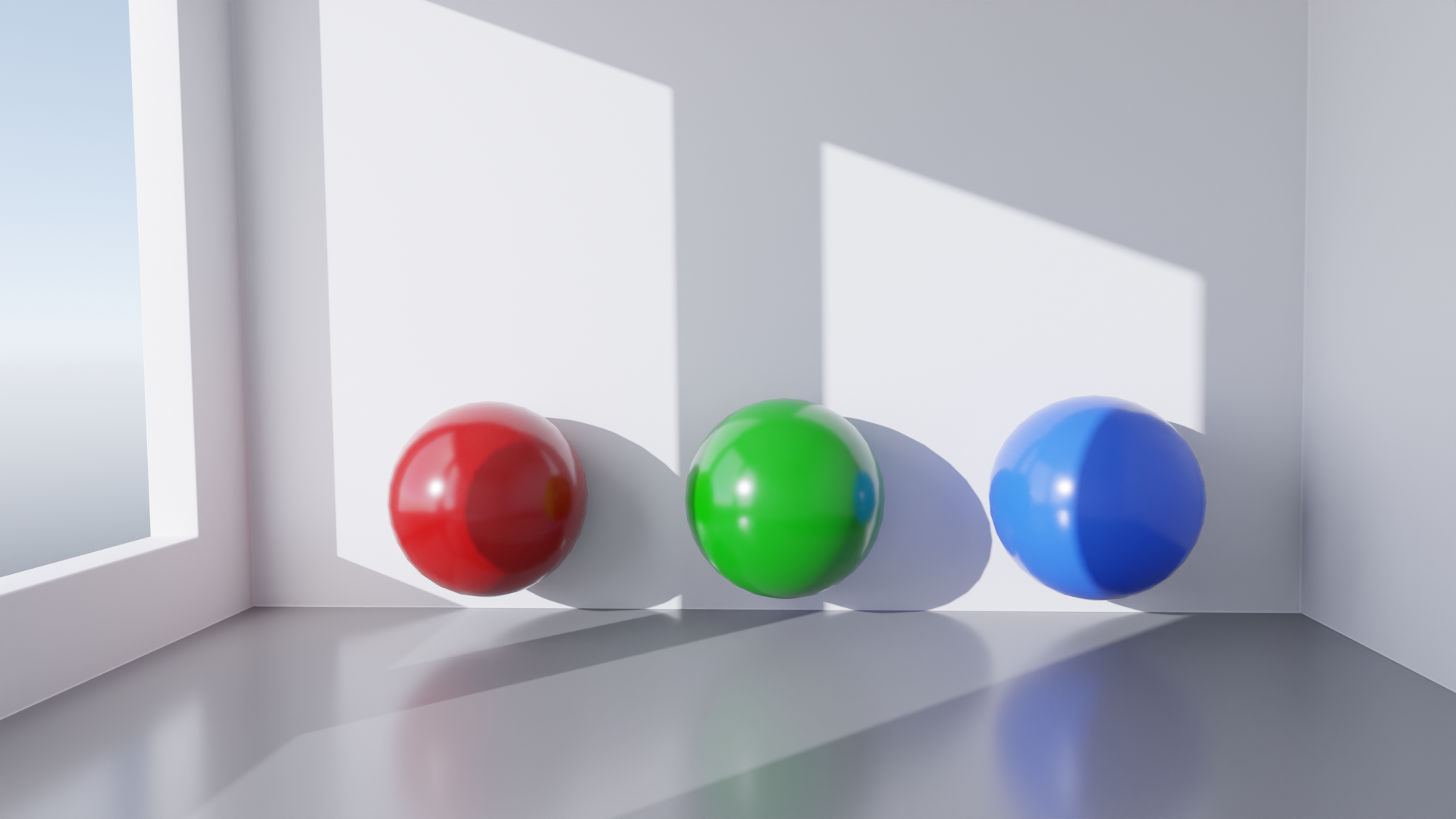
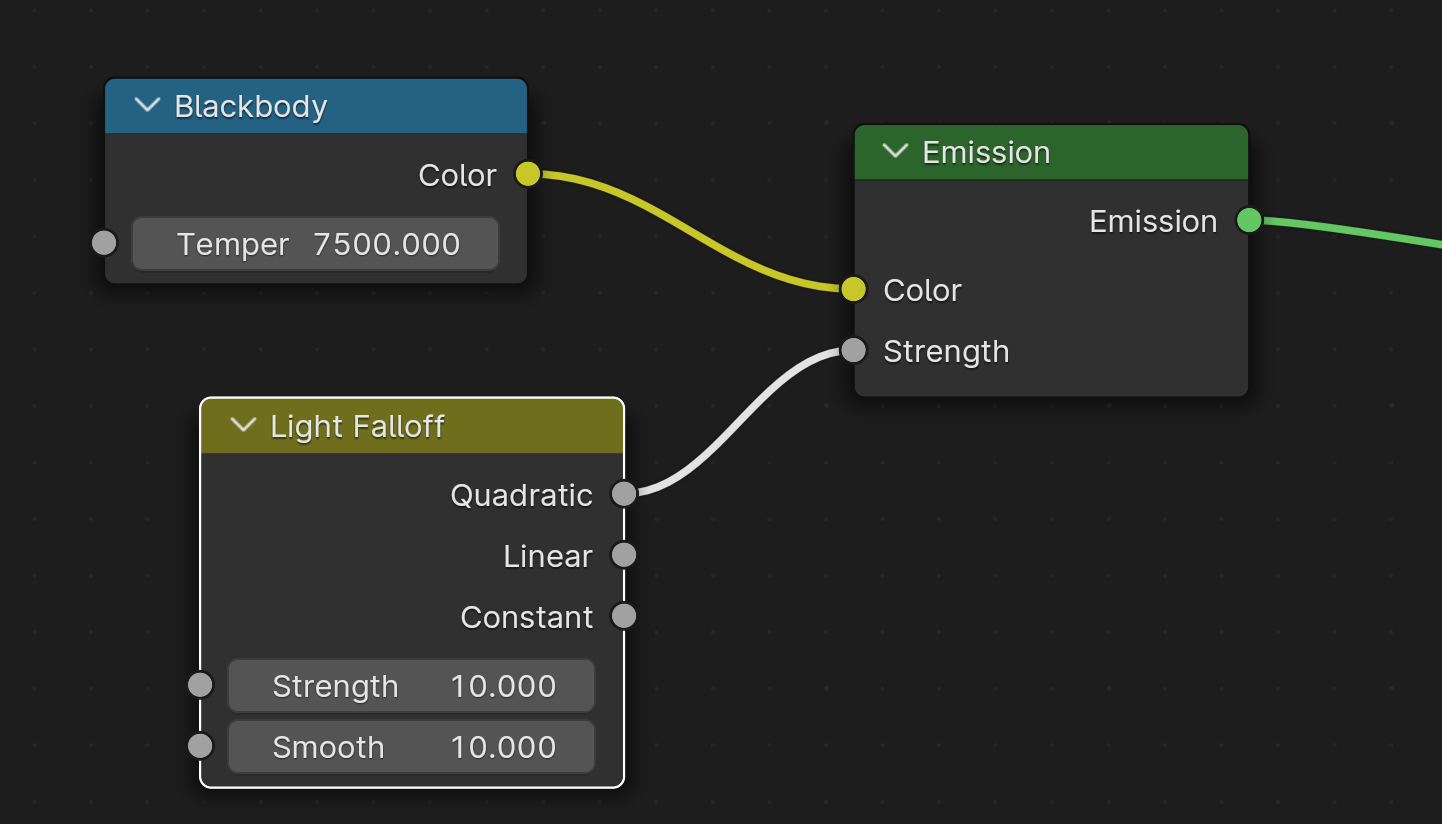
I did ran a quick test with the light falloff node for the lights. With quadratic falloff, the result is somewhat more contrasty, less light “conservation”. The left image is without the node.
1 Like
I am looking at the white wall to the left. Can you see how in Octane the light bleed from the source off camera at the left if more sharply defined? there’s a difference in roughness there. Another one on the copper object (center), it’s rougher in Octane this time. I am seeing more absorption on the colored balls, which is consistent with Octane being spectral, I think.
2 Likes
Thanks for doing this. Once again I would say that the Octane light falloff is slightly different and (to my eyes) more natural.
We’re talking real subtle stuff here, but I do think it can have a very substantial cumulative effect as the scenes get more complex and the scale gets larger.
I was recently playing with some Quixel Megascans of large rock formations, and no matter what I did I just couldn’t get it to look “right” in Cycles (I know about the weird auto-mapping that the Megascans Bridge does and which needs to be manually corrected)
1 Like
Looking at the green ball in particular, the difference in the light falloff is quite pronounced.
1 Like
There is a more greyish tint in Cycles render room image. I think that affects perception.
The high illuminated scene i think is not conclusive, it depends on materials reflectivity and or sun energy - it seems to not be the same. In the 2 render engines i would have expected some GI from the colour balls.
1 Like
Great test, thank you. Can you please post also Diffuse and Glossy passes (direct and indirect), to narrow down where the problem is?
PS: looking at window in the reflection, does something odd happen to the HDR?
1 Like
@Midphase on the last thread about this we had images to work with. Gragh above provided one which is a start but hardly real-world. Since you’re the one posing that question, don’t you have captures to illustrate, clear examples of that mysterious “light falloff” ? I want desperately to follow here, but by these words alone I don’t think I can…
3 Likes
But why put quadratic falloff node when, actually, every light in real life as that kind of falloff?
I think that Cycles has that falloff as default for every light (except “special” lights as spherical background)
1 Like
I don’t use Corona…but this thing about render settings complexity of Vray is becoming a mith that will be transmitted generations by generations like a verbal legend… if it was true in the past (probably 5/7 years ago), today is not true anymore.
Today you have to set, more or less, to do this:
- Load defaults
- Change Max samples of the Adaptive Antialiaser, Min value just in really specific scenarios (usually you’ll never go over 25/30 for Max)
- Set the Noise Threshold according to preview or final renderings (rarely you’ll go under 0.015 for final)
- The lightcache samples (just when the defaults fails…very rare case)
In the ArchViz world, this is right for the most of the real job.
Surely, if you have to pay the bills rendering jewelry and you need perfect caustics, you should have more issues and make more tweaks or go to progressive path tracing mode…or change renderer.
1 Like
I like that everybody forgets about the fact that, everyone looking at the same picture with different hardware like graphic cards, screens and even different color spaces and settings for it.
20 People can’t see the same image without having the exact same setting…
and they still trying to figure out why the image doesn´t feel right.
I’m using Eizo screens and can’t confirm some of the problems others might see.
Its overall a bad for discussions based on feelings and looks without the same default requirement.
Just saying…
It doesn`t feel right for me 
5 Likes
I’ll write responses to several comments at once so I don’t have to write separately to each one a paragraph at a time.
First of all, I have attached a screenshot of the material and exactly the walls. The same roughness, the same color, and I found for myself that this is the ratio of reflectivity will be the same. Like the metal - the roughness is the same. Again - different bump and works differently, not just its values, but how the renderer sees the map. In cycles two values to customize this, in octane one and the result is different.
Second, the same hdri with the same intensity is used for lighting and the exposure is the same. The materials are also identical as much as possible. Different bsdf model, energy preserving ggx and multiscatter ggx, and maybe it’s the same thing? I don’t know. But I took the most progressive one for each of the renders.
Yes, there is glass on the left and I would like to have a white background there, but I couldn’t achieve it equally in octane and cycles quickly, I didn’t want to spend more time and I didn’t want to throw it into photoshop for correction, so I just hide it.
octane

cycles


2 Likes
I’ll share my opinion as well.
The first thing to note is what we do. We do not do technical analysis of renderings. Yes, we refer to technical aspects, but because of their impact on the artistic component. So we don’t say “let’s use lux or mitsuba”.
The next thing is to note in general that cycles and octane are both unbiased. And they both produce phenomenal results.
The point is that in my opinion octane is the best renderer in the world in terms of quality, without nuance or compromise.
So what are the differences?
There are differences in bump, and they are noticeable. There are differences in shadows in the corners, there are differences in the brightness of the balls. I think if you add a roughness map, the differences would be there too, well let’s say if we’re talking about parquet.
I will also say that in my opinion, there is such an important point - mesh light in octane works better and it has ai light, which, as I understand, works with separate small light sources, they give less noise. In cycles if I use a small object for lighting, not only is it noisy, but it can’t literally give a strong enough light. But still this is so far on the edge of my subjective observations, so I think it would be worth me doing a test too, since I’ve entered the polemic).
But again, we’re not looking for a technical miracle, we’re looking for the right tool, so it’s not how it’s technically arranged that matters, but how we can work with it, so consider the following points. (which also include technical differences).
Different ± with the displacement. In octane it is the possibility to use it without subdiv but with uv and without procedural maps, in cycles on the other hand there is adaptive subdiv, due to which already real displacement works better in cycles.
In my opinion the default workflow in octane allows you to achieve a more realistic result with less effort and attention, it favors it, especially if I’m talking about the architecture niche. In octane there are complex nodes made technically correct, and things that cycles needs to find solutions for are done with a single node. It’s convenient and fast.
What I don’t find now, and what comes to mind immediately, is the ability to partition islands inside an object. This can be achieved with geometric nodes and attribute, but in cycles it can be achieved with nodes in the shader. But the triplanar map is more convenient in octane, and just working with mapping in cycles is frustrating for me, compared to octane and without complex nodes.
Also volumetric. The last time I compared, the speed and quality of the renderer was not even close to compare. Octane was winning.
But also different noise reduction and approach to working with it. As is the scope of the renderers. In cycles the noise reduction covers large planes better. And we can’t adjust blending, either with or without it. In octane we can adjust the blending and it covers large planes worse and performs worse in real time.
And that is what plays a Key role in our perception of quality.
Noise reduction… The thing that dictates workflow. When I do workflow projects, I render them much worse in cycles than in octane 95% of the time. Because I’m just giving them away with denoise. And denoise in cycles messes up the roughness, it clamps them down. And in the process of working and tuning I work with denoise, not without. And how not to twist, denoise in any case strongly distorts the work, especially if it is a complex light, then even if you want, it can be difficult to render without it. And in the case of us artists with cycles, most likely our niche allows us to render with denoise. Which is what we do. If it’s architecture - corona with cache stands in contrast. And no, corona does not render better or faster if we talk about brute force, it considers interiors with cache faster. But previews it counts without cache and on CPU, and cycles faster than corona even on CPU (my opinion, though not only mine, but also corona users in comments under corona update on youtube).
So how to judge whether this is an advantage or disadvantage? Also cycles is a bit more alive than octane in most moments. Because of this, the workflow is even smoother and more natural.
Speaking of denoise. I have a 3090, and I say it’s hard to do interiors/exteriors without it. How do those with weaker cards work?
Ah yes, bevel node in cycles works better.
No matter how you spin it, we have blenderartist where we see a lot of works, absolutely different level and orientation. And many of them are amateur, and even those that are professional are still from a specific niche, resulting in a different sample.
Further, most addons, objects and other things are made in the same way. Plants in a number of addons are configured through mix node for leaves, rather than through add, which distorts their display, compared to the same octane, and any other renderer, and in fact in a lot of works used these libraries of vegetation, rather than manually customized trees maxtree for example. In Geo-scatter is done through add!
So it turns out that most of the available addons, as well as the blender itself, allow you to occupy a niche less complex and demanding segment, they are focused on this. That’s what the sample is made of.
But the renderer itself, in my opinion, is not inferior, but superior to the competition and even in quality. Perhaps redshift could be faster in a number of scenarios? And octane is more realistic? But it’s not about rendering anymore, it’s about pipeline. If the pipeline allows, cycles are excellent renderers and the choice should not be about which renderer is better, but about which pipeline suits you or is needed.
Actually, that’s why comparing commercial work for world creator and addon previews is not correct as much as it might be incorrect.
This artist does phenomenal work. As he did with world creator so does with Gaea. And if he had done it in Cycles, it would have looked just as gorgeous.
7 Likes
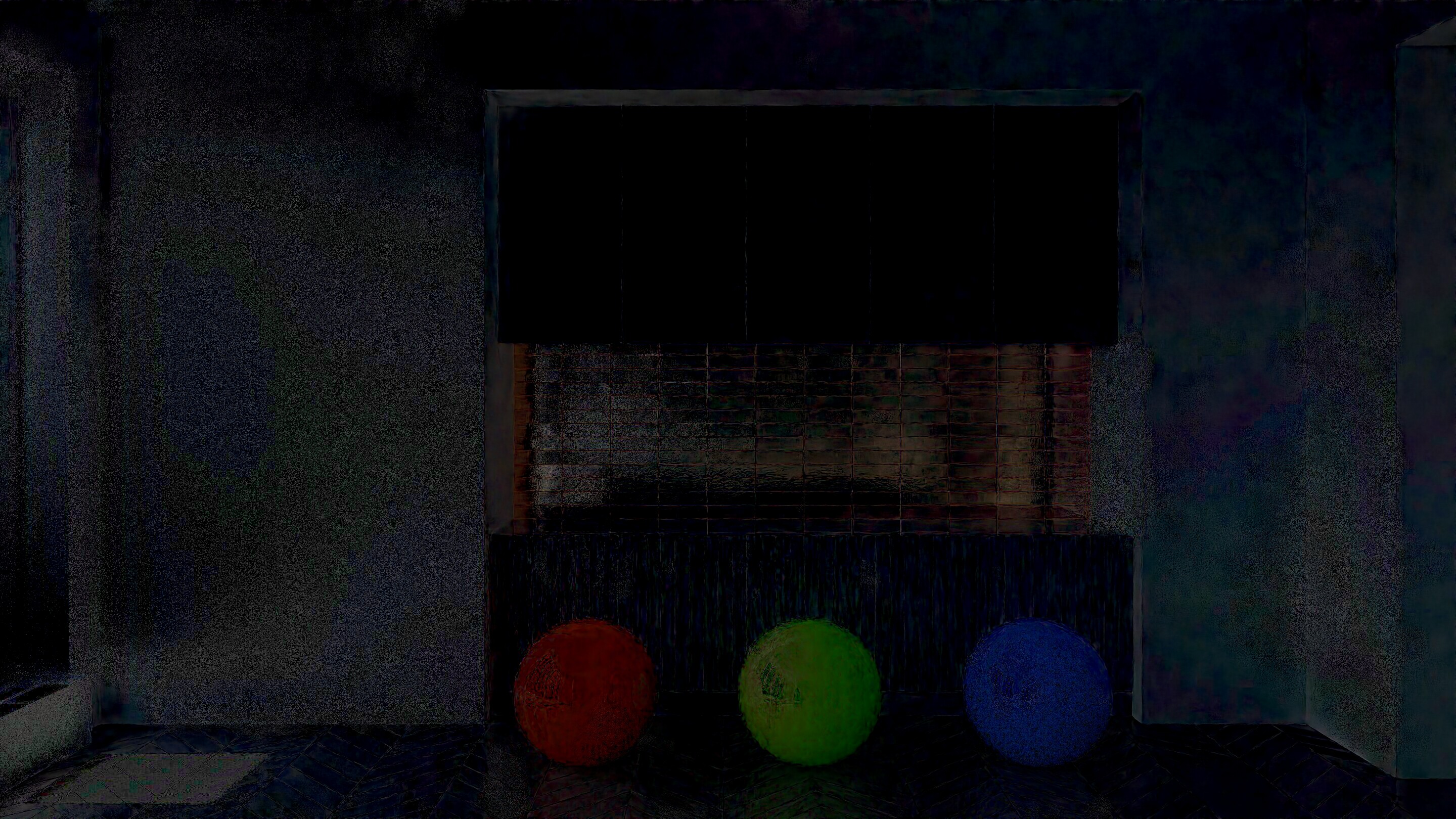
The Octane and Cycles render into a color mix node with difference function selected.
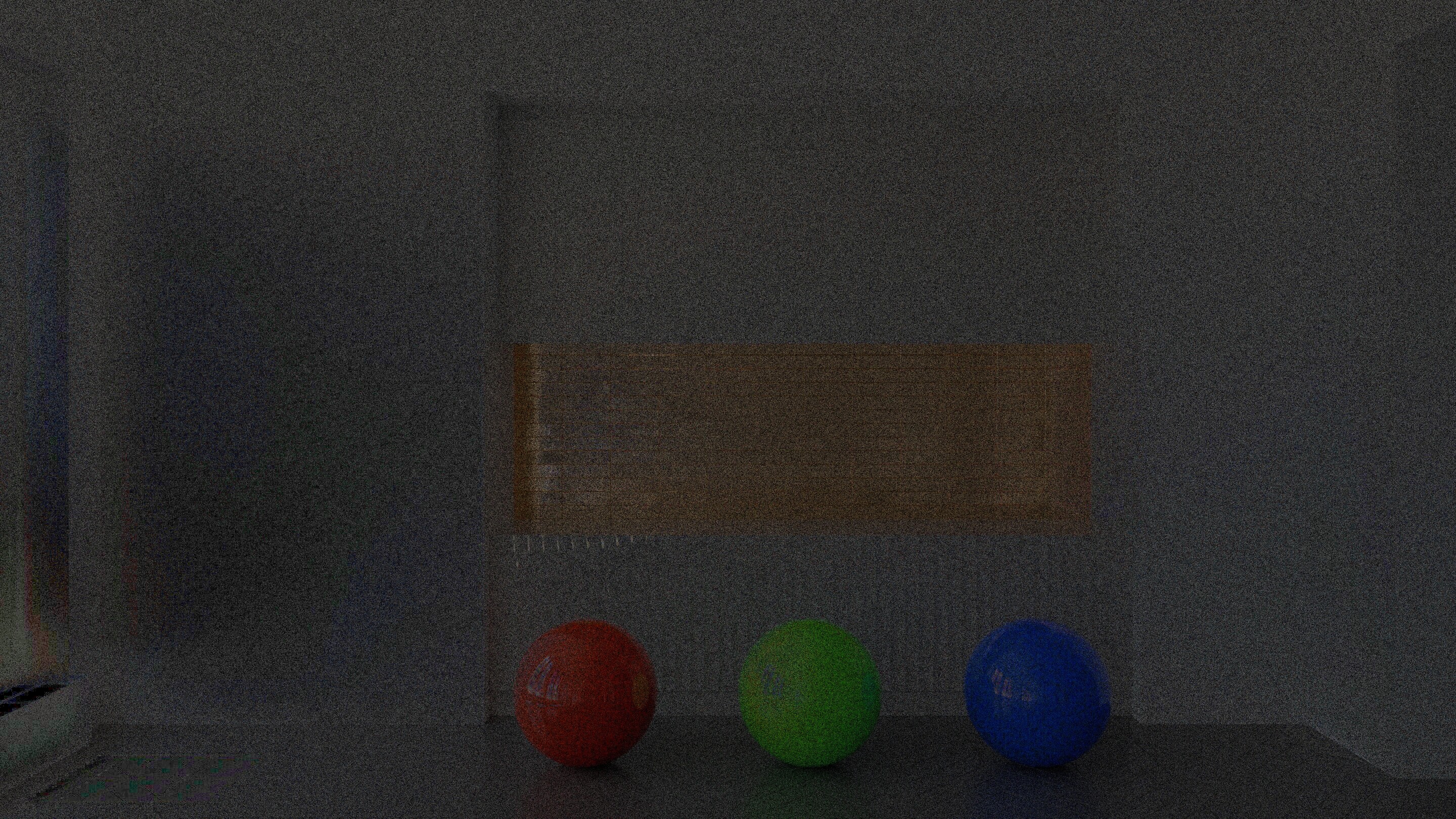
without or lesser noise the difference would be better visible
with denoise nodes.The darker the parts are the less difference is there.


subtracting octane render from cycles render should be black if the values are the same
Subtract octane from cycles
2 Likes
First of all thank you for your detailed analysis and points about renderers, I do think you’re spot on for many things.
However, when it comes to this final point, unfortunately I’m not quite sold. I have been part of the Blender community now for almost 6 years, and I have yet to see an example of a wide vista, or other landscape render that convinces me that I might be looking at the real deal. I have scoured so many resources by brilliant artists, and each and every time, the Cycles renders are disappointingly CG-looking.
If this last point of yours was true, I think by now we would have seen at least one piece of artwork that is convincingly photorealistic.
Unreal Engine which is not even a path tracer has shown more believable results such as some of the landscapes in this piece:
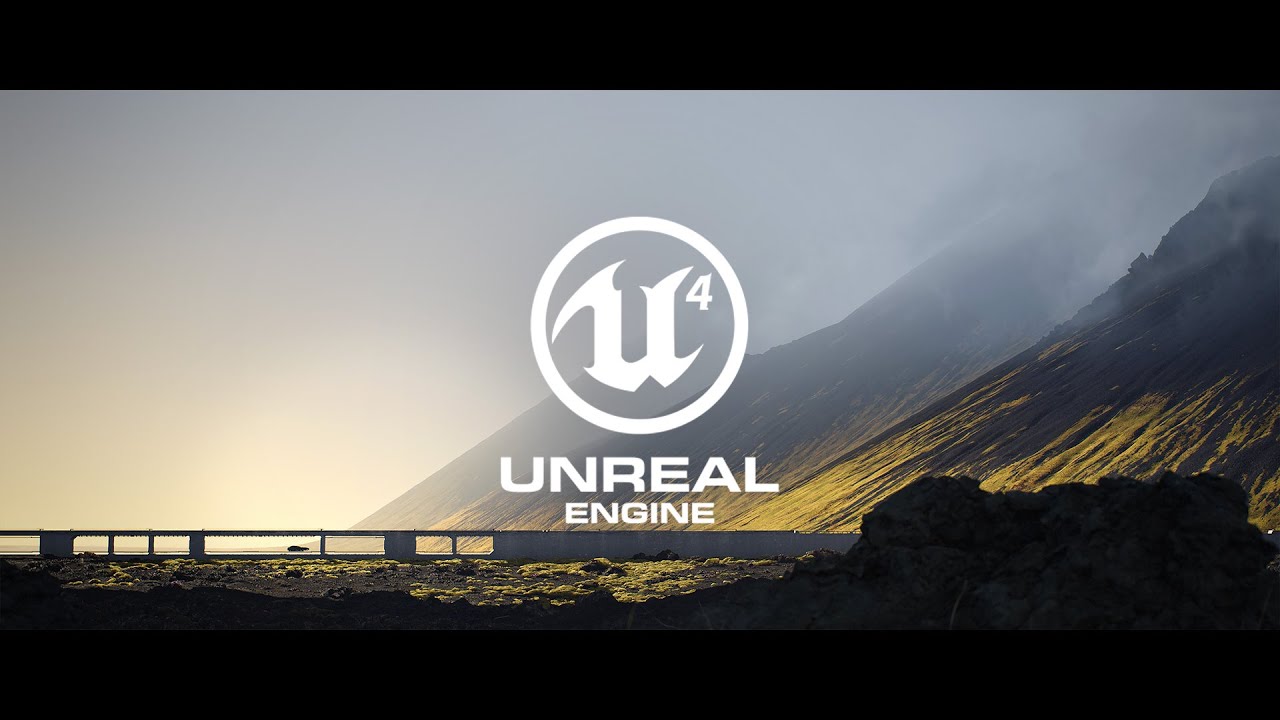
Is the implication that Blender artists are generally inept when it comes to crafting believable and photorealistic wide vistas and landscapes with Cycles? All of them? I refuse to believe so.
3 Likes
Look, I mean you’re even willing to argue that there are no, well, or you haven’t seen, call it what you want, decent landscape works in cycles. The presence or absence of works can be called a fact one way or another.
But even in view of this discussion it is not clear to me at all why your conclusion is reduced to software as such?
Cause and effect are different things. You are talking about the highest level, about large projects, the realization of which falls on the shoulders of specialists/companies, who use the software that they use in their specialized work.
Moreover, you gave an example of UE, which is not even a path tracer. And even its path tracer is worse than cycles. And there is no point in talking about anything at all - path tracer of such a level is in any case superior to UE in its graphical capabilities.
So the conclusion is the opposite of yours - an artist, or a team, as in this case, who are paid for their work, who use the corresponding library. They had the guys from Gaea help them create a great environment.
In general, my message is that Photorealism and Physical Correctness are different things. You can achieve photorealism with gouache on paper. And you can lose it if the basics are broken in any complex software, so the artist is paramount.
7 Likes
I actually wondered to myself, and that’s where I should go as an artist to do landscapes. And you know, the answer is. no?
Concept artist? Why would a concept artist do a full 3d job, picking up, or creating, complex assets, only to do something completely different a day later? It’s easier for him to do the blocking and sketch on top in photoshop.
Archiviz? Studio Mir level? Even they have a lot of photobashing.
VFX? What’s the order? A car commercial? And if it’s a big Vfx, who would do it in blender? And if they do, is there doing the whole scene in 3d?
I - wasn’t immersed in this, I’m judging from my experience, I could be wrong. But the way I see it.
A big project is a lot of work and it’s hard. Assets, scatter.
An artist who’s done work for world creator. How many of those do you know in any other software? How many landscapes can you find that are fully 3D in any other software?
And then it needs to render, if it is animation, and if it is not animation, a wagon of work for a couple of pictures?
The point is that UE itself is suitable for working with the environment. Lots of geometry, displacement, materials. Blender itself is worse suited, it’s not about rendering.
All of us turn around and do something to earn money, if you have a good portfolio, big projects will be done in a big company or for big orders, and if you can produce Hollywood at home, then the question arises whether you are doing it right, that you do it at home).
4 Likes