As it often happens with Blender, I guess, for this particular problem, the best is waiting and in the meantime using workarounds like the ones mentioned above.
Good news is that there is a new plan to implement it, at least in EEVEE, but it mentions Cycles too. Who knows how long it’ll take, though!
1 Like
I will concede that I’ve overstepped in my comments.
I’ve sure never seen mention of these optimizations in c4d-land, Modo-world, Octane-land or with Blender. Good reminder to stay humble in one’s opinions.
2 Likes
As long as they have it on their radar, I will remain cautiously optimistic.
Considering the fact that this tech is around for at least a decade and is part of almost all commercial renderers (and the VFX platform specification) I don’t think this is an extremely hard problem to solve.
If they plan to implement it into EEVEE, that probably makes it easier to implement it into Cycles too. I could imagine that the back-end is the same, just the way how it interfaces with the render engine is different.
Probably because people take it for granted and never actually think about it since it is the status quo.
I only discovered it in action by really paying very close attention to my VRAM usage when comparing Arnold and Cycles a while ago.
I didn’t now that it is called on demand mipmapping (instead of normal mipmapping) until 3 months ago when it popped up in the Blender 4.x Cycles Photorealism Improvements thread.
4 Likes
They did at least attempt to become more ambitious with Project Gold. It was not hyper realistic, but it at least forced the BF to see tangible examples of Blender’s limitations in person at the institute (which has more impact than just They did at least attempt to become more ambitious with Project Gold. It was not hyper realistic, but it at least forced the BF to see tangible examples of Blender’s limitations in person at the institute (which has more impact than just writing about it online).
The mipmap development for Eevee (which may later come for Cycles) meanwhile should be taken the same way as everything else related to Blender development news, and that is to treat it with a huge grain of salt until actual code is put down (because who knows if it will be acted upon, it could be years). At least prospective users don’t have to pay anything to find Blender will not work for them.
Yeah, when I saw the pitch, I was skeptical right from the beginning.
The floating hair underwater in the concept designs, the water itself, it looked to me like they where about to bite more than Blender could chew.
When I saw the behind the scenes footage of them rigging and animating every single shard breaking away from the main-character I felt the visceral pain of the guy who had to do all that.
Doing one shot or two like this might be tolerable, but having lots and lots of shots with this kind of setup would make me soo mad if I had to do that…
A seasoned Houdini artist (not me) could probably build a half procedural, half physics driven setup for the shards (and all shots) in half a day.
If they had a semi production-ready version of that experimental Rigid Body Physics system in Geometry Nodes it would have been much, much easier.
But working with an buggy and in-stable and unfinished simulation system is probably as frustrating as doing everything by hand, so I can understand why they did that (and the resulting frustration).
Guess I expect less salt than you - maybe I am overly optimistic.
Like I mentioned earlier, it shouldn’t be a hard problem to solve for the devs, if they start doing it, they’ll manage to implement it. It’s more or less a scheduling issue.
Also it’s not a problem that is directly tied to Blender itself, its a render problem.
Blender users can use Octane (for free).
I would always recommend that one learns more than one render engine in order to gain more flexibility. It’s good for the brain to know how to do things in multiple ways - it strengthens the neuronal networks.
4 Likes
We are working on some shots right now that take advantage of Blender and Unreal 5+.
For the interior scenes it is all Blender.
We have large city assets we created that we are using for scenes with the character for exterior shots.
For these scenes we render the character in Blender, background in UE and comp it.
2 Likes
Mip mapping has been around for a lot longer in the GIS/Image processing world. There it is called pyramiding and is used in much the same way. Mip mapping does increase the file size (maybe double it or more?) so that will take up more memory (regular and VRAM). I’m thinking that until we get some kind of data streaming (aka Nanite) for textures that it will not help as much? If you could just data stream the level that you need, it would save a whole bunch of memory.
It has been around for a long time in games too, out of necessity.
On-demand mip mapping is what we need.
4 Likes
I have a feeling this is going to take a long time before they add it to Blender. They always have to ask for examples of how useful these things are which I find weird considering the fact that they have existed in other similar softwares for over a decade.
Look at how long it took for us to get light linking. 3DSMax and Maya had it over 10 years ago. We didn’t because the Blender foundation did not think it was useful.
1 Like
I do recall many years ago that Ton’s ultimate goal was not to bring Blender to Hollywood, but bring Hollywood to Blender.
Ton’s dream is dead. Blender is making a lot of progress now and will remain a powerhouse for individuals and small studios, and the amount of data it can handle will steadily grow, and may even soon become one of the best solutions out there for creature modeling, but the BF over the years have made too many unforced errors (allowing the Blender bubble to drive their decisions) and larger studios in general only settle with the best instead of “good enough” (because they have the income to pay whatever Autodesk, Maxon, and SideFX are willing to ask). Then there was the Blender Network which unfortunately never actually got anywhere and made Myspace look like a major success story.
I honestly do not believe that Blender being a major component in the movie industry is something that will happen in my lifetime, barring a major shock event that either turbocharges Blender’s performance or brings disaster to Max, Maya, and C4D. Where Blender can thrive is, as mentioned, courting individuals and small studios by realizing the tagline of putting the fun back into 3D (high performance for large scenes being a component for this) and continuing to strive to provide the latest in 3D with no financial barriers. Any attempt to attract large studios should be over at this point, because it is obvious after 20 years that it is not going to happen.
Lot of doom and gloom recently- sounds like you should find a different hobby that brings you joy, instead of something that brings such pessimism
3 Likes
By no means did I deny that Blender was making progress, and a lot of progress at that.
However, I have been tracking Blender development for around 20 years now and after years of being one of those superfans who believed in it having future dominance in 3D, it is simply time to take a more realistic view based on the events of those 20 years.
Also, I still enjoy using Blender largely because of the progress it has made over the last few years (allowing it to keep up with what I want to do). I have seen a pattern where you consistently interpret posts in a way that assumes negativity, we should not have to fill our posts with disclaimers just to not get called out for having a normal discussion.
Problem with Blender is that it drags its feet at taking features that are very important but appear minor seriously and it’s something big studios encounter and revert back to the paid ones because of it. There are a lot of very big studios that try out Blender just to see its possibilities and revert back because it lacks one small important feature or another. For example, light linking, mip mapping e.t.c. They may seem not important but they help make a project easier to accomplish and run smoothly. There is a reason 3dsmax and Maya have these things for over 10 years.
I remember that studio that was runing Blender and made a Netflix movie (can’t remember the name) and then it closed down. I think it had something to do with hair system or so and Blender not being able to handle it and later they came back as a new company using Maya and Houdini? I may be wrong.
Currently Blender has a faster and better viewport than 3dsmax and Maya imho, Cycles is very fast (faster than Corona…I think) if they can fix this viewport/render mipmapping thing, I think they might be getting more money from bigger companies using it.
Sort of related but back in 2009 when OpenEXR files were written upside down and flipped horizontally, the Blender devs were insisting that the problem was the rest of the industry, not Blender… but it was in fact Blender not writing EXR files correctly.
MIP mapping has been a staple of visual effects for a LONG time, because they had to. If I recall I believe RenderMan still converts image files to MIP maps by default when they are converted to it’s native format, so it is still in use by Hollywood. If Blender could be on board with more standard parts of the 3D industry it would help instead of inventing things that aren’t really needed (asset library, yeah it’s nice and all but is it really NEEDED).
Which for the OP could be an option… RenderMan… there is an addon for Blender for it, you would be using a rendering system that has been in existance for over 30 years, has active support, is constantly being developed and improved… I could go on.
This all might be true… but complaining about blender alone… does not help anyone.
And also: it’s free and open source… anyone can try to refine it or choose a “better” system and pay for it.
So i really do not understand all this blender-should-do–talk. And this is not fan-boy–talk because if i could afford it i would love to try almost all of the other great applications out there.
And again: nothing of this helps the OP/ original question because they use blender and know about the features of other systems but still decided to use blender.

So the only valueable info here is:
- it’s called on-demand-mipmapping and
- something from the OP himself:
This is all very off-topic, let’s keep the discussion focused on the actual question, thanks 
3 Likes
One way for sure is to plan your large scenes for comp.
Also think about average render size and percentage of screen space any one object will take.
Another thing to consider is DOF - often you will want the BG out of focus from the subject.
So it sacrifices some freedom and flexibility. But make up for that with planning.
Then of course there is Unreal as an alternative for open world aspects of the project and rendering the hero in Blender then comp - as we are doing now with Thrive.
Comp in general is one of the hugest optimization factor because it makes things possible that otherwise wouldn’t be.
Clever compositing is a necessity to archive maximum effect and a mighty force multiplier.
The movie industry learnt this very early as there was no alternative way to archiving huge and complex results.
Separating into layers divides the amount of data by every layer.
If you can cut your scene into lets say 4 layers (foreground, middle-ground, far away, background), you can max out your (V)RAM for each layer = 4x more data than what your PC is able to do at once.
There is no limit on how many layers you can use.
It also makes it possible to speed up rendering extremely.
Everything that is so far away from the camera that it doesn’t create a visible parallax effect, only needs to be rendered ONCE.
Then you can use 2D cards in the scene, 2D compositing or camera projection onto a lowpoly mesh and it renders incredible fast.
This applies to all distances.
If your camera is static, EVERYTHING that is static doesn’t need to be rendered every frame. If there is no interaction with anything, no animation, no parallax, you can break it out and project it in 2D.
This even works to a degree with moving objects. If objects move only horizontally or vertically you probably can get away with animating them in 2D.
If you have enough parallax in-between the objects, the missing parallax on the objects itself goes unnoticed. 2.5D as it is called works pretty well.
If you look out of the window of a moving train, the objects that flyby very fast do have parallax, but if they are very close and move fast you can totally use 2D cards and hide that with the motion blur.
Which brings me to point 2.
Everything that is blurry due to DoF or stronger Motionblur can be optimized significantly. Lower textures, lower mesh density, less render samples + strong denoising. The stronger the DoF, the easier it is to use it as an factor for optimization.
You have some plants in the foreground that are totally out of focus and they move ever so slightly in the wind… you can probably render them once, then warp and animate them slightly in compositing. You’d be surprised with what you can get away with if it isn’t the focus of the scene.
Point 3:
Even if things are animated, you can probably still separate into layers and then create an animated composited element.
For example: the illumination changes, but the objects are static. You can create a shadow catcher from/for the objects and only render the light pass for each frame and combine it in post with the objects (that you had rendered only once). If you can break it apart into essential elements you can probably find a way to do something cheaper and faster and then combine it again.
You only have to create the appearance of complexity and detail, you don’t have to create the complexity and the details itself.
Point 4:
“Where attention goes, Energy flows”.
Use this principle in your creative work, but also flip it on his head and use it in context of the audiences perception.
If you can lead the eyes to a thing it also means that you have lead them away from other things.
Putting to much effort into details that aren’t important is not only a waste of your resources, it can become an distraction that undermines your artistic intention.
Point 5:
80/20 rule - the pareto principle. Make this your no.1 guiding principle for creating. Perfectionism is the enemy of progress, probably a trauma response and definitely a coping mechanism. Unless you get paid well to push into the last 20%, forget about it, get it done now.
95% of the audience isn’t even able to perceive a meaningful difference and the rest are perfectionists themself.
I am an authority on that subject, I have ~20 projects on my PC right now that are 98% done and I suffer from being unable to “finish” them.
Don’t be that guy/girl and run chasing after that specific vision that you believe makes your result “perfect” - it is a Fata Morgana.
Make compromises, cut through the bullshit.
Good enough is good enough, your energy is better spent archiving more results.
5 Likes
Let the record show that Star Wars: Episode One actually shipped to theaters where “the crowd” in the Podracer scene actually consisted of … “colored Q-Tips® cotton swabs.” No one noticed, until the trick was revealed in a “Making Of” video.
Of course, “the shot has since been replaced,” but that is not the point. The filmmakers realized that, having first been exposed to a detailed depiction of the actual scene, the audience would “see” the same thing again in a passing shot that did not otherwise draw their attention. (“The human visual cortex” to the rescue …)
Yes, this was partially a product of “the technology of the day” and ever-present production deadlines, but the principle is still here. If you have designed “the trick” well, the actual audience will never “see” it. And there’s no point in pursuing “perfection” where “a trick” will do.
2 Likes
Expectation informs perception.
If the brain subconsciously decides that something is the same, it spends less brainpower on processing it visually.
Humans can see a lot more data than what their ordinary waking consciousness uses when creating an image.
Processing visual data seems very costly and the visual cortex is constantly optimizing for efficiency.
Especially in the periphery of the image one sees, there is a lot of temporal compression going on.
The further away from the center of focus something is the more likely it is that the human brain constructs the image from non-real time perception / memory. Similar to how frame interpolation or video codecs work.
If you want to see a demonstration on how easy it is to break the ability of the visual cortex to produce a coherent image, try this:
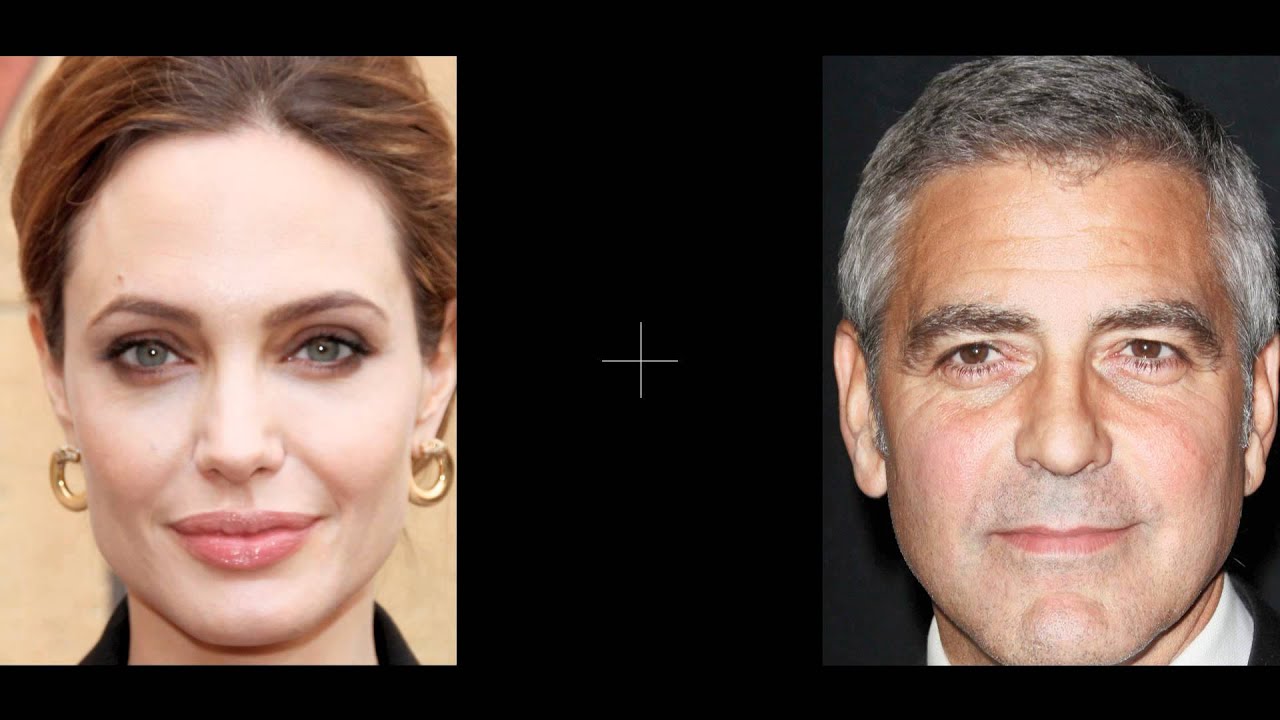
The images change too fast for the brain to keep up and the facial features of one person bleeds into the next one and distorts them into freaks of nature.
It’s hilarious. 
I also have experience with non-ordinary states of consciousness and have seen the surplus of visual data that my brain can perceive (and process).
It is significant to say the least.
But It comes at a price of diminished activity in other areas of the brain which results in memory loss and eventually the loss of ego and personality.
If you want to see the world to the fullest, make yourself empty.
2 Likes