Blender's History

There is no such thing as an industry standard.

It’s just a straw man argument.

And indie films using “unconventional” means ie not shooting with industry standard Panavision or Ariflex cameras and large crews is nothing new at all.

Animation is no different!

If there is any standard at all it is story and execution.

And if you can bottle that, you will be set for life!

7 Likes

I find the question thought inducing. Can’t say for Ace, but I am obsessed with FOSS because it’s the only way we can own our machines, our means of production. FOSS is to information technology workers what communism is to factory workers, a way to be free. That’s reason enough to obsess over it in my humble opinion.

6 Likes

Insightful video. Thanks for posting. Was this when 3d animation just came out and 2d animators were losing their jobs as a result of 3d animation being adopted by animation studios?

2 Likes

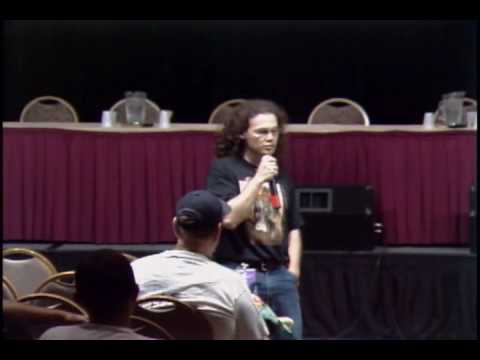
It could have been. But he is referring to a film he made before that happened. But regardless, it was just about how technology had changed to allow them to make 2D in the computer without the need of 100 animators to draw in-betweens. And the fact that while maybe some change in the industry was making things difficult, there is no excuse not to just make your own. Or course that requires imagination!

But the same was true then as it is today.

Another gem:

1 Like

Of course there is, and many industries have a standard by which things are compared.

That doesn’t mean it is the best for everyone, but it does exist.

3 Likes

While we are briefly in this tangent.

Here is this:

I have learned a number of valuable lessons over the years. One of them is to be open and study the life and works of those that have gone before.

I can’t list all of the lessons I have learned and conclusions I have made over what rabbit holes and straw man arguments not to chase down.

I would like to say proudly that I always knew better.

But no. I had to learn the hard way.

Regards Blender history, it is a unique situation where Blender was developed by and for filmmakers.

Of course that it is not the only time this happened. But it certainly informs the dynamic of Blender development and currently sets it apart from most all of the others at this time.

1 Like

To note, I do make use of commercial software as well because of the awareness that some projects have yet to overcome the old FOSS stereotypes of being quirky applications developed in a bubble with no regard to sensible UI/UX design (at least according to professionals who have long tried to paint a hard distinction between FOSS and commercial and why they avoid the former, even if it means dealing with things like subscriptions and always-online DRM).

On the other hand, I also make use of software such as the GIMP not because it is even remotely close to leading the industry in anything, but because it can be considered ‘good enough’ for my purposes. This is especially when considering that the vast majority of advanced operations related to renders for instance can just be done now in Blender’s compositor, leaving GIMP for basic things if needed such as text overlays.

1 Like

And that is not unusual.

What I don’t understand is why every other comment you make is related to some aspect of FOSS.

FOSS does this, doesn’t do that, hasn’t learned from this, will never learn that, history of FOSS, mistakes of FOSS, and everyone does something including FOSS.

Oh…I remember seeing some BTS of the Making of the animated movie Tarzan, there was a software they were using that had some inbetweening feature, also inhouse 2d animation software were newly introduced. I don’t get why there were oppositions to it, claiming the collapse of theatrical animation. I am guessing the ones who were open to learning the 2d animation computer thingy got retained.
Everytime new technology comes out, history keeps repeating itself with opposition to it when in reality, these companies don’t care. All they care about is money at the end of the day.

Reminds me of the architecture industry, the T-square, inking pen and sets square days, and its replacement with computer drafting tools like AutoCAD, ArchiCAD and others.

Kinda reminds me of MontyOum:

He saw himself as a filmmaker rather than as an animator
RIP Monty

1 Like

Yeah I think there are many like him.

Timothy Albee comes to mind of Kaze Ghost Warrior fame.

Disney animator turned to LightWave to make his short.

Wild story about holding up in a cabin in Alaska for 6 months or something doing all phases of production himself.

Sadly he never raised the money to make the feature.

The short was compelling considering one guy using LightWave 20 years ago!

Edit

The talk :smiley:

2 Likes

If you are launching a properly-funded commercial product, and you have decided that [[software-X]] is what you want to use, then “license fees” are just a cost of doing business. Obviously, you will make the best decision that you can, based on a number of factors, as you formulate your business plan.

But it is extremely important now that Blender was selected as the core technology for what is now a “highly awarded” project. This does not mean that the next project that comes long “should, or should not,” do the same. (Every project, and its economics, is different.) But, Blender now has well-deserved bragging rights. For good. Take a bow.

6 Likes

It has been my experience, growing up in an entrepreneurial household, where the business was accounting and therefore had a unique insight in to the success and failure of businesses, that they form and grow more organically.

And people who are able to “launch a properly funded” business and make a business plan have already been in that business in some capacity for a number of years. In my father’s case he litterally grew his business from the ground up.

And he built that business on the back of his previous experience and knowledge.

When it came to choosing software and make the transition from pencils and paper to computers, of course yes, evaluation of all of the options was required and over the years those options changed as well. As the accounting world moved from DOS to Windows.

But once those options were decided on of course there was the necessity to keep files for 5 years, for legal reasons. So you better get it right.

However in the animation industry it has been a good long time since companies had to make the transition from paper to hard drive.

And then from 2D to 3D.

But in the case of studios etc. of course they were building the these business or rather expanding them into new areas based on a previous track record and experience.

A studio that previously made only live action and needs to add animation to its roster has the track record of its live action decision to bring to the table, maybe even their own money or money of investment to help.

Historically in these cases of course the answer is to simply look around and see what everyone else is doing.

So the tools out there being used are evaluated.

However time and technology moves forward. New players, new younger players come to the table.

You could call the decades of 1995 to around 2015 as the college years of animation new comers.

These are the years that animation schools sprung up starting near 2000. Prior to that animators were coming into the business as freelance due to the drop in software pricing.

But that time has come and gone. Quietly, without much fanfare, Blender came onto the scene. Since about 2012 from my recollection forward there was a surge in startups using Blender as well as companies using Blender in very unglamorous manufacturing and other industries.

Some of us - such as myself - were poised to take advantage of this and have successful freelance careers using Blender.

There are a few other factors as well. More and more people using 3D without having to go to school or buy software.

So in effect you have a new ecosystem that is centered around Blender.

And while the old guard is still alive and standing the future is changing.

So that Blender is more and more a viable solution for people starting out and building a business from the ground up without either a) having to raise money or b) having any experience whatever.

Maybe there is also a problem with this.

But what has happened is that - especially in a challenging economy - building a business without upfront cost of software is going to be more of a common place than the exception.

Blender has positioned itself at the center of this new growth. New artists new businesses etc.

Because people tend to stay with what is familiar and has been working for them.

Autodesk tried to answer this by making education software free, offering Maya LT and Maya indie.

But it’s a bit too little too late ti stop this train.

The “mainstream players” are going to focus on the folks who brought them to the table: "[big …] studios who want consistency and support, and who are willing to pay for it." Customers big enough to tell you what they want. (“IBM” showed them the way …) It’s a viable, sustaining, business model. They need not deviate from it: they have billions of dollars of movie business to continue to support, and contracts to do so.

“Blender” is certainly emerging as a “poster child” of the open-source revolution. (Along with several others in unrelated industries.) It has now earned an undeliably ("the™ most …) prestigious industry accolade. But, “there is so much more left to do …!”

Blender certainly makes recruiting much easier. Because, now you can expect a candidate to know a lot of the basics. All that remains to do is to educate them on your toolchain … unless that toolchain happens to be … Blender! :slight_smile:

Yes, it has been so much fun to watch Blender … moving from such humble beginnings … now earn its success (the hard way). Which is now “beyond reproach.”

Because: When you have won an Oscar®, "because of the film, not the technology," you have … “arrived.”

2 Likes

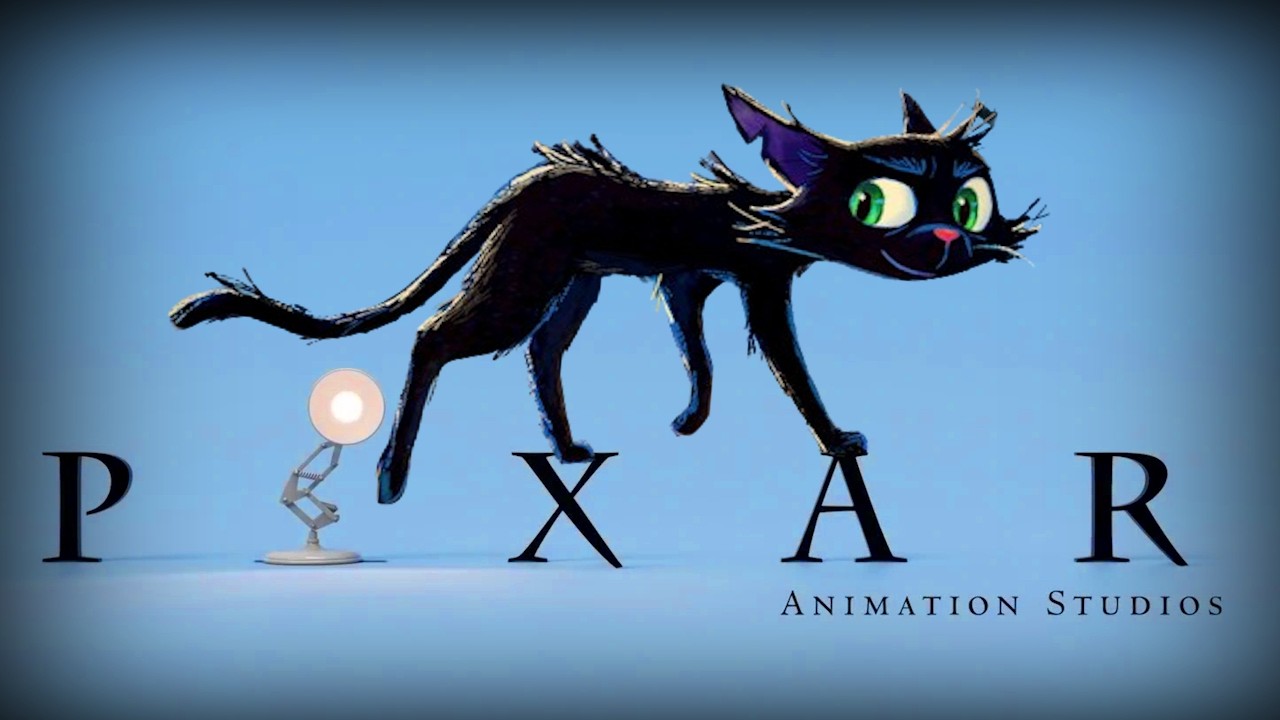
Now there is speculation underway as to whether Pixar of all studios is seeking to copy Flow. No joke, the cat does look similar in its art style.

In addition, what are the chances that Autodesk is going to work with Hollywood in an attempt to school the Blender Foundation on how NPR should work in a DCC app. since it is now clear they missed the boat on kneecapping Blender’s rise in the area (by implementing something similar or superior inside Maya)? Billions of dollars in revenue vs. perhaps 2 million annually in dev. fund money, the math should work strongly in Maya’s favor, right?

1 Like

We have had toon shading options in Maya/Arnold for years now

Also Most production studios use a custom NPR solution such as the team at Fortiche studios who did the Arcane series for Netflix

If Autodesk was to “school the Blender foundation” on anything it should be core software level cached rig evaluation and well….
some “other features” :sunglasses:

No, Pixar. Don’t “do Flow.” It’s already been done. Do something else that is equally wonderful – but very different. Using your technology. "Y’know, because that’s what you do." Amaze us. You’ve done it before …

What I really liked about “Flow” is that: "it was an utterly original idea." Everything then – ahem – “flowed” from there. That’s what caused the movie to win. When you watched it, you thought: “I’ve never seen anything like this before.” Both visual design, but especially story. But, it worked.

4 Likes

But that is standard toon shading fare and not at all like Grease Pencil and the upcoming NPR engine demoed on the devtalk forum. Also take a look at the BF’s creator showreels from the last few years and notice the wide variety of styles.

The original talent that built Pixar is long gone though. Now you have reports of Toy Story getting a 5th movie and its parent company converting its entire animation library to live action. Even the parks are losing that clever, creative spark according to longtime fans (such as the discovery of a thinly disguised Home Depot shed intended to be the new giftshop for The Haunted Mansion).

I think Arcane has firmly established what can be done in NPR with Autodesk software. (as if it wasn’t already known what Maya can do, but whatever…)

Not that this needs to be a “what if” competition of Autodesk vs Blender in the first place.

The larger problem at the moment is not worrying about what Autodesk will or won’t do, but Blender killing it’s own NPR branch because “Oh no, has to work with Cycles”.

4 Likes

Lol ! the key to success : black cats rendered in NPR :slight_smile:
Anyway, I don’t see the point of copying it, they do blockbuster movies, flow is an independent low budget movie, why they should bother…

That said, it’s great if they look into NPR and try different rendering styles that the regular pixar look. In the meantime it’s also their trademark so I don’t think they’ll completely reset their style . Probably it’s still going to be a pixar movie with a slightly visual twist…

The movie is going to be released in 2027, hopefully we’ll have new interesting trendy movies by then :slight_smile:

Yeah I think there is really a place for everyone here ! On one hand you have the regular DCC suite : Zbrush, Maya , Mari, Painter, Arnold, Houdini, Nuke… And obviously with the right budget using those tools together will lead to very cool stuff.
In the other hand we have blender that is likely to do very interesting stuff all inside the app . And while I’m sure we’ll be amazed by what’s possible to do within a very efficient / cheap workflow I don’t think it’s worth comparing. It’s like comparing two boxers from the heavyweight and featherweight category. They can be both amazing in their own rights but they don’t have to compete together, it doesn’t make a lot of sense…

Well, while it might take some time they’ll obviously fix it, given everything that’s coming to blender, we can’t have all these amazing tools aimed at realtime and NPR without having a functioning render engine as a basis.

But like with everything related to development it’s going to take some time but eventually we’ll be happy :slight_smile:

1 Like

While I thoroughly enjoy the fact that someone took the Blender tool-chain and did an Oscar®-winning film with it, as always it’s really about the film. This wasn’t a “technical” award. This film really is “one of a kind” on many levels. The tool-chain is how they did it, but the well-deserved award is for what they did with it. However, this does cement the fact that "Blender has arrived."

They also did well at the also-prestigious Golden Globe® Awards. It was a truly original and deserving film.

2 Likes