How make a models and faster modeling?!

Hello everyone!

I’m busy learning Blender so that I can make animations later.

My style is 3D anime in the style of gametoons/one piece

I am Russian and I don’t speak English well, so I communicate through a translator, I apologize if something is written wrong.

I studied blender once, but decided to study it in a new way since I didn’t see any Progress from the previous time and I studied blender once, but decided to study it in a new way because I didn’t see any progress or meaning from the previous time.

Now I’ve started my training by learning navigation and the basic Edit Mode and Object Mode keyboard shortcuts. I also learned the necessary modifiers for the work.

Now I’ve decided to learn how to model and build a library of models. But the problem is that I’ve never modeled objects before.I don’t know where to start, as there are many things that surround us.

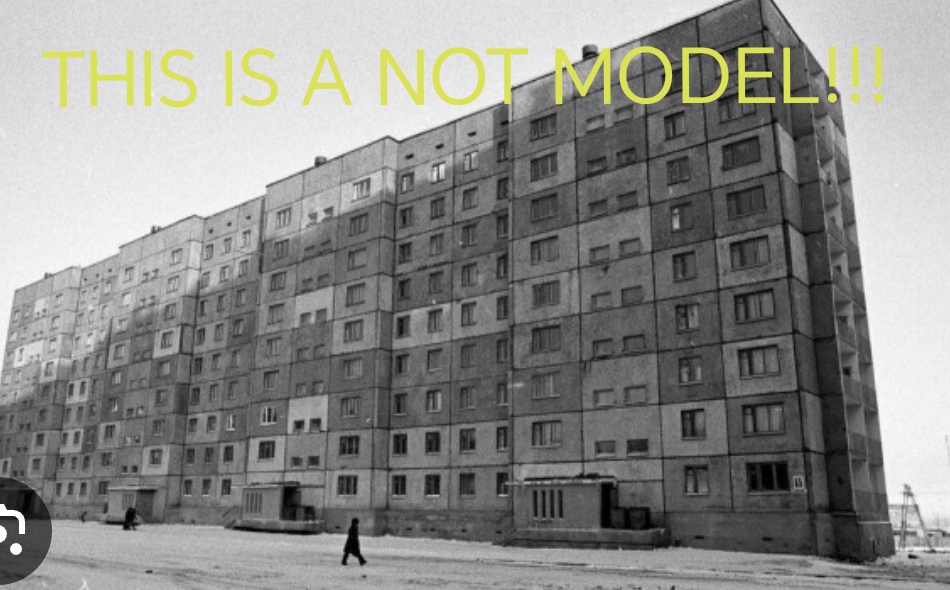
I’ve been modeling for the second day now, and during that time I made a model of a nine-story Russian house, and I made windows for it, a door (with crooked buttons and a handle), and a balcony (which looked bad) I also modeled a bottle. These were my very first models, I had never done modeling before. I made the model of the house (along with the window and door) for about two to three hours, and I made the bottle in 15 minutes. I personally think that this is a bad enough result even for the first time and that we need to accelerate and simulate faster. I want to start making full-fledged Anime series before the new year, but it feels like I won’t be able to wait a long time for this goal at this rate.

It took me so much time just modeling without texturing or anything else. These are simple models, and I’m afraid that I won’t be able to make the rest of the models in the future, since I’ve been making such simple models for so long. I can’t upload models right now, but I can send you what I was trying to do specifically. I did it without references, from memory. I tried to watch videos on YouTube about modeling or training beginners in blender, but sometimes there were things that I didn’t understand, so I decided to rely on my own strength. For example, I include videos on YouTube on how to make an anime character, they show and tell me something, but I can’t figure out what exactly and how to do it. Why is that?!

Again, I repeat that my focus is on anime and cartoons, not on realistic.

I would like to ask:

Where should I start modeling?! How to speed up this process and learn to model faster?! I want to be No worse than the professionals in a week!!!

In short:

  1. How to start modeling correctly?

  2. how to speed up the modeling process?

  3. Is it better to model from points or from primitives?

  4. For now, it’s better for me to continue modeling houses or modeling various other objects?

  5. How to model the characters correctly?

I will be glad to hear your answers. Please answer all five questions.
Hello !

Well, consider that 3D takes time to learn, in a good art school it would take something like between 3 to 5 years to get a diploma. 8 hours a day, with professional tutors and homeworks.
And from there you are just considered junior artist.

It’s similar to learn a foreign language, learning to dance from scratch, learn music, it’s not something you can grasp in a few month…

you have to split your work between practice and learning technique. IDK how much time you have, but something like 30mn a day to learn technique through tutorials + 1 hour modeling one object a day would be a good starting point.
And after a week or two you make something like an object that span across a day or two of work, something like between 8 to 20h on an object.
rinse and repeat that for every days / every weeks until you are comfortable.

you have to pick subjects that are a bit challenging but simple enough to get a satisfactory result. If the result isn’t good focus on simpler things. If that still too complicated then do 1h totorial , 30mn practice.

If you have more time, then double or triple the dose : 1h tutorial , 2h practice, or 2h tutorials 4h practice.

The most important thing is first learn the good technique, it’s not important if the result isn’t good.
Then learn to make things that looks good even if takes some time.
Eventually keep practicing and you’ll become faster, but it’s the last step…

That depends on the case, it’s not that important , whatever is more comfortable for you …

One various object per day until you are comfortable and don’t make a lot of progress anymore. However keep focusing on hard surface first , then look into organic modeling as it’s a bit different.

First learn hard surface objects, then start to look into simple organic shapes , like fruits, simple toys , then move on to body parts like hands , nose, ear, and eventually a face…
But before doing that you need to be comfortable with simple objects. Probably you’ll have to practice a bit differently like more tutorial less practice at first…

Also keep in mind that if you don’t have prior artistic practice you’ll have to learn that as well :
For instance it’s possible to know the technique of modeling a face, but you might lack an artistic eye, therefore the model while being good might look weird because your eye isn’t trained enough to see the right proportions and balance.
That’s why someone who has already trained in drawing might learn 3D faster because they can focus on technique only and other people have twice the work to become good …

Last piece of advice : always model from reference, don’t use your own imagination, focus on realistic things first and when you are comfortable move on to stylized / anime stuff.
Focus on modeling first but it’s ok to learn bits of lighting/materials and render so once in a while you make something a bit more complete, you can post your progress here to get feedback from other artists !

You need to give yourself realistic expectations.

There is a concept that it takes 10,000 hours to become good at anything. It’s not a hard rule but the point is that it takes a long time, with focused, deliberate practice, to master something.

10,000 hours, if you work 8 hours per day, is 3.5 years. 12 hours per day is still a bit less than 2.5 years. Again, this isn’t a “real” rule or guarantee, but expecting to make professional quality animation by end of year isn’t going to happen even if you are the most talented artist the world has ever seen.

As you yourself noted, modeling is only one aspect. For anime characters, you need to learn modeling, UVs, texturing, rigging, and animation. Each one of these is a difficult area to master by itself. In large studios, there are different artists who specialize in just ONE of these areas.

Modelling in itself takes time, modelling when you don’t yet have the skills takes so much more time though. I wouldn’t worry about it too much and I think it makes sense to accept that you are learning now. I don’t have any scientific statistics or anything like that, but my intuition is that if you are starting, modelling may take even up to hundreds of times more time compared to someone professional who has been doing it for many years. I think it’s normal.

Regarding your set goals. What are you basing them on? Wishes? Well, OK. Don’t get surprised that planning time based on wishes may not turn out to be very accurate then. If you are learning, you don’t have much to base your predictions and time planning on.

That’s just absolutely the worst mistake one can make in my opinion. Always have reference. I started learning modelling 20 years ago. I don’t start modelling anything without first finding all the reference I can. Why would I make my life harder?.. Even if you are creating something new, have inspiration material. As much as you can.

I think since you need a whole lot of practice, modelling anything is what you need. Houses are usually quite simple in terms of modelling and functions you need. I would recommend trying to model other objects as well. I would recommend modelling things that you have or something that you can get a lot of good reference for.

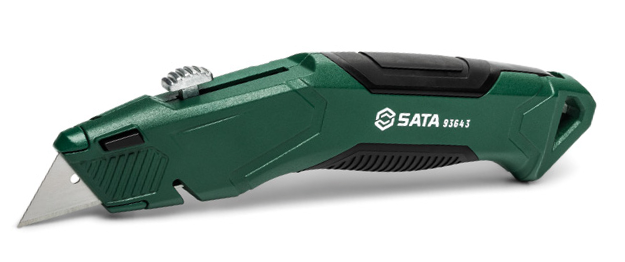
I have always thought that power tools or just any tools is a good way to practice modelling. That’s something accessible and they can be quite challenging. If you can model something like this accurately:

I would say you are done with learning modelling. At least the technical part involving all modelling tools and techniques. But that’s just a random suggestion, it obviously doesn’t have to be anything like that. And of course starting with something much much much simpler would be a good idea. Something that you can have in front of you and take photos of it yourself is good.

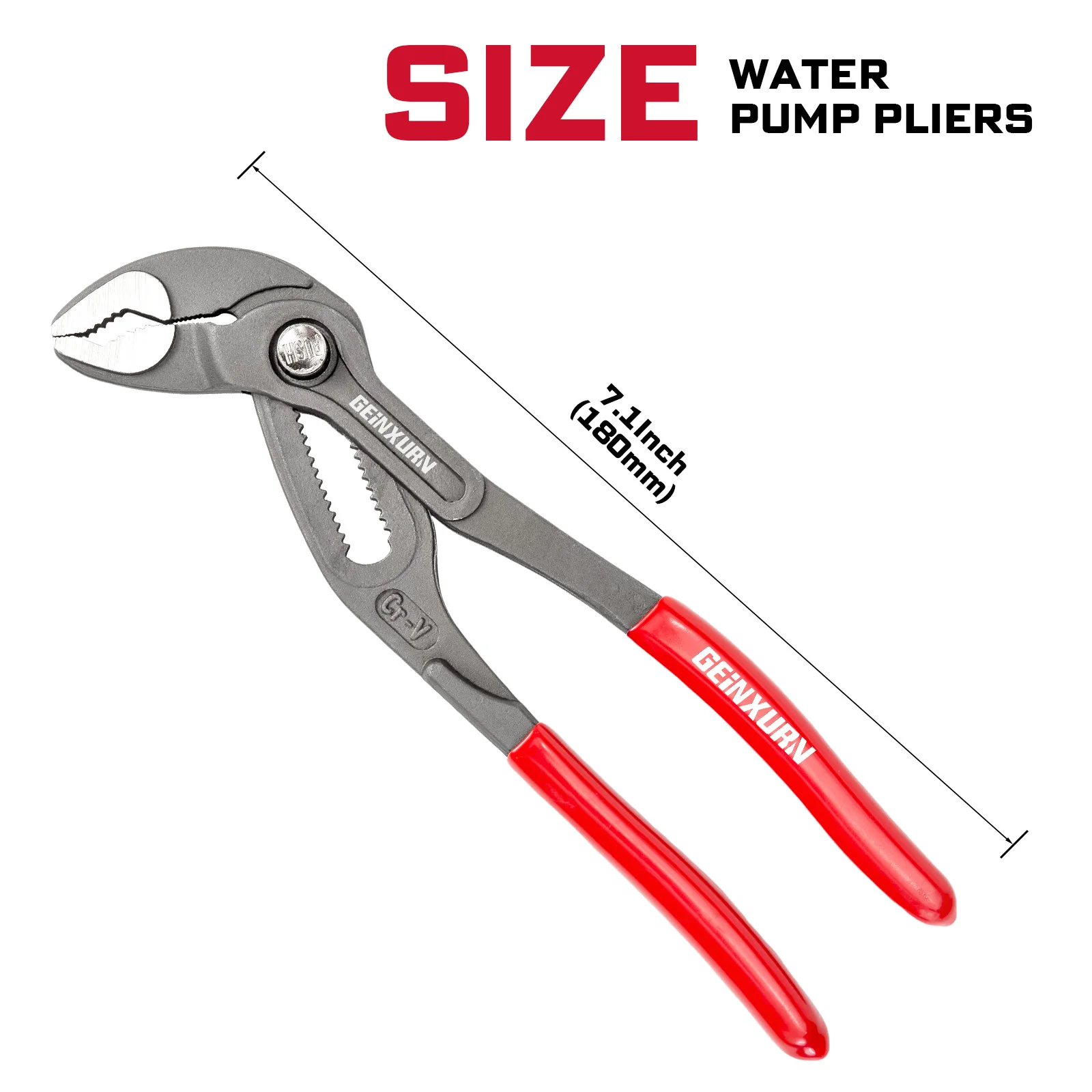
Something like this would be extremely challenging for a beginner if you like pain and suffering:

I think I would say this is a good very challenging task for a beginner 1-2 weeks in:

(this might still be a brutal suggestion, it’s quite challenging, you’ll not model this in a couple of hours. Think days if not weeks if you are just starting.)

Or something similar that you may own yourself.

It’s a very arbitrary suggestion, I know :laughing: But I just think it’s amazing that you can just type “tools” on AliExpress or Google and find ideas for practicing modelling for a lifetime. :laughing: Might not be for you though, I don’t know.

I think that’s to become a real expert. 1000 hours is OK for modelling. I think you can be quite decent at modeling after the first 1000 hours, really good after 2000. We usually underestimate what 1000 hours of work time really mean. It’s a lot.

completely agree. I was told as a kid that using reference was cheating, and avoiding references held back my skill development for years.

Anyways. Getting better really is just keep practicing, and keep watching or reading every piece of educational material you can get your hands on. Both speed and accuracy will come with time. Model every day, you’ll progress.

Oh if only the beginners knew what professionals use for reference… :laughing:

Cheating is the name of the game! :laughing: :laughing: I’ll use photogrammetric reconstruction if I can get my hands on the object I need to model! I don’t care. I need results. Now. :laughing: High quality reference is always the goal. If only it was always possible… That’s different with stylized stuff, then you want sketches and concept art I suppose.

And of course I couldn’t agree more to sozap:

I think whatever you do even if realism is not the goal, then realism can be a great starting point in many circumstances. It probably unavoidably is in some shape or form anyway whatever you do.

Sure, but 1000 hours is still about 4.5 months, assuming you work 8 hours a day, 7 days a week. That was why I said 10000 isn’t a hard rule, but no matter what, it’s on the order of months or years, not weeks.

…and that’s JUST modeling.

Yes. Professional artists use TONS of references for everything. It’s not cheating, it’s just what you do. If you’re modeling a completely fantasy/made-up object, scene, weapon, vehicle, or creature, it will look way better if you base it on real things.

There are many YouTube videos that teach modeling techniques.
The problem is that there are too many :grin: I find it hard to tell good from bad.

What I can suggest is to practice topology modeling little by little whenever you have time.
There are various modeling methods, but topology modeling is also very helpful. Clear purpose and practice are the best methods.

I’m attaching a YouTube channel with a topology example.

https://www.youtube.com/channel/UCVA3cYOgsTN4hs3v7pjne7w

Also, if you scroll down on that channel, you’ll find a list of helpful Blender YouTube channels.

Practice, practice, practice.

Looking at other models or workflows (“research”) and tutorial and course… and:

Practice, practice, practice.

The “art of modeling” is something one does not only learn by “reading some books”.
And because of this:

Practice, practice, practice.

People who think that this is to tedious, cumbersome and do use AI for it.. never really learn it (and so doing this for money are replaceable). Only one who did all this may have some useful task to be done with AI.. because (s)he knows what is good.. experience is beyond price.

(This it not a rant against AI this is a encouragment to gather experience !! )

Your overall points are great. I want to push back on the 10,000 hours, because I think it’s important that people understand it.

The 10,000 hours idea was made up by Malcolm Gladwell- a failed marketer with no research experience. He wrote a book about it entirely based on his goal of marketing the 10,000 hours idea, which is not how science works. To this day, there are no peer reviewed studies supporting Gladwell’s theory, and many experts across many fields have spoken out against it.

It’s true that it takes time and practice to improve, but there’s no specific number. It varies based on person and discipline, existing skill level, quality of practice, consistency, and unfortunately, brain plasticity and capacity and some unquantifiable natural advantage we usually call “talent”.

Mozart and Rachmaninov were better pianists as teenagers than most professionals who’ve spent decades training. I know two people who got the same degree in animation from the same school and have spent the same amount of time at the same place since. One of them is a phenomenal animator, and one of them is good but nowhere near excellent. Both of them work equally hard- and here’s the most important part- both of them are getting better. Their baseline is just inherently different.

You can always improve! But it’s a myth- made up to sell books- to believe that there’s a specific magic number that exactly measures all improvement. Some guitarists spend decades trying to rise to the level of David Gilmour. Some people are David Gilmour. It’s not fair, but it is just the way it is.

The important thing is to keep consistently practicing and recognize that your speed of improvement is unique to you, as is your starting baseline.

ETA: I should cite my sources :ohno:

Regarding the book [about the 10,000 hours idea], Paul McCartney, former member of the Beatles, said in an interview on August 6, 2010:

[…] I’ve read the book. I think there is a lot of truth in it […] I mean there were an awful lot of bands that were out in Hamburg who put in 10,000 hours and didn’t make it, so it’s not a cast-iron theory. I think, however, when you look at a group who has been successful… I think you always will find that amount of work in the background. But I don’t think it’s a rule that if you do that amount of work, you’re going to be as successful as the Beatles.[26]

Case Western Reserve University’s assistant professor of psychology Brooke N. Macnamara and colleagues have subsequently performed a comprehensive review of 9,331 research papers about practice relating to acquiring skills. They focused specifically on 88 papers that collected and recorded data about practice times. In their paper, they note regarding the 10,000-hour rule that “This view is a frequent topic of popular-science writing” but “we conducted a meta-analysis covering all major domains in which deliberate practice has been investigated. We found that deliberate practice explained 26% of the variance in performance for games, 21% for music, 18% for sports, 4% for education, and less than 1% for professions. We conclude that deliberate practice is important, but not as important as has been argued”.[27]

That quote at the end is from an excellent paper which I’m adding here:
Oswald_Deliberate_Practice.pdf (785.3 KB)
Macnamara, Brooke N., Hambrick, David Z. and Oswald, Frederick L.. “Deliberate Practice and Performance in Music, Games, Sports, Education, and Professions: A Meta-Analysis.” Psychological Science, (2014) Sage: 1608-1618. http://dx.doi.org/10.1177/0956797614535810.

Yeah. Some people were born with raw talents while others have to hone their skill by hand throughout their whole life, and it’s always been like that, though I think that the first ones may be more talented per se, but that’s just my opinion at the end of the day.

Sometimes I think about that when it comes to Blender, and how I started working with 3D graphics in general.

¯\_(ツ)_/¯

Interesting.. i already knew about the myth of “learning styles” or “the fixed kind of learner you are”.. like for example “debunked” here… if i remember correctly the “original author” was an employed teacher but not a pedagogue.. (didn’t study pedagogy or wasn’t a “special trained educator”)

..so.. as always:

It depends.. (and it might be not as “fixed” as some people suggest) :wink:

I’m also a bit uncomfortable with that concept of 10 000 hours for other reasons, it’s because it implies that it’s just a matter of mileage. And of course stuff takes time to learn for sure, but you have to be mindful about it… It’s about you finding your way to being good at something. You need to figure out what works and what doesn’t, what are your strength and weakness , what you should focus on…

Spending 10000 hour making the same mistake isn’t going to magically solve your problem…

Anyway, even if that 10 000 hours theory isn’t scientifically accurate, it’s a good number anyway. It recalls that stuff takes time. Sure some genius can figure it out pretty fast, some people will take 50 000 hours.

In practice with 6 months of hardcore supervised training you can already do interesting stuff, but after 1 or 2 years you’ll still have a lot to learn. It’s interesting to look at artists we like and learn how many years of experience they have. Personally I probably opened a 3D software more than 30 years ago, and I was already doing drawing as a kid. Nowadays it’s like I still have so much to learn even though I’m happy with what I’m currently doing… I’m not the fastest learner but not the slowest one either…

I think there is some general problem in evaluating any thing by only one
number.


Let me give you an example:

There are wonderful pieces of art which does sell for only a few bucks.. and then there is..

:roll_eyes:


The world is going banana..

:rofl:

I do not know the reference… but still.. :rofl:

But we might get off topic now..

I understand, but I have mixed feelings… Those numbers can help understand something more abstract a bit better. But the problem then is being more focusing on the number instead of looking at the meaning it brought to our understanding.

But “measureing” someones “level of capability” by only counting the hours some one did something like this ??

Also… ohh i found it:

Seems to be also “the problem” for some AI “solutions”.. wrong.. but fast :rocket: .. time saved and no need to think about the actual task. :upside_down_face:

Yeah I think we are on the same page here ! I can say I worked with blender for 20 years, in fact that doesn’t say a lot about my abilities. Maybe someone with just 5 years of experience will know the software better. But at least it’s very simple to understand.

If not, how would you express what is needed to learn something ?

I worked with a director that didn’t understand when I said “it’s going to be difficult to do”, in their mind it was like maybe 2/3 extra hours of work… If I say it’s going to be maybe 5 days of work at best it’s much more clear. But the truth is that it’s only an estimate, to really know precisely how much time and effort is needed to do the thing I have to go through it …

I think we need those simplifications so things are much simpler to understand, but indeed if we stop here instead of understanding the core idea we are completely missing the point.

The tricky part is: estimated on what..
I always had my problems when people does estimate something which is not in their daily work routine/workflow.. especially when i was aksed about this.. i always wanted to cry.. “You are the superior.. so when you do not know then how should i know ? I had never done this before !?”

So when i do something and need, say for example three hours and did this even multiple times, then when tasked to something similar with more detail i can say: “Maybe in four hours.”.. but when i see something mor ecomplex in the general shape so it’s “not only some more details” then i can say: “Let my try my usual workflow and in two hours i should get to some certain state so that i can tell more about this specific problem.”

..so back to the topic:

For a beginner (and i was and am this also for multiple things :wink: ) it’s very hard to estimate things because there is no experience yet. Also all those question about “best way” are almost everytime otu of context.. different types of model (from low poly games to high poly cinematic VFX assets ) needs different approaches and so one needs experience in the actual domain to “judge” which way may be good way to solve some preconditions. The the “best advice” is practice and learn to educate oneself. If one can do this then on can ask specifi questions and not some very very general and almost unanswerable.. or only in a very very general way.

Dito with “how to do this correctly”.. only in math there is correctness. In polygon based 3D-modelling: If it works then it works; see triangle–quad–n-gon “discussion”.

(Expect in CAD.. but see ?? It’s another sub-domain of 3D and so how to do things is completely diffferent.)

Puuuhh this was long and i’m not goin to spell check this :winking_face_with_tongue: