Hi everyone,
I’ve been building a Windows build of Blender aimed at VFX pipelines, and version 1.1 is out. The short version: Cycles now writes real Deep EXR — along with a few other things a compositing pipeline expects.
What it does
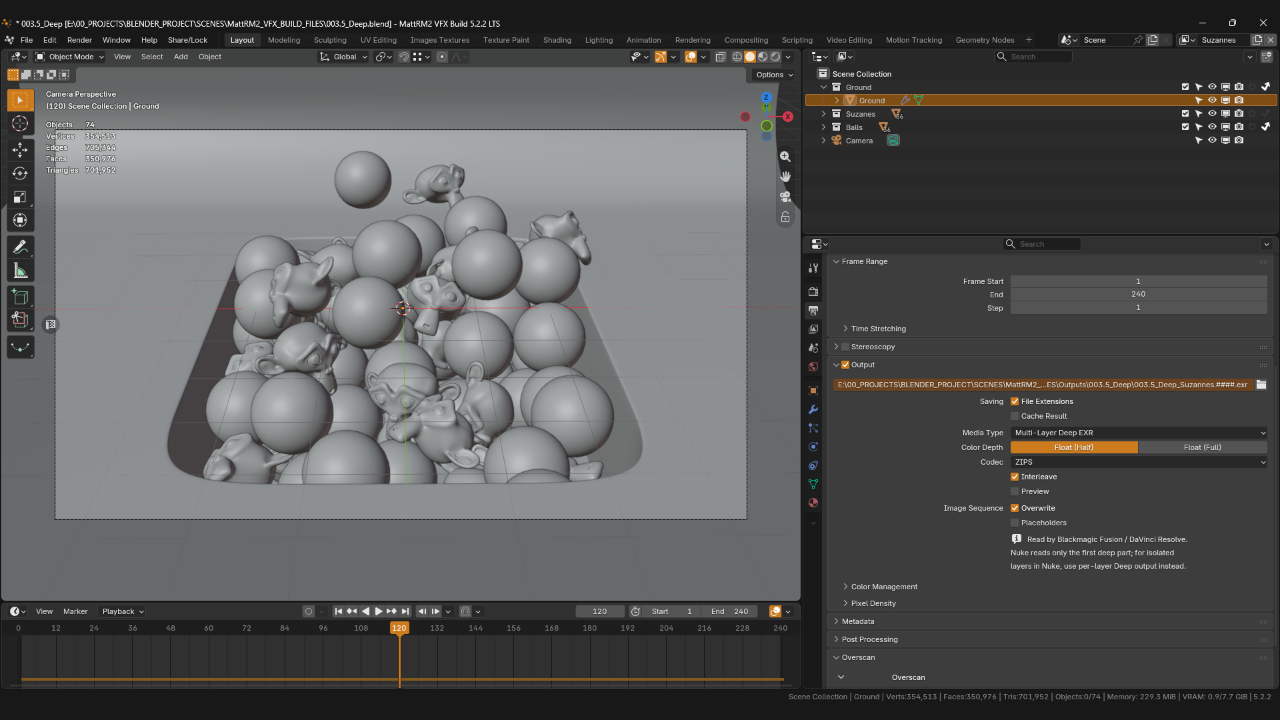
Deep EXR from Cycles. One fragment per surface hit and per volume step, each with its own Z and ZBack, flattening back to the beauty pixel for pixel. It reads as deep in Nuke, Fusion and DaVinci Resolve. Volumes carry the light they receive from the rest of the scene. CPU, CUDA and OptiX.
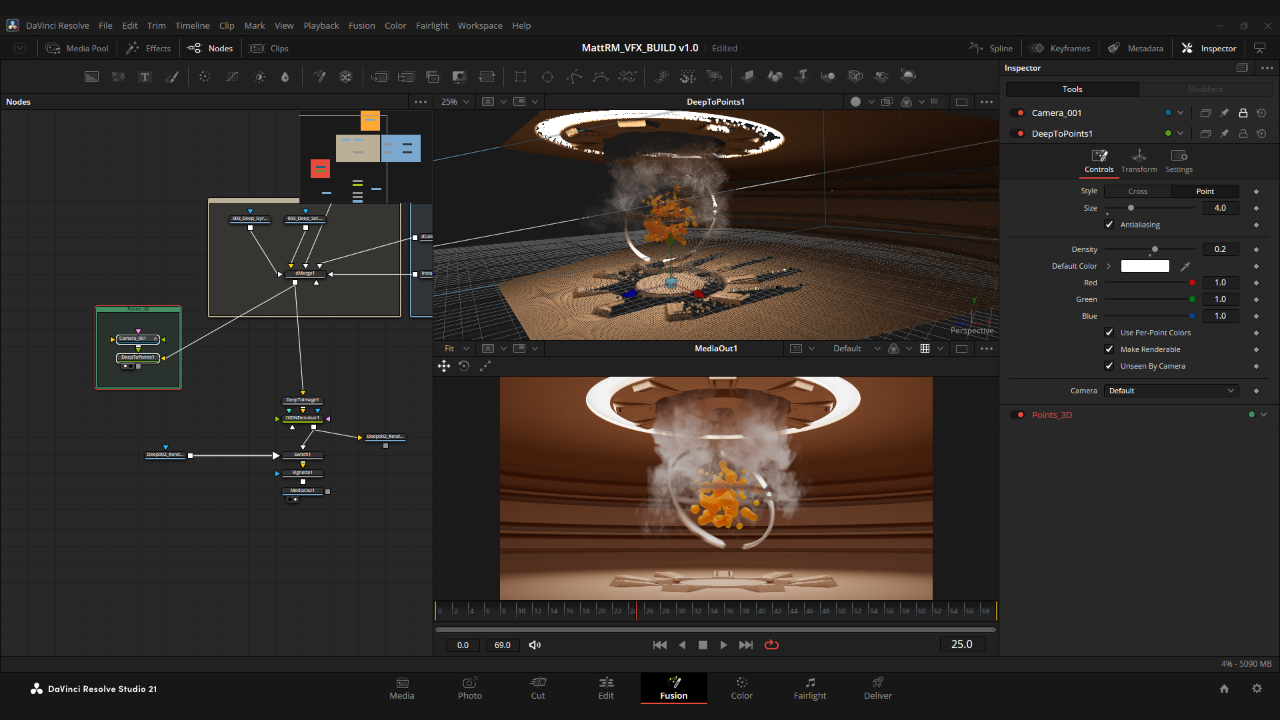
A Z Depth that understands volumes. It takes the nearer of the surface and the volume, with Near / Far / Normalize per view layer, and it no longer breathes across an animation.

View Layer Overrides. Right-click any property → Add Layer Override. That includes the output path and the frame range, so one render job can write several independent file sequences.
Curves Lofting. A loft node for Geometry Nodes — linear or Catmull-Rom, subdivisions, closed lofts, and a Collection input.

Environment variables in every file path. Render outputs, textures, libraries, caches — and Preferences too. $MY_PROJECT, ${SHOT_DIR} and %PIPELINE_ROOT% all work. They are stored as written and expanded at resolution time, so a .blend moves between workstations and render nodes without a single repath.
Qt tool panels, outside Blender’s process. A PySide6 bridge that runs rich interfaces in their own process — no freezes, always on top, live two-way sync on Blender data. It ships and auto-loads, with a Deep EXR control panel included as a working demo.
An Alembic camera export that resolves the film back against the render aspect, so cameras land in other applications with the framing they had in Blender.
Plus a batch of fixes — deep frames dropped mid-sequence, Persistent Data silently disabling deep, a texture-cache defect on CPU + GPU rendering, and view layer overrides not refreshing on a layer switch. Full list in the release notes.
An Alembic camera export that resolves the film back against the render aspect, so cameras land in other applications with the framing they had in Blender.
Try it
The release includes a demo scene: one Render Animation writes five EXR sequences — three deep, two flat multi-layer.
- Download: https://github.com/MattRM2/MattRM2_VFX_Build/releases/latest
- Documentation: a 27-page PDF on the release page, plus a 25-page guide to writing Qt / PySide6 tool panels
- Source: the complete source is attached to every release, with build instructions
Windows x64 only for now. It’s portable and won’t touch an existing Blender install.
Known limits
Deep EXR needs a fixed sample count — set Noise Threshold to 0. CPU and GPU deep are not bit-identical. Fusion and Resolve read Multi-Layer Deep EXR in full; for Nuke, give each view layer its own output path. The full list is in the PDF.
Feedback
Questions and bug reports are very welcome here, or as a GitHub issue with a .blend and your GPU. It genuinely shapes what gets built next.
Unofficial build under the GNU GPL v3. “Blender” is a trademark of the Blender Foundation; this project is not affiliated with or endorsed by it.