Man what are some of you guys on about? LOL
I already explained this above, but I challenge you to give me one other example where asking “which sphere is larger” would be talking about mass rather than size.
Not even at the speed of light can you do this. Take Mars for example. It travels its entire diameter in 4 minutes and 41 seconds. But it takes light 3-22 minutes to reach Mars from Earth. So even at its closest approach you would have to lead the planet by 2 minutes and 20 seconds to land at its center. EXCEPT, this brings in the even more obvious problem with your statement which is that you can’t just go to a planet and land on it. You have to carefully align your approach into an orbit around the planet first so you can slow down and line everything up, otherwise you’ll be going way to fast and crash into the planet.
There are also permanently dark sections in some of the craters, but keep in mind that is not a “side.” That’s purely a section.
No no no and more no. You can breathe air safely. You would likely die instantly breathing most rocket exhaust. Rockets use things like methane or kerosene in their fuels, not to mention the temperature. You’re not breathing that.
Um… notice the Titius-Bode law is not 1+1+1+1+1 or any other linear formula, so it’s therefore not even.
Right right… so if I look at a photo of you from when you were 5 then I’m looking at how you are right now because that’s how frame of reference works or whatever?
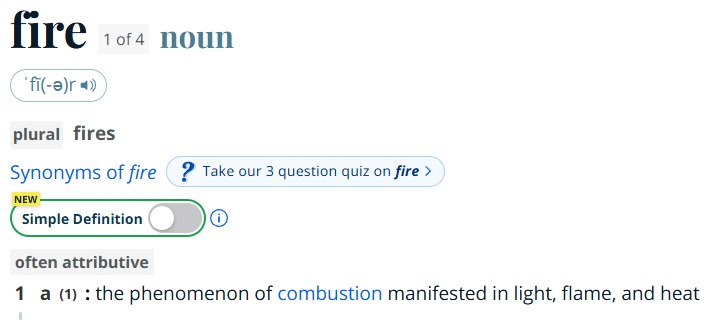
Well, let’s look at the dictionary definition to see what I could’ve possibly meant by “fire.”
Hmmm pretty sure I wrote the survey in English so would’ve been asking for the official English name. But if yours was in Latin for some reason, be sure to let me know.
Magnitude ≠ size. Arc size/visual size is a valid point which someone else also pointed out, but I feel like it’s pretty obvious that I’m asking about physical size rather than visual size (since they’re visually just sizeless dots).
Also, not sure what you mean by “in grand scheme of things are similar sizes.” The size of one star relative to another is the exact same regardless of the “grandness of the scheme.” I mean, yes, in the grand scheme of things all stars are small, but that doesn’t mean a human is roughly the same size as a grain of sand now does it?
You seem to have forgotten the fact that EVERY star you can see with your naked eye is in the Milky Way galaxy, including very visible things like the Sun, the Moon, and the literal Earth. Plus, even in extremely light polluted areas, you can still see really bright stars like Sirius which are also part of the Milky Way.
Anyway, thanks for taking the survey even if you didn’t enjoy it very well.