I think the problem with 2D, is that there’s not even a sort of standard way in which artists and their software is manipulating the imagery.
They might use IK constraint within the software, connecting each limb to the body. They might paint it framed by frame, they might drag the curves around and keyframe the point positions, or the shapes, or the layer positions. They might use expressions (drivers).
And every 2-D animation software does not have all the same feature set. Even in Adobe, key framing in flash and key framing in AE are nothing alike. Key framing in Premier is nothing like after effects.
Blender has grease pencil and 2D tools, but not like any of the above and doesn’t even have layer transfers in the first place. And blender is still trying to figure out how to make a hole in a filled shape.
(For the record, I never used animate so maybe it’s more similar than flash was.)
The new fill functionality that allows for holes has been already added to the 5.1 builds, it’s not very user friendly ATM but better tools and a boolean eraser that takes advantage of it it’s supposed to come in later
It’s pretty much the same, they just renamed the program and added a few things here and there, but in general it’s still the same as Flash.
Hehehe I get it, I started my animation journey with Flash when I was in college, around 2004 or so, and at the time there was nothing like it, and it was very fast compared to other 2d animation programs.
But as time went by it was apparent that Adobe wasn’t very interested in improving the software, even the bones and rigging tools (the only interesting new feature I can remember being added) were left in a unfinished state, and the current version of the program still has bugs that date back 10 years or so…
Well, there is some kind of a common ground between animation software.
First you have traditional / frame by frame workflow, and then you have puppet/rig workflow.
From there of course you have bitmap based animation and vector based animation, and a happy mix of all those…
Probably exporting traditional vector based animation could be doable…
Probably exporting puppet vector based animation to some extent also.
I think also that having some I/O format could enforce some common practice, but it’s also what is great about 2D animation is that it’s free in the way you approach things. If the rig lack a face expression in a particular shot, you just torn the rig apart and add the needed drawing to that particular shot.
Anyway, in 3D we definitely need to go from one software to another, to sculpt in ZBrush, animate in Maya, model in blender, FX in houdini render in unreal stuff like that…
Now why we would need to go from a 2D software to another ? Maybe for games ? Having a format just for the time software shut down seems a bit exaggerated…
And if you need to switch from one software to another, it’s better to do that between 2 seasons. And probably that would mean re-doing all the rigs.
I don’t see an exporter that would give you the exact same control.
But it’s the same in 3D you don’t just export a rig from Maya to Blender and work with it… You generally redo it in blender to have something that works…
Creative cloud. The first time I heard this phrase, I knew this is going to be a problem. You see, that’s where these subscription models continually lead.
OK. That’s exactly what I thought as well the first time I heard about it. And so I decided not to use it, because it sounds like a problem. And so I don’t use it. So if you know it’s going to lead to problems and you still use it… Who’s fault is that?..
Put your files in the cloud with some subscription? No, thanks. That’s it, no problem.
I think it’s not just a matter of “export the animation”, but also “import that animation, and convert whatever and however it was animated into how our 2nd software animates it.”
Not a minor task. And one that I suspect most of the 2D softwares aren’t that interested in creating, as they’d rather spend their hours coding features that improve their own software’s native abilities.
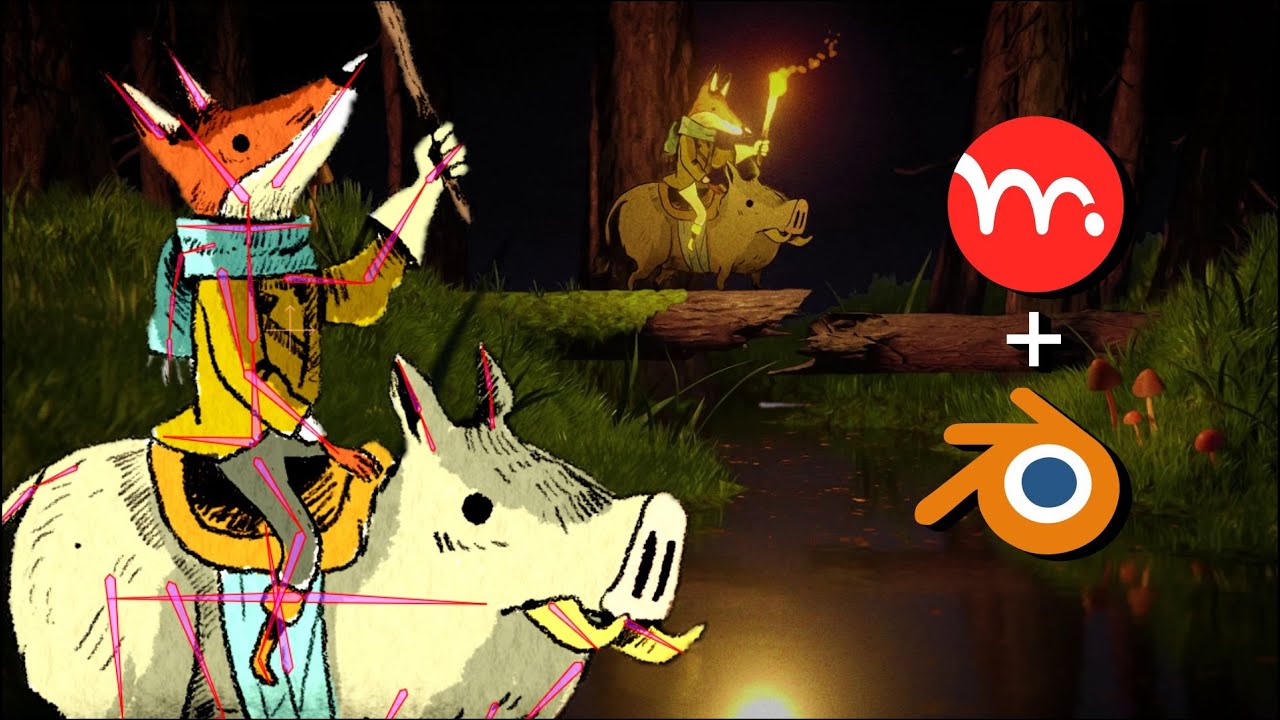
I think Moho is going the in right direction with I/O with the decision of using GLTF as an intermediate format, because you can use it in game engines or other 3d software.
Of course, exporting frame by frame and vector animation that’s still editable in another software is another beast, but at least for puppet like rigs this is a wise choice IMO
I think vector data could be easy to import, we already have .svg , so it’s possible to make something similar to this for some animation software.
But yeah definitely just like when you import an SVG into blender you don’t always get complete support.
But just like in 3D when doing I/O if you don’t put a bit of though beforehand it’s unlikely to work right away.
Very interesting example ! It’s pretty fun to see how Moho is close to a 3D software behind the scene. I would be super interested to have a look at that gltf file to see what is going on and how things transfers from one software to another.
At least it’s a bit different from exporting from one 2D animation to another like say you start animation in Animate and you want to move on to Harmony to do the same task.
Here it’s like doing design then do Photoshop → Moho to do the rig and animation, then Moho → blender to do the render… Which is simpler and makes more sense.
But since you don’t have to tweak that animation in blender and just add stuff on top of it, it’s somewhat easier !
The cultures in the 2D animation communities ,that I have spent time in, seems to indicate that there is very little demand for any sort of “universal file format” for moving project assets between different 2D animation software ecosystems.
However, as expected, many of the more popular 2D puppet animation programs all have some built-in support for native formats from the major 2d bitmap and vector editing softwares such as Adobe, canva/Affinity, etc to help facilitate better automation of creating the actual characters that are later to be puppet rigged.
Puppet rigged 2D animation programs ,in my mind, still have many severe limitations, The major one being the difficulty in performing Z axis Depth camera moves/rotations .
This is why the most popular anime productions coming out of Japan are created with traditional hand-drawn 2D animation applications such as clip studio paint.
And in Europe TV paint.
Clip studio paint is also very popular with comic book and graphic novel artists, Because of the comic line filters that it has
in addition to the many brushes and layer compositing modes that are in some ways more complex than what you would find in something like photoshop.
I used clip studio paint to add more of a traditional comic book style line art layer to my 2D starter images for recent animated series I produced based on the HALO video game franchise deep lore.
I don’t think this movie by Adobe will have much of an impact on any but a few studios, definitely not hobbyists, but I do know of an Animate-based studio that is, to put it lightly, in crisis mode right now. Moving their assets to another software in the middle of active production could genuinely be impossible, they might not make it. An interchange format would surely help
If I was in charge of managing a 2D animation pipeline at work I’d definitely be in panic mode, even if Adobe promised to keep the program available in maintenance mode, there’s absolutely no reason they won’t pull the same move one year from now. It’s just way too risky to keep a pipeline based on Animate knowing it’s abandonware now.
I’d be already talking to my bosses to start looking into alternatives and begin a slow migration process asap while whatever production is in progress gets finished using the current pipeline.
I actually asked my boss this morning to maybe look into alternatives to After Effects for compositing work hehe, right now I think it’s a good idea to be too cautious with Adobe
The issue of moving characters between 2D animation programs is not so much challenge of the character art itself
because, presumably ,you would have all of your original character designs in the drawing illustration software formats where you created them.
However, as is the case with 3D character meshes,
The challenge would be rigging that Vector, PNG etc art into the native rigging/animation systems of the new 2D animation software.
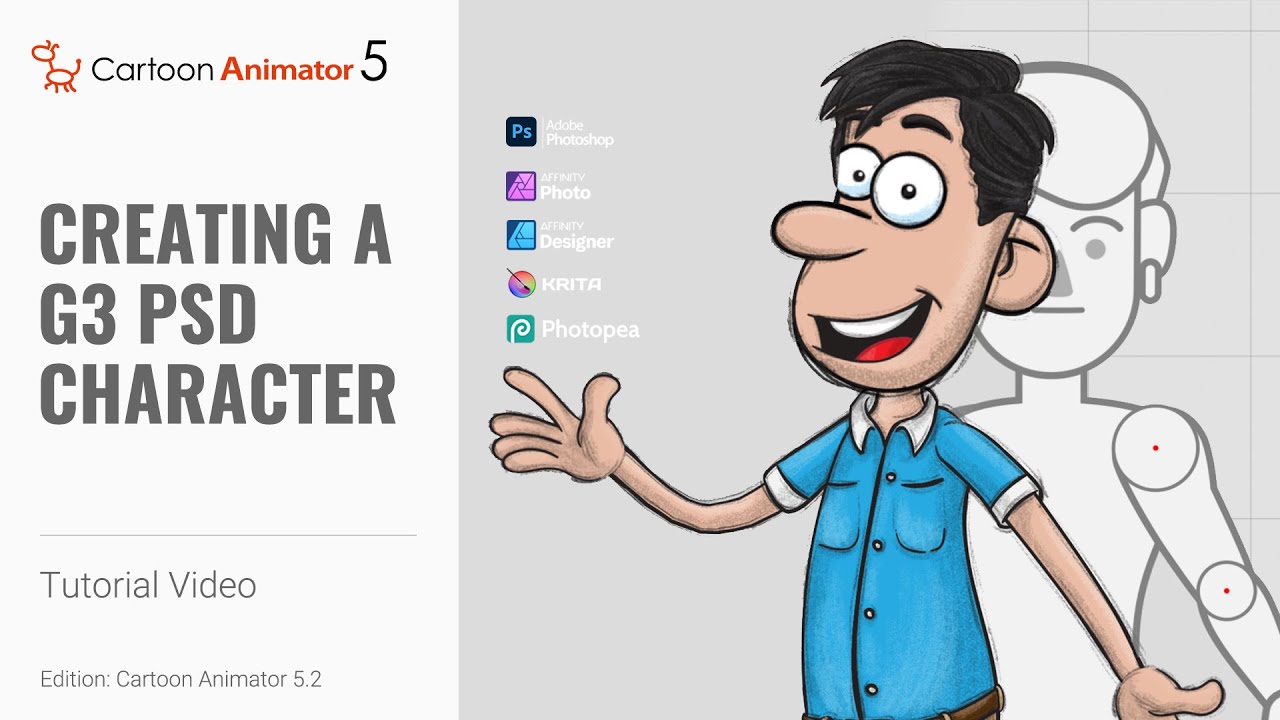
Particularly those 2D softwares with complex facial setups that allow you to do lip sync from imported audio files and even webcam based facial motion capture as offered by Reallusion cartoon animator.
AFAIK none of the 2D softwares have a functional equivalent of something like an auto rig pro.
So yeah, I can certainly understand the initial panic before Adobe
walked back their initial announcement.
And of course, in a purely hand-drawn pipeline like clip studio paint or TV paint rigging is not a factor as it’s just a matter of learning the new drawing and animating tool sets.
Or any software for that matter.
in the video game industry, a title
going into “ maintenance mode” results in immediate mass exodus by the user base.
with animation software you will live in constant fear of things like hardware/OS updates breaking app.
The 2D animation world is full of viable options in 2026.
better to venture outside of your comfort bubble on your timetable before suddenly being kicked out.
Well you’re thinking probably feature film. Most series are using puppets because it’s much easier to industrialize and produce a lot of content.
Obviously it’s limited compared to traditional animation but series tend to be simpler also.
On the first announcement they said that enterprise users have access until 2029, and it seems that lately they’re talking about giving access to the software for a longer period of time. I’m sure that will settle eventually.
At least for these studios !
Well, indeed Fusion is cheap and a good alternative to AE for compositing.
Anyway, I don’t see AE going anywhere. It’s used a lot in animation and TV.
There isn’t a good alternative for 2D motion graphics.
While there are alternatives to photoshop and premiere, so…
But for pure compositing especially if that involves 3D fusion could be really good. I think the main advantage of AE is that you can put shots next to each others in a timeline and maybe work faster like that… But then Fusion + Resolve could probably be better !
As a compositing software especially in the way it handles colorn bit depth, passes… AE is really not good … but it’s used a lot
Yes, I personally prefer Resolve + Fusion for compo, but the people in charge of the compositing are so deep into AE that it’ll take quite a while to make a full migration. Not only they have to learn a new program, but they also have years of material made specifically for AE, plugins, templates, effects, pre-made animations, etc.
I guess that’s also one of the reasons many indie animators were freaking out about Animate suddenly dissapearing, it’s not only about the knowledge of the software, but also about all the assets and stuff you build and save to be re-used over time.
True, that’s why I stick with Blender as my main 3d DCC, I have a lot of issues with it, but I least I own it, and I can have as many versions installed as I need/want without worrying about losing access to the program and the files.
That’s a huge advantage right now.
Yes, I also don’t see AE going anywhere anytime soon because there’s really not a complete alternative to it out there, but we can still be surprised hehe. Especially if it’s true that Adobe wants to double down on the AI development.
Though it depends heavily on the API’s used, applications that do not have to ‘phone home’ and instead get activated through a keycode delivered by email might be slow to degrade and last longer than a similar application containing internet connected DRM.
I still use Genetica for textures as an example of this, after a number of years of Spiral Graphics going defunct and the servers being turned off it remains largely functional even on Windows 11. However, Material Maker may fully replace it at some point since there is a good chance it will be in a pretty good spot by the time Genetica just stops working.


 OK. That’s exactly what I thought as well the first time I heard about it. And so I decided not to use it, because it sounds like a problem. And so I don’t use it.