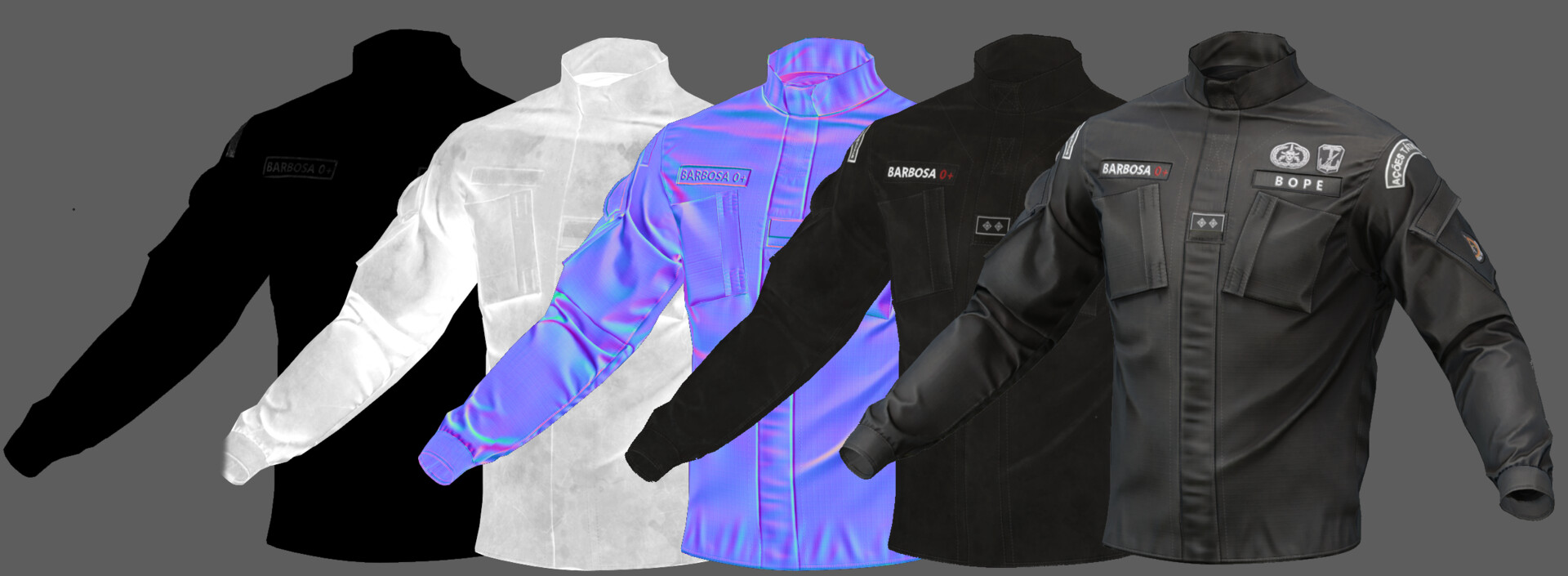
Real-time tactical uniform based on the combat clothing used by operators of BOPE — Batalhão de Operações Policiais Especiais, the special operations unit of the Military Police of Rio de Janeiro, Brazil.
The project focused on reproducing the construction, proportions and material response of tactical clothing while maintaining a workflow suitable for use on a real-time character.

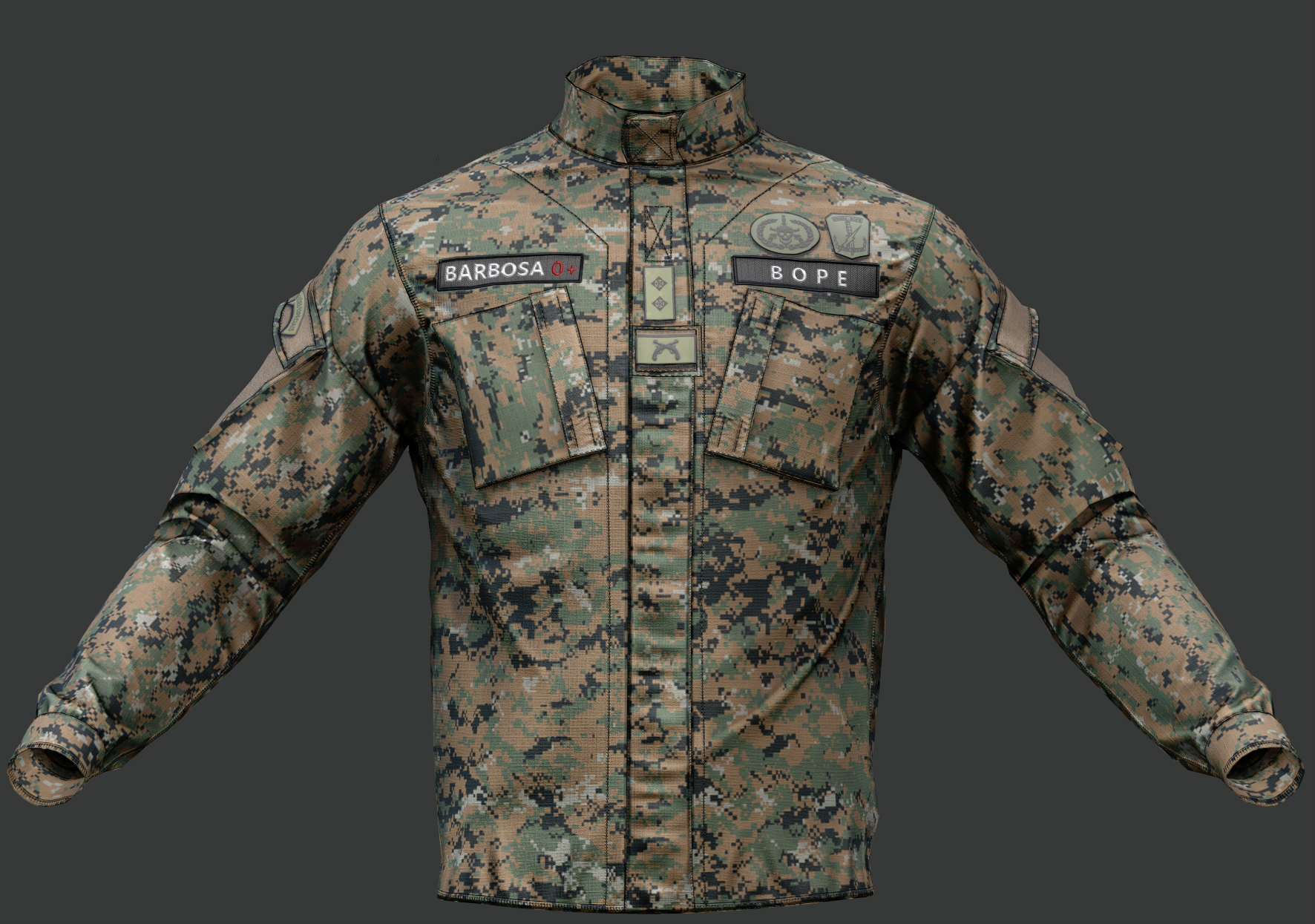
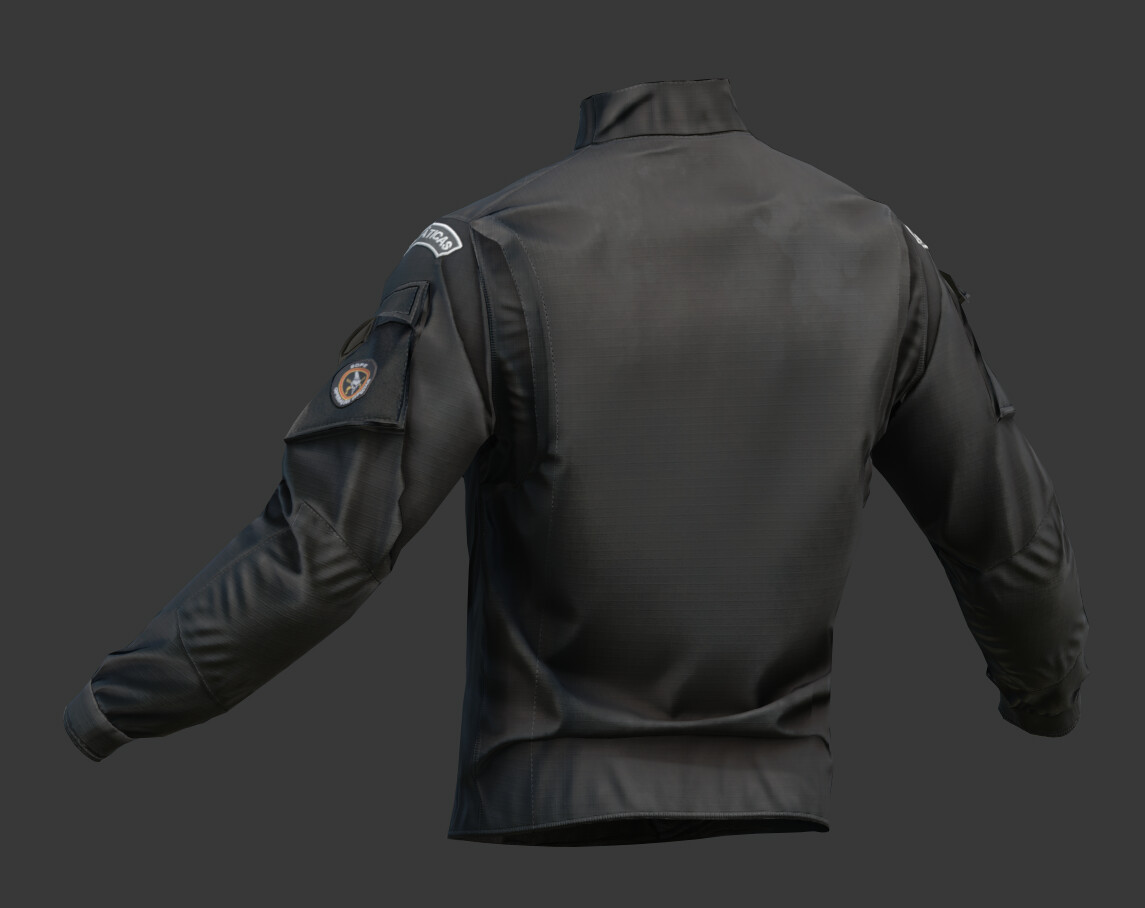
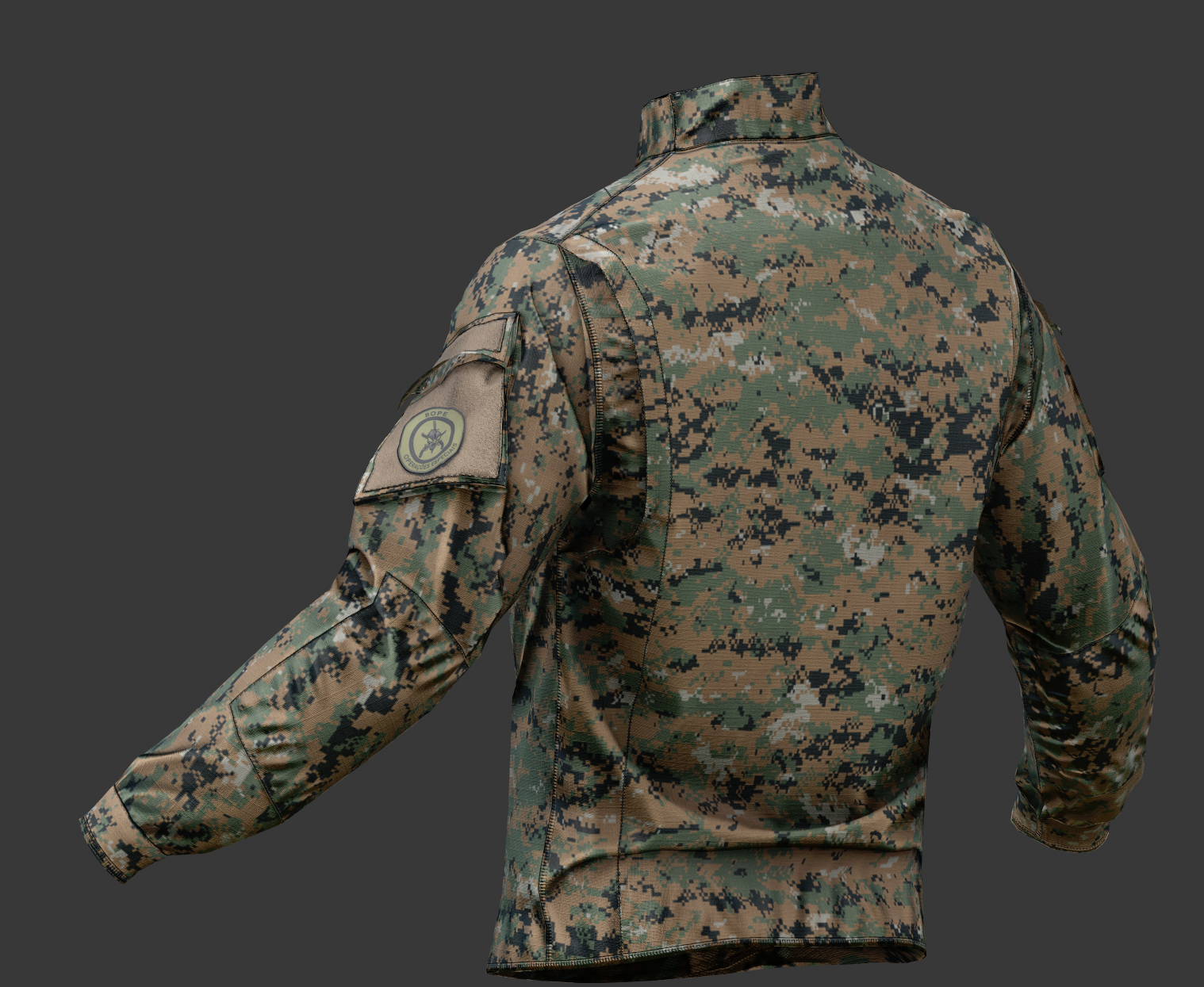

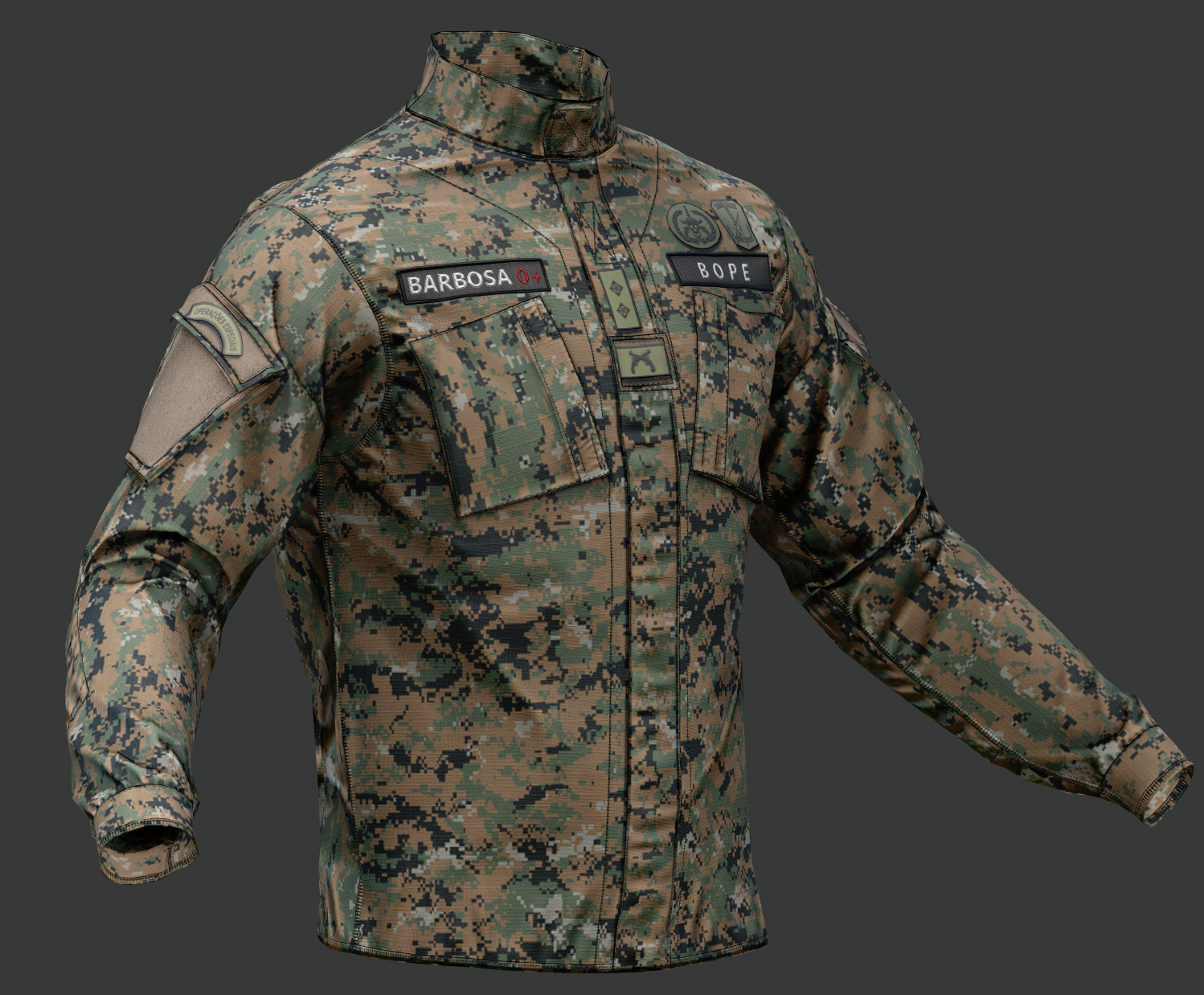
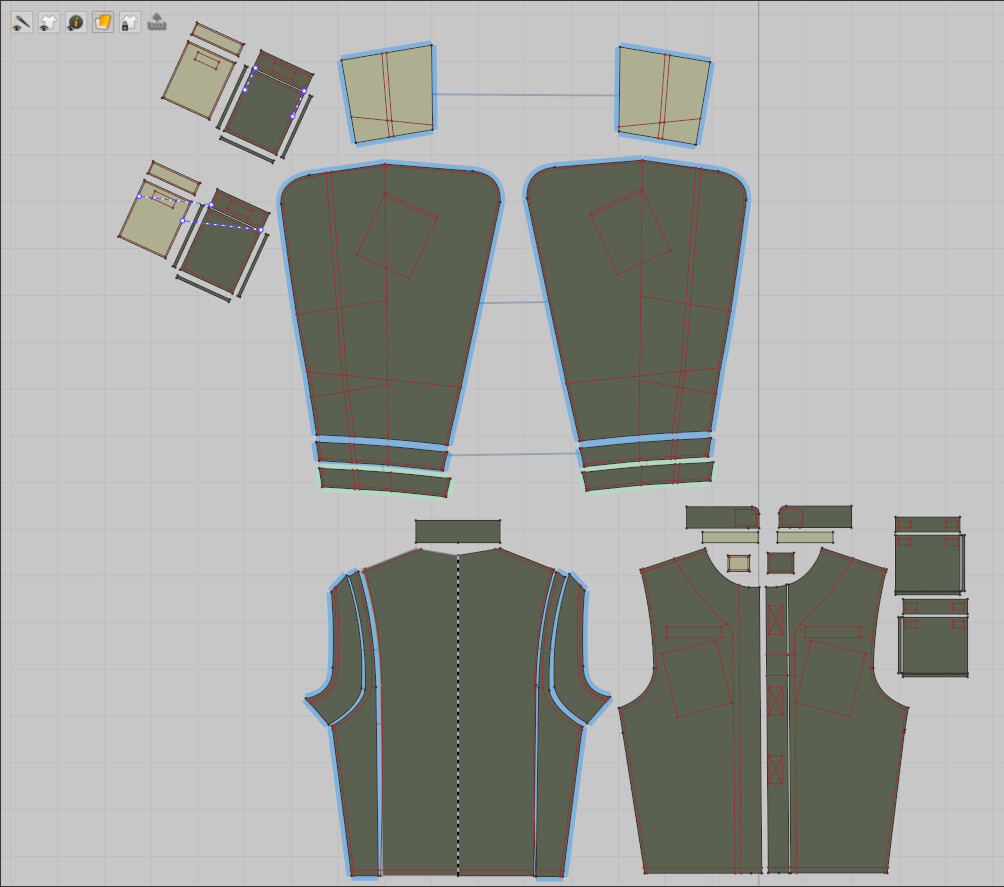
The garment was initially constructed in Marvelous Designer, using physically simulated sewing patterns to establish the overall proportions, seams and natural fabric tension. The resulting geometry was then brought into Blender for cleanup, refinement and additional modeling.
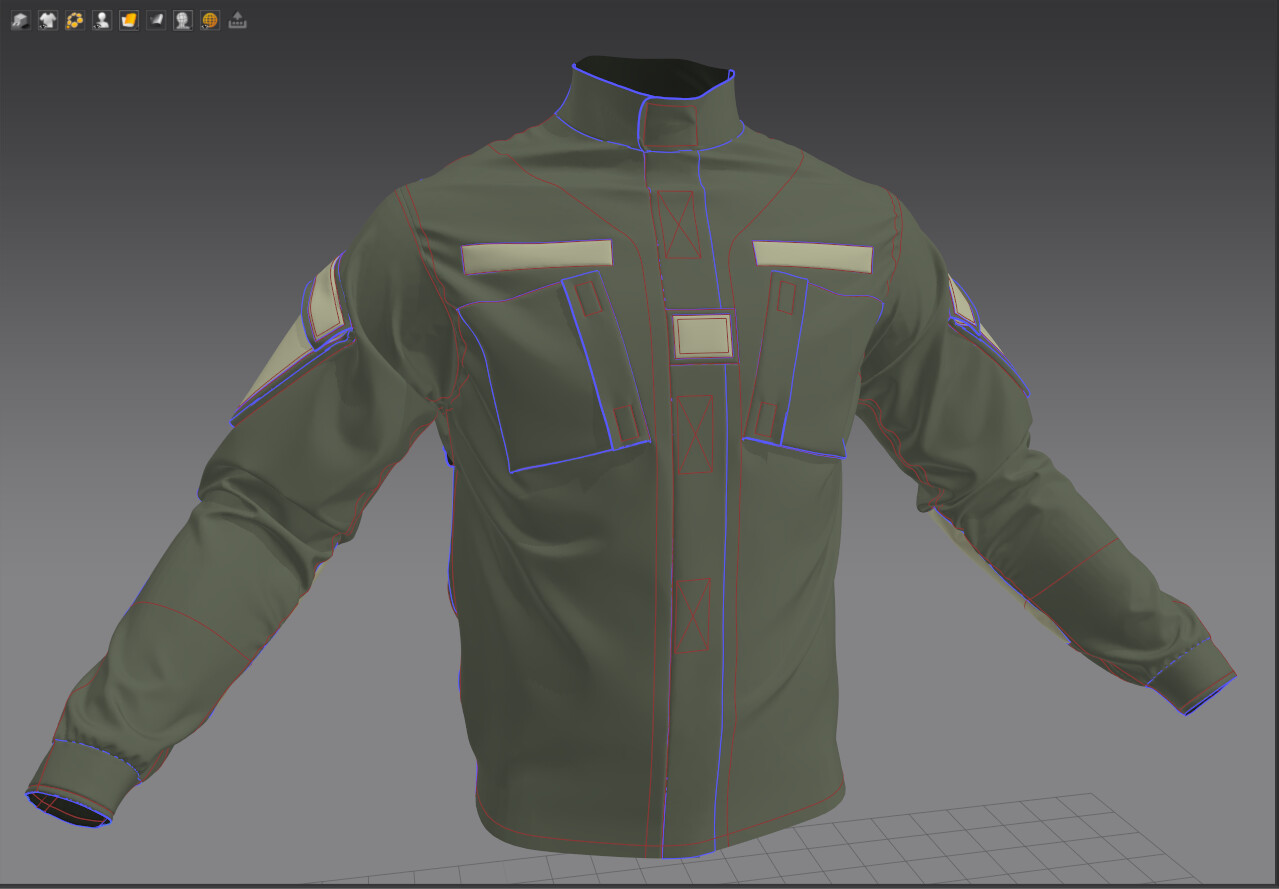
Modeling & Garment Construction
- Pattern-Based Construction: The uniform was built from individual sewing patterns rather than sculpted directly as a single mesh, allowing the main seams and garment structure to follow realistic clothing construction.
- Fabric Simulation: Marvelous Designer was used to establish the primary folds, compression areas and tension generated by the interaction between the garment and the character body.
- Secondary Form Refinement: After simulation, the geometry was refined in Blender to improve the silhouette and correct areas where simulation alone did not provide enough control.
- Layered Clothing Structure: The uniform was developed as separate garment components, preserving the natural overlap and interaction between different pieces instead of merging everything into a single surface.
- Functional Seams & Panels: Construction seams, reinforced areas and panel transitions were incorporated into the model to define the physical structure of the uniform.
- Controlled Fold Distribution: Large and medium-scale folds that affect the silhouette were retained in geometry, while smaller fabric deformation and surface detail were handled through the texture set.
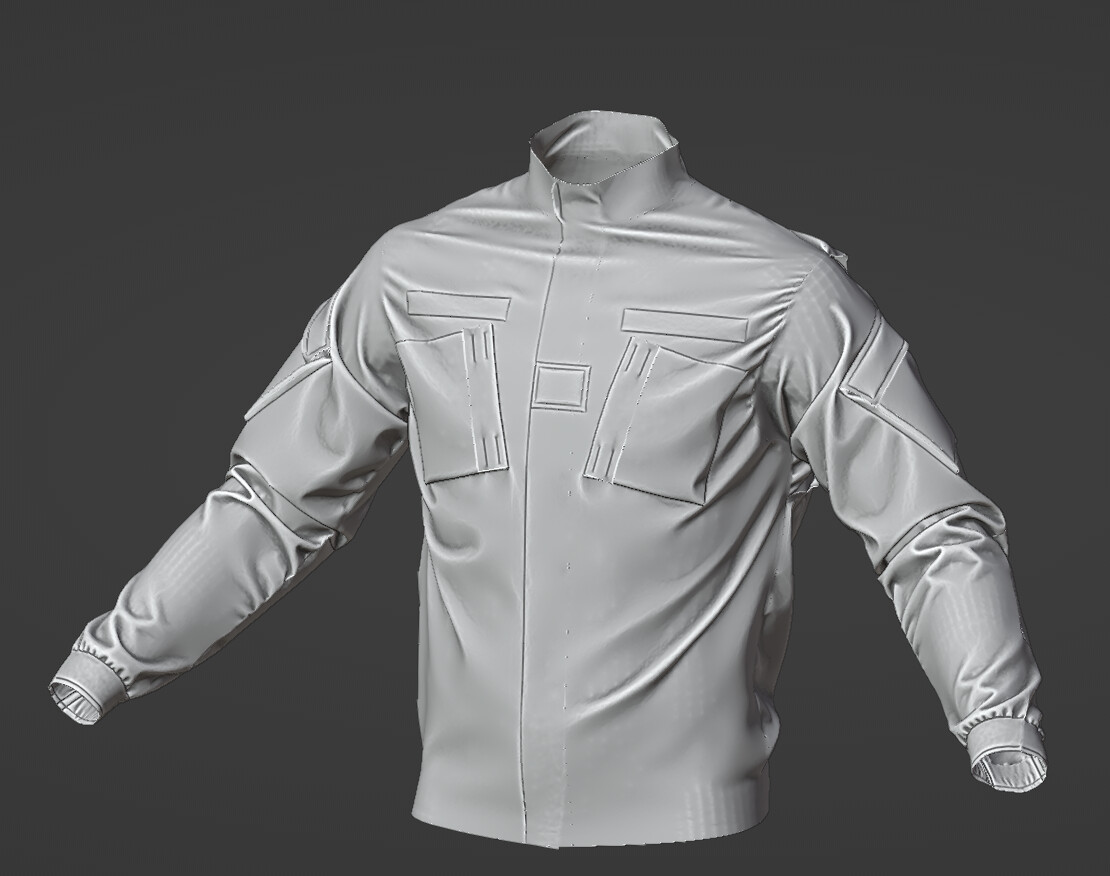
High-Poly & Surface Definition
The high-poly stage was used to preserve the natural cloth deformation generated during simulation while refining areas that required more controlled definition.
Special attention was given to:
- compression around joints;
- fabric accumulation around the waist and sleeves;
- tension between sewn panels;
- transitions between reinforced and flexible fabric areas;
- maintaining readable folds without introducing unnecessary surface noise.
The objective was to keep the clothing believable both at normal character-viewing distance and during closer inspection.
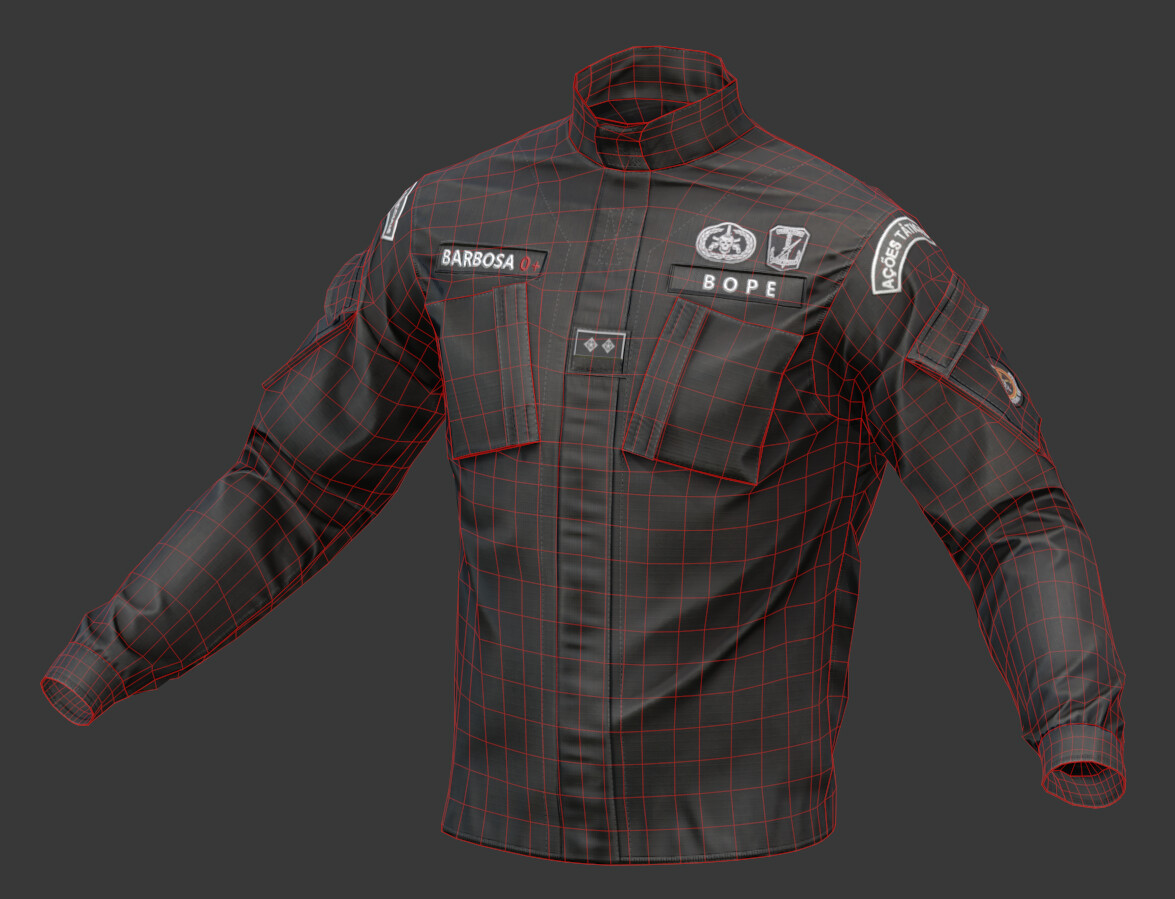
Texturing & Material Definition
The asset was textured using Substance 3D Painter, with additional material preparation performed in Substance 3D Sampler.
The material definition relies not only on color variation but also on differences in roughness, normal response and fabric microstructure to reproduce the behavior of the different textile surfaces.
The texture work includes:
- woven fabric microstructure;
- subtle roughness variation;
- seam and stitching definition;
- reinforced fabric areas;
- localized wear on exposed surfaces;
- BOPE identification patches and uniform markings.
Surface wear was kept restrained in order to preserve the appearance of operational equipment rather than heavily worn or damaged clothing.
Real-Time Workflow
The asset was developed for a real-time character pipeline.
Large and medium-scale folds are represented through geometry and baked information, while high-frequency fabric detail is handled primarily through normal and material maps. This approach preserves the readability of the silhouette while avoiding unnecessary geometric density for details that can be reproduced more efficiently through textures.
The completed uniform serves as the clothing base for a BOPE operator character, with tactical equipment and accessories handled as separate assets.
Software
Blender
Marvelous Designer
Substance 3D Painter
Substance 3D Sampler
The asset is now complete.
Feedback regarding the garment construction, topology, cloth workflow, material definition or real-time optimization is welcome.