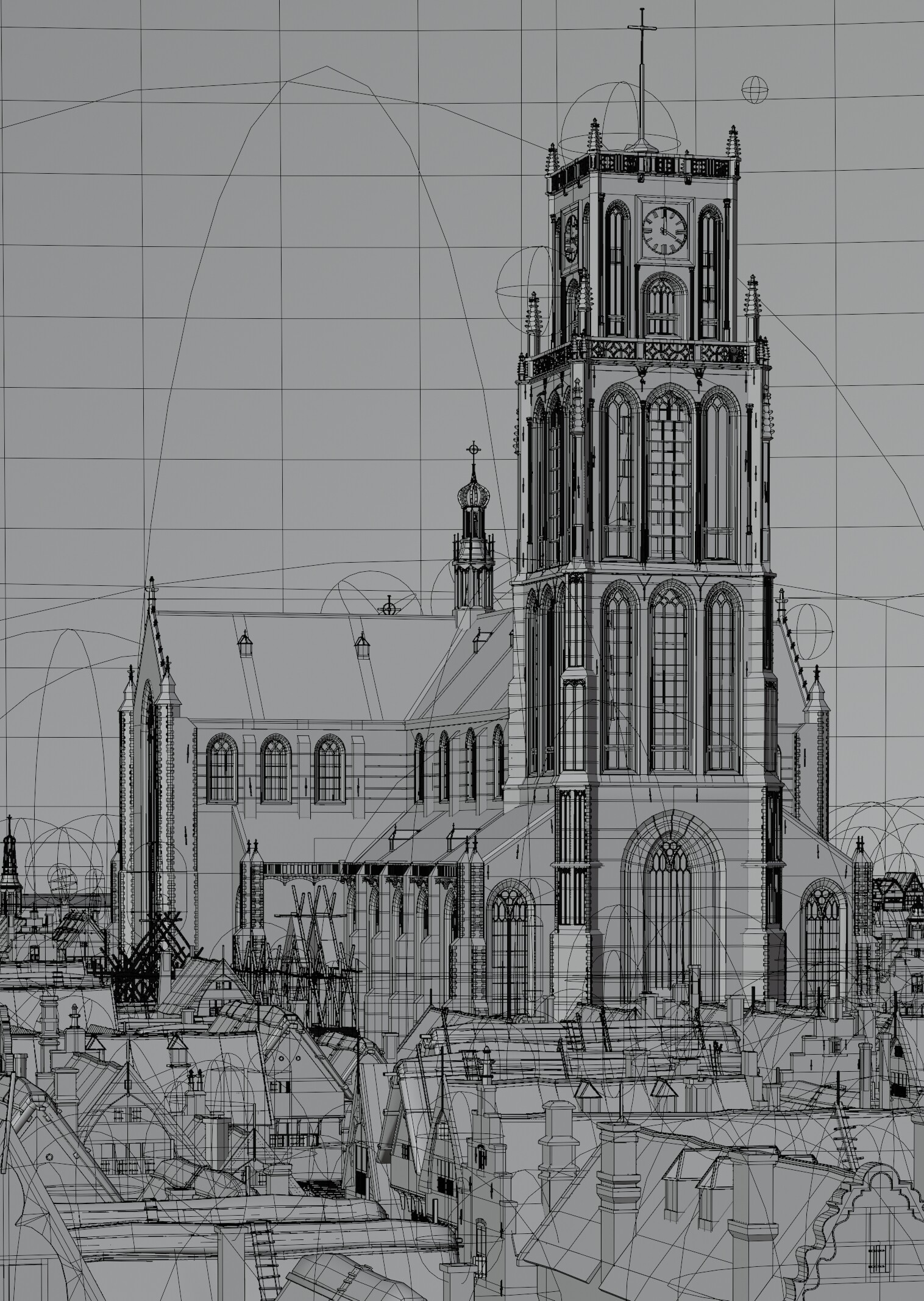
One of three projects I made a couple years ago(release 2.93) on “the wave of Blender hype” to research Blender(especially Cycles and Compositor) and found out the way to integrate it into our pipeline(Maya–Max–MODO, ZBrush, SD–SP–Mari, Keyshot–Octane–MToolbag, Nuke, PS–AE and etc.).
And Maybe even replace everything “tooo expensive” from Maya to Nuke and AE(How “stupid and naive” I was!).
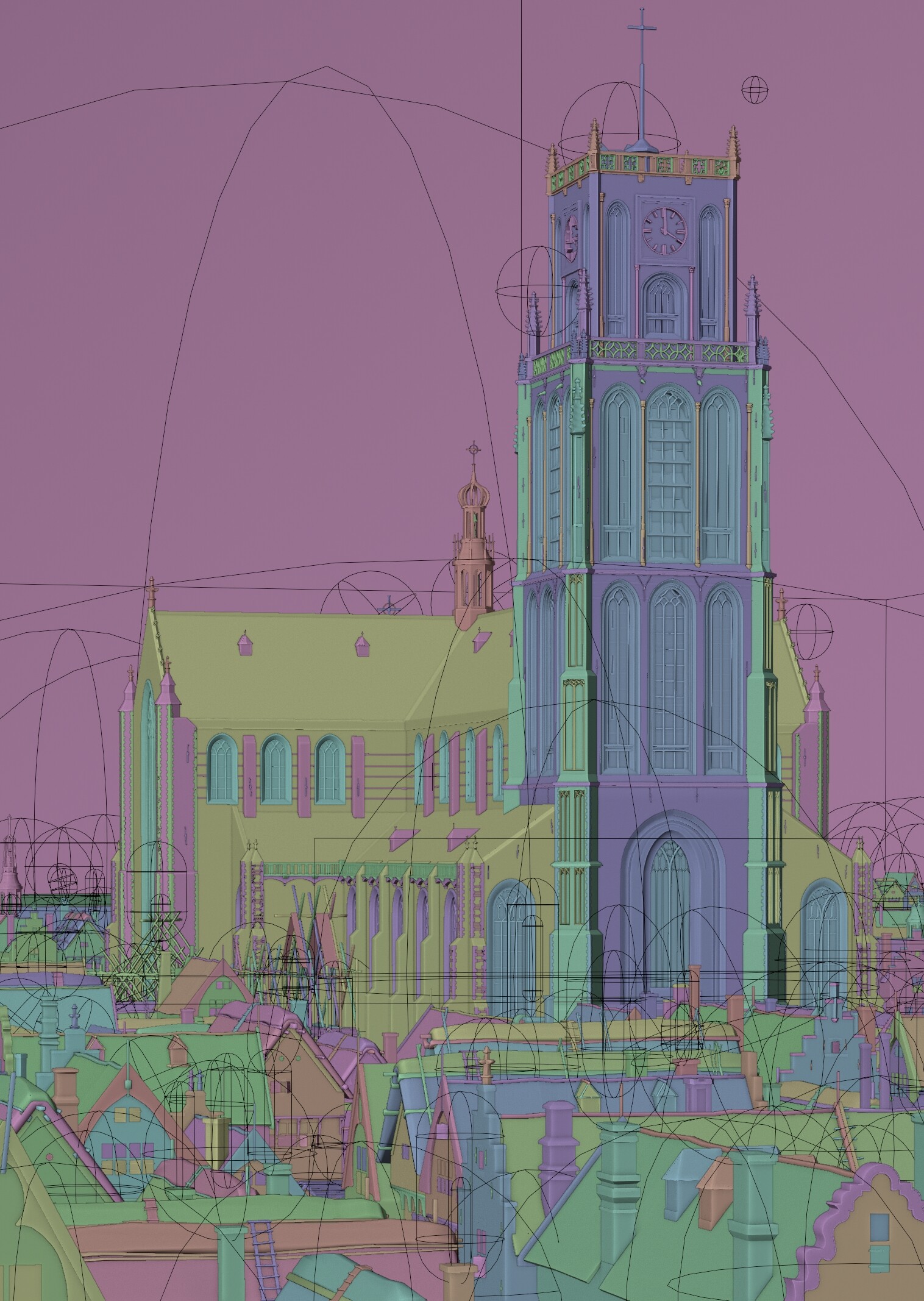
The project was made using “good and old” Standart pipeline(Diffuse, Normal and Specular maps)
All textures are: 256, 512 or 1024 px. Most of the textures was made in SD->SP or PS and than mixed in Blender Shader editor
No PS or AE for postprocessing. All postprocessing(color correction, distortion, film grain, abberation and etc.) was made in Blender Compositor
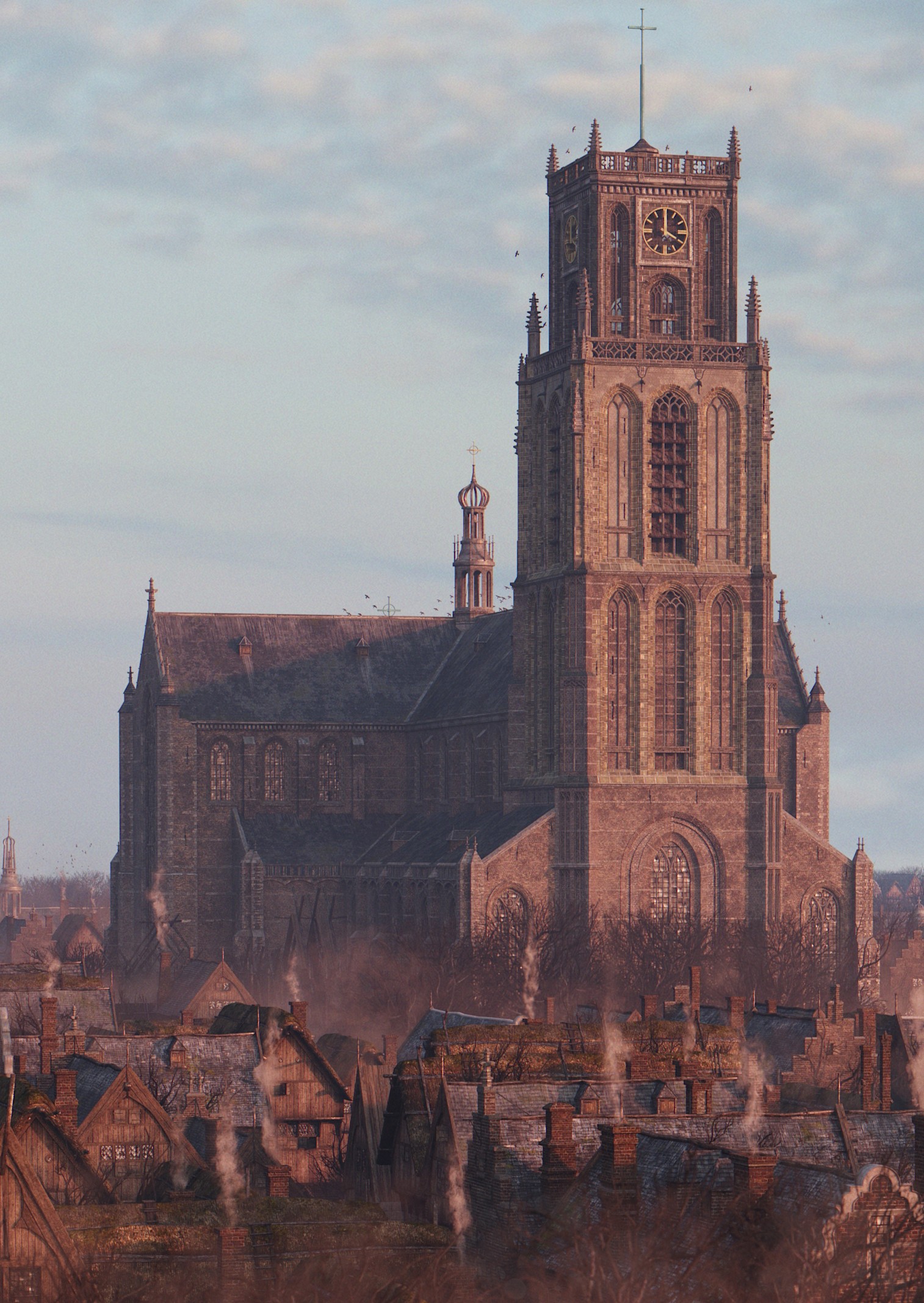
The final image “as it is” from Blender Compositor.
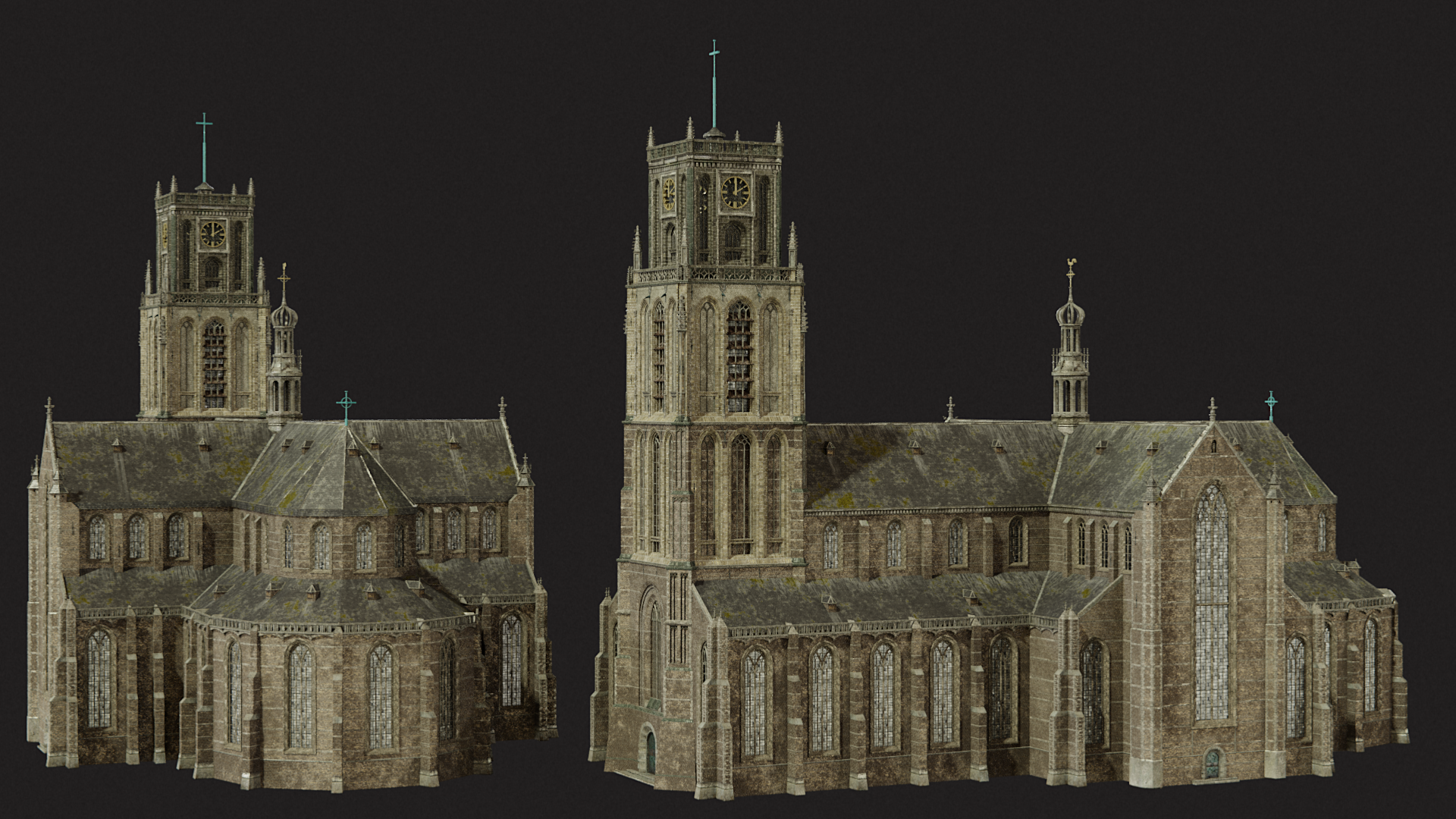
Grote of Sint-Laurenskerk in Rotterdam was taken as a basis(old plan, structure, element: - width, length and height most of the elements). Only Aisles was changed(simplified a bit) in this version. I had at least 5 or 6 variants of Grote of Sint-Laurenskerk(most of them was “lost in time” on my hdd’s), some of them was made more then 15 years ago in XSI/Softimage when I was keen on Gothic Architecture(mostly Brabantine Gothic in The Low Countries). This version was made from scratch in Blender.
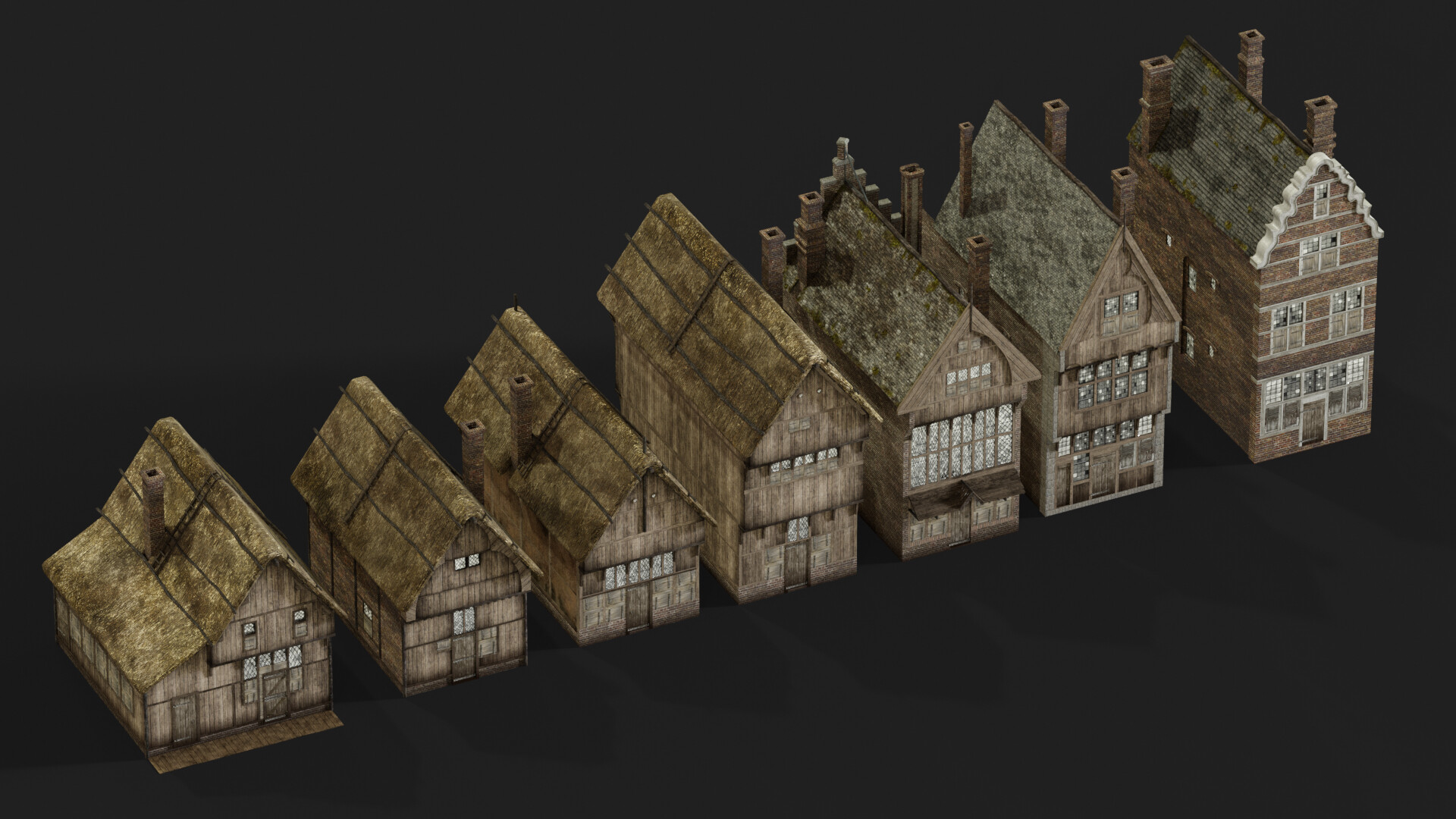
Medieval houses was recreated from Archeon Museum Park(one of the best medieval houses have survived to our days) photos created by my mother many years ago when she was visiting the Netherlands.
Also I used paintings of “Old Masters” to see how Grote of Sint-Laurenskerk was changed through time.
Thank you!
The height of the Cathedral ~77± metres. The distance between the point of view(camera location) and the closest corner of the Cathedral ~300± metres.
I always try to keep everything as close as possible to real sizes.
@RyokoAzuno - Wow this is an amazing image. I got strong Assassins Creed Unity vibes when I fist saw it.
The framing, the tilt shift look and how the small houses somewhat disappear at the bottom of the image really gives the cathedral something grand and superior.
Maya–Max–MODO, ZBrush, SD–SP–Mari, Keyshot–Octane–MToolbag, Nuke, PS–AE and etc.
We have recently changed our workflow from Modo+Vray and Nuke and Photoshop to Blender/Cycles and Resolve. And I could not be happier.
How is Blender integrated in your pipeline now? May I ask at which Studio you are woking?
Thank you! It was a small studio specialized in archiviz and CAD-modelling based in Tokyo and Minsk. The studio doesn’t exist anymore!
I can say that we had to chose between “cheap and free” Blender and “expensive and comfortable” Maya, Max, ZBrush, PS, AE and etc. The last won! It was one of the reason the small studio not exist anymore.
You can create almost everything using only Blender from start to finish, but honestly I’m not sure Blender can compete(even now) with “pAAy for use” specialized softwares like: ZBrush in sculpting, Maya in animation, VRay-Octane-Redshift-Arnold… in rendering and etc.
In my personal projects and freelance work I use Blender for modelling and prototyping(scene assembly), sometimes for rendering(mostly Cycles) and texture mixturing in Shader Editor.
Thank you! It was a small studio specialized in archiviz and CAD-modelling based in Tokyo and Minsk. The studio doesn’t exist anymore!
I can say that we had to chose between “cheap and free” Blender and “expensive and comfortable” Maya, Max, ZBrush, PS, AE and etc. The last won! It was one of the reason the small studio not exist anymore.
You can create almost everything using only Blender from start to finish, but honestly I’m not sure Blender can compete(even now) with “pAAy for use” specialized softwares like: ZBrush in sculpting, Maya in animation, VRay-Octane-Redshift-Arnold… in rendering and etc.
In my personal projects and freelance work I use Blender for modelling and prototyping(scene assembly), sometimes for rendering(mostly Cycles) and texture mixturing in Shader Editor.
Check out the “Behind the Scenes” article for this captivating artwork
In the article, the artist shares his process of designing and texturing Gothic structures in Blender, offering valuable tips on achieving realistic environments inspired by historical architecture.