Hmm i think clusters and the “activate broken” setting are your friends here. You connect your shards with constraints and specify a count of clusters, say 10 or 20. Then enable “activate broken” and some cluster breaking rules like an low angle and percentage about 75-90%. Means if x percent of the connections are broken, the rest will be broken (and activated) in this case, too.
This means further if a couple of clusters break according to the rules, activate broken should also activate nearby constraint partners and clusters relative to the hit shards. You may need to experiment a bit with the breaking values too to get the desired effect.
It may also help to have “longer” connections which are not only neighboring shards, but also shards behind the direct neighbors, in case the activation doesnt propagate as far as desired.
Let me show you an example:
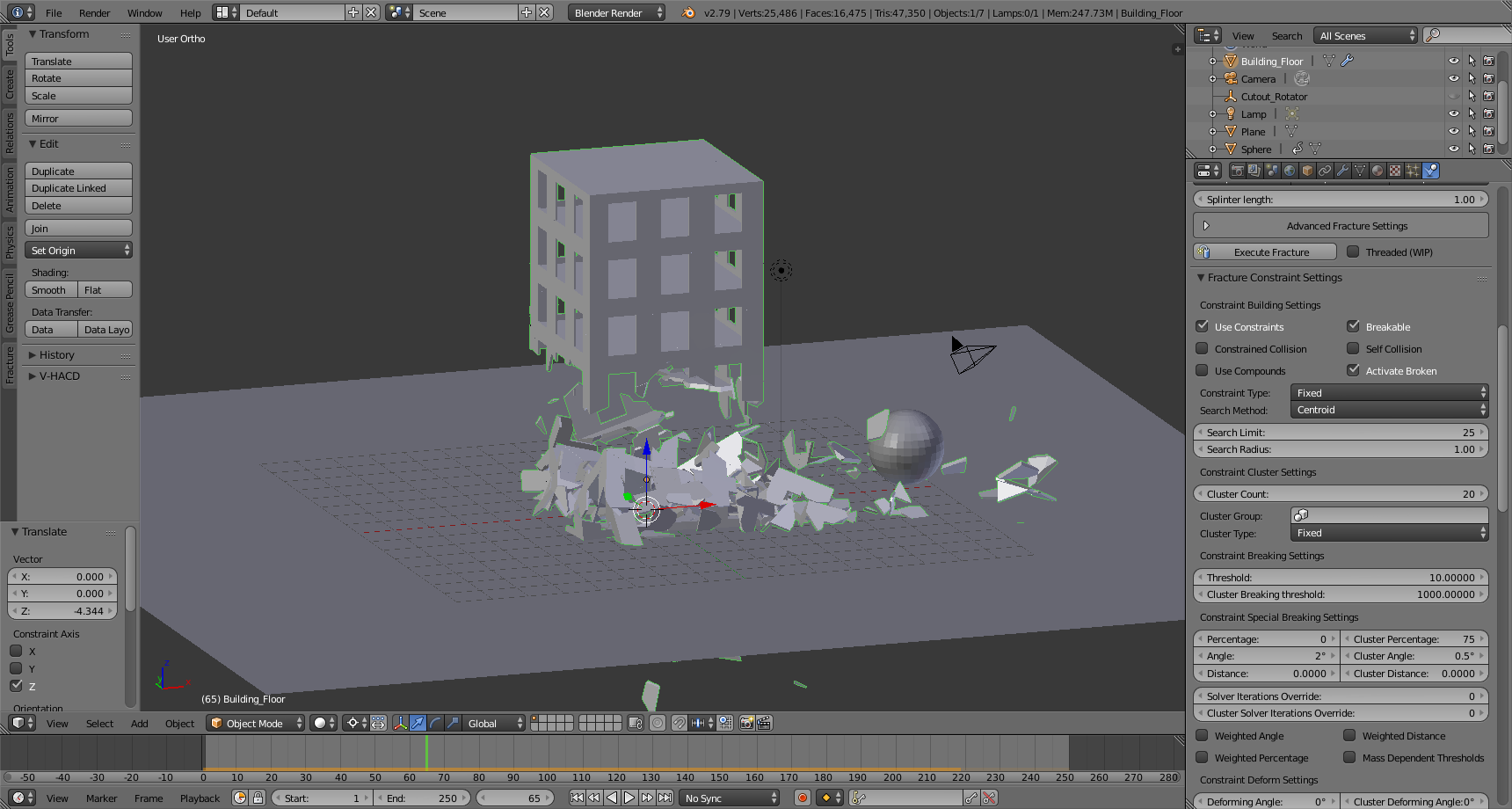
This one had too “short” constraints, as in search radius was only 1. Activation didnt propagate far enough.

This one has longer constraints, but at the same moment it doesnt seem to work as well. But the breaking pattern already looks more convincing… lets wait a couple of more frames…
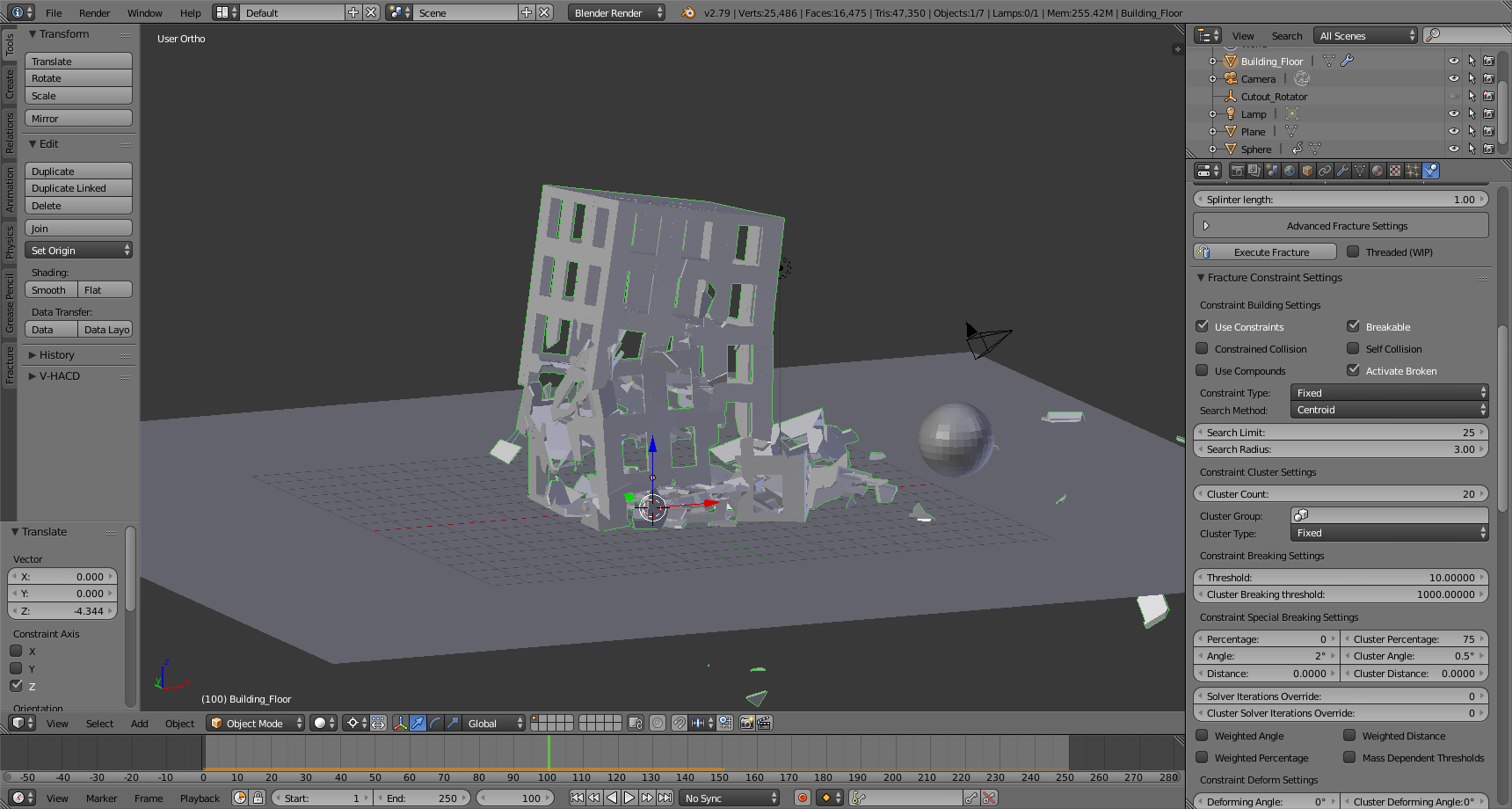
and boom! there you can see activation propagates up all the way to the roof and the floors above the damaged one will come down too.
Example blend: skyscraper1.blend (2.6 MB)