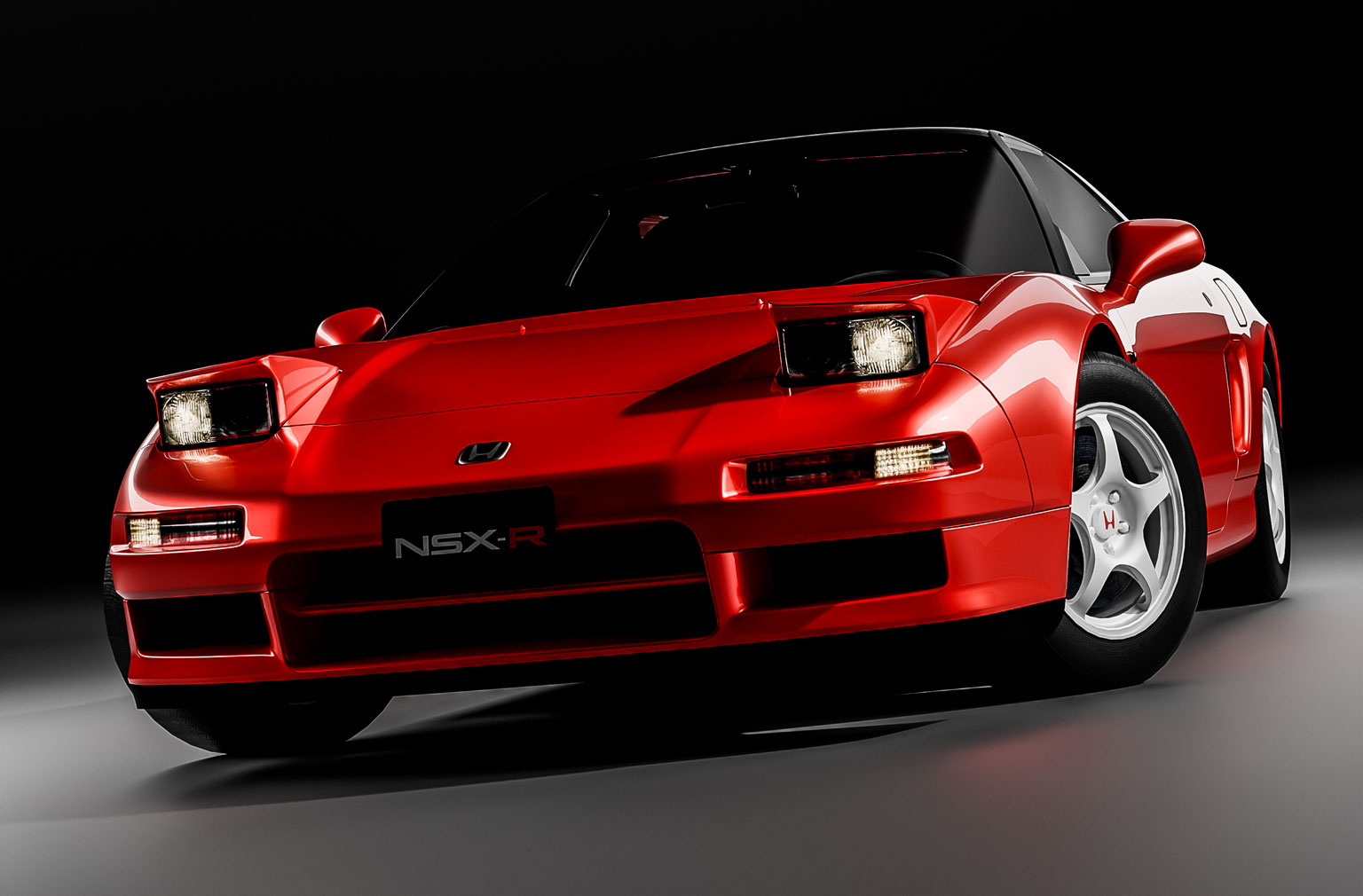
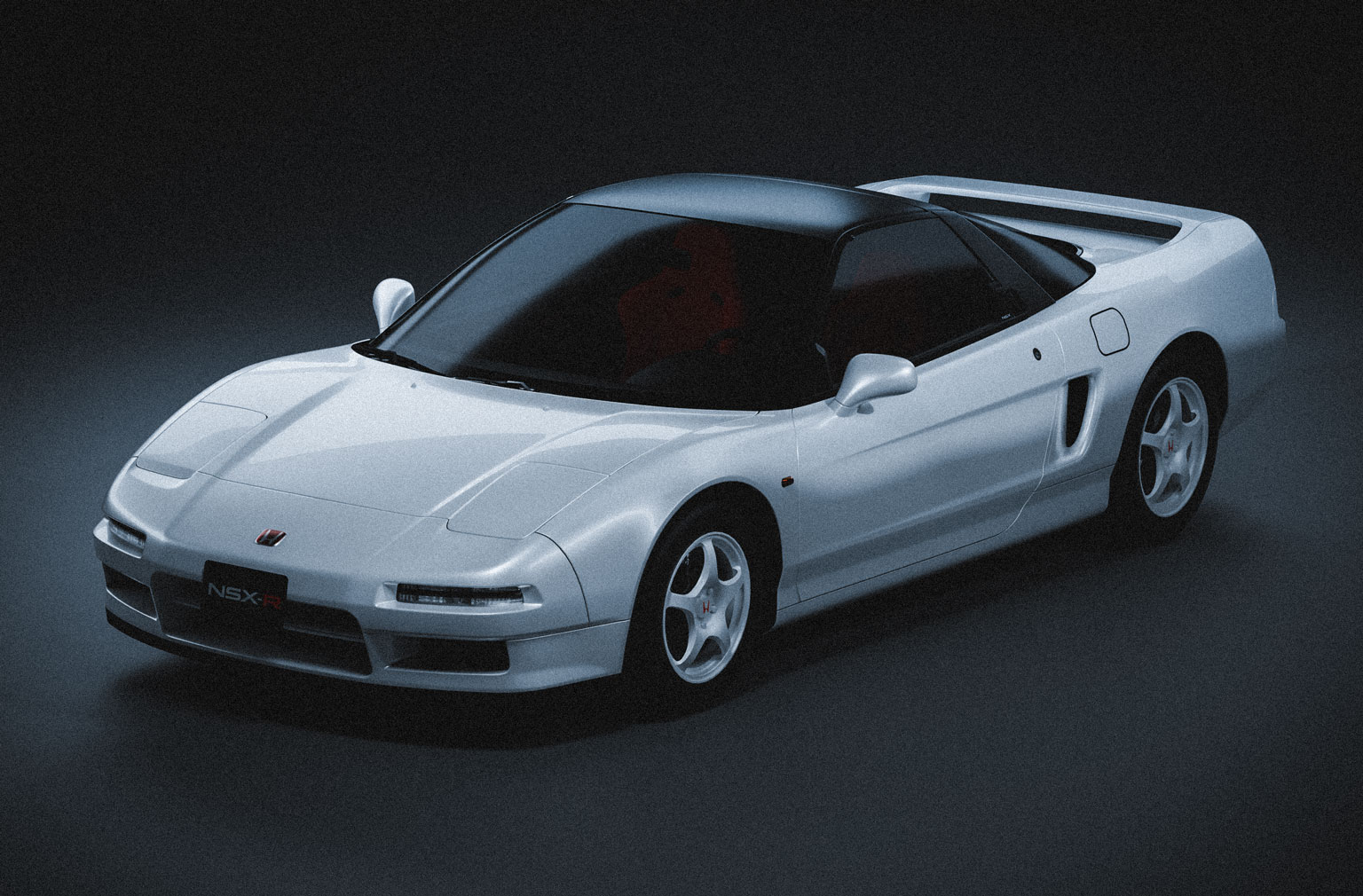
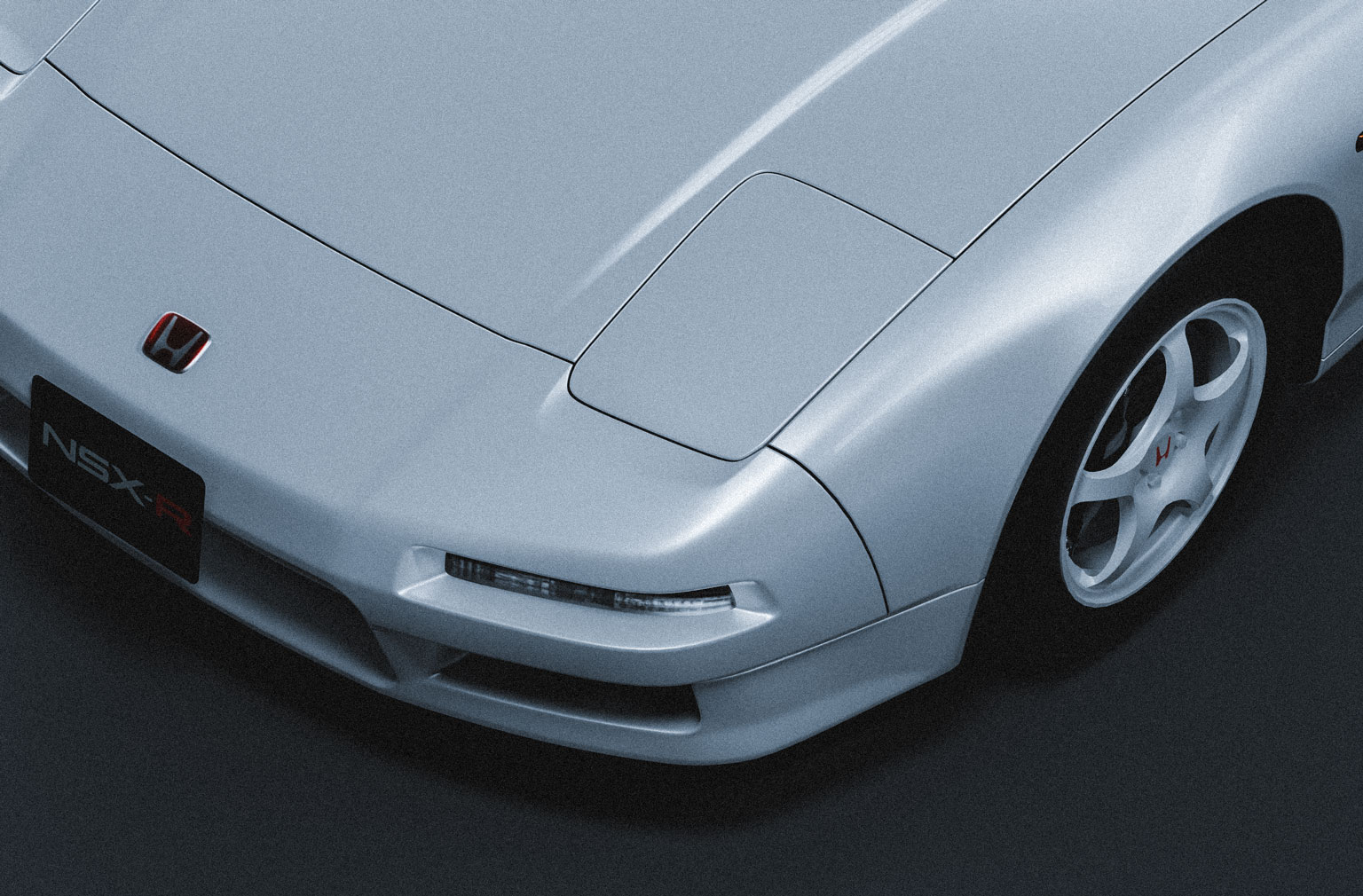
This project is a high-fidelity 3D rendering study of the 1992 Honda NSX, focused on recreating the visual language of 1990s automotive studio photography. The goal was to analyze how light, surface continuity, and material response were handled in pre-digital car advertising, and translate that approach into a modern 3D workflow.
The model was developed with strict attention to proportion and surface accuracy, allowing lighting to define the car’s form rather than exaggerated geometry. All renders were created in Blender 4.5 using the Cycles render engine with a physically based material setup. Large, soft light sources were used to achieve controlled reflections and smooth highlight transitions, inspired by classic studio techniques.
Final color correction and tonal refinement were completed in Adobe Lightroom, following a photographic post-production process. The result is a calm, restrained, and historically informed automotive render that prioritizes realism and design integrity over visual excess.
You can learn more about this project in my portfolio.
You can also watch the short animation here. Long version soon…
As a Gen Xer, this renders bring some memories of what photography looked like in those times, specially in magazines, so very good work indeed. Quite accurate and characteristic not only of car photography, but the studio practices for many different products.
Congratulations! and of course, that’s some nice car.
Thank you, I really appreciate that
That era of photography—especially magazine studio work—was a big reference for me, so hearing it resonates with those memories means a lot. I’m glad the character came through, not just for the car but for the overall studio feel.
And yeah… hard to go wrong with a car like this
I’ve often said that you can receive a professional education in advertising photography from any copy of Vanity Fair magazine, before you reach the table of contents. It’s well worth the time to study, and try to analyze, the shots. Because: “these are the Best.”
I also vividly remember watching a television film-shoot in progress at Death Valley. They polished the car, loaded it onto a flatbed, drove it to the top of the hill, polished it again . . . then drove it past about ten different camera stations mounted in dedicated semi-trailer trucks. Then, they polished it and did it again, and again, and again . . . Since I don’t own(!) a television, I didn’t get to see the final version. But, there couldn’t have been one speck of “dust” on that car!
That’s a fantastic way to put it—and I fully agree. Those magazines are basically masterclasses in visual discipline if you take the time to really read the images, not just look at them.
That Death Valley story is gold. It perfectly illustrates how unnaturally perfect “real” photography actually is at the high end. What I find especially interesting today is the role reversal: photographers spend enormous effort removing every imperfection to reach the ideal image, while CG artists deliberately add dust, scratches, uneven reflections, and micro-flaws just to get back to something that feels real.
Different tools, same obsession with control. Thanks a lot for sharing that memory—it adds great context to the discussion.