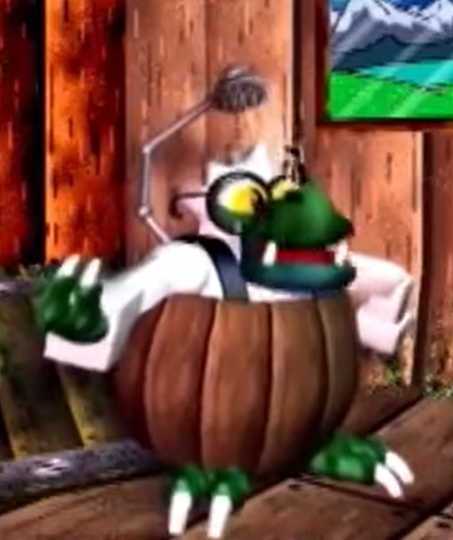
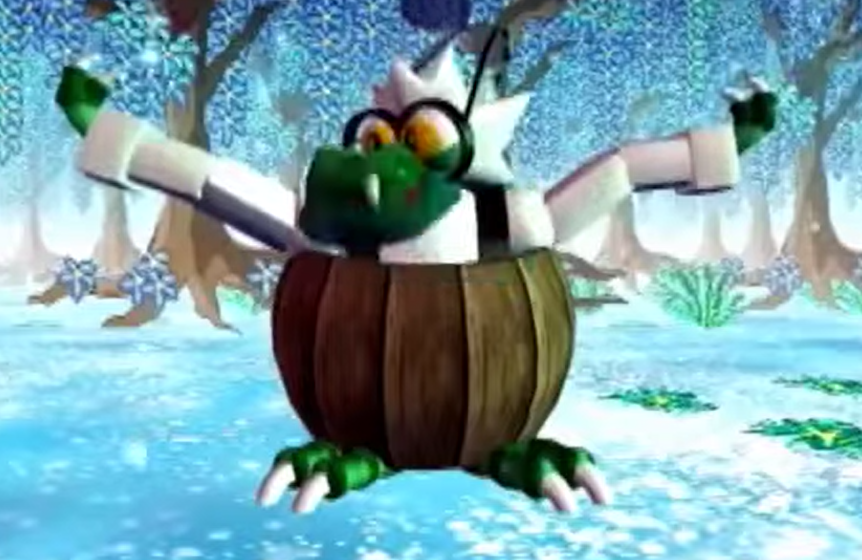
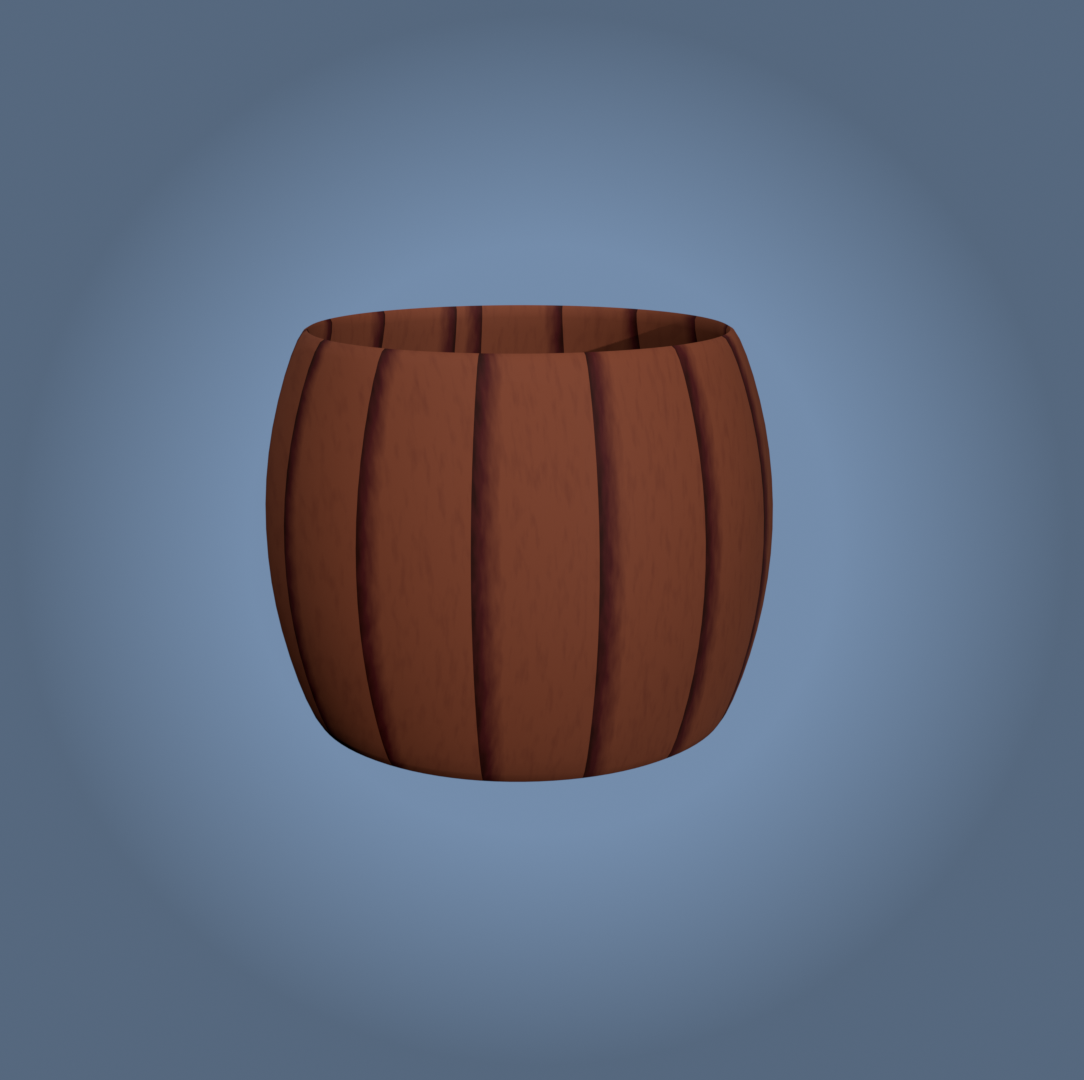

He’s from one of Scott Cawthon old works from the late 90s-early 2000s (BirdVillage animation series) and I would like to model him as accurate as possible. I started to model his barrel, which is most of his body. Here’s a render of his barrel:
My question is: How can I improve the wood material of his barrel to make it as accurate as possible to the reference images, which was originally rendered on a pretty old version of 3ds Max from the late 90s?
The original looks fully hand painted, including the lighting. It looks like it’s just a color texture, no bump, it’s all manually faked.
The most accurate re-creation would be to hand paint a single plank with all the lighting, then use that as a repeating texture. There would be only a color texture and nothing else.
--
If you want to keep your current setup and improve it instead of hand painting the wood, you need bigger details, your noise texture is a bit too fine. Also, the original has some highlights that are brighter than the wood’s main color and you don’t have those.
Mouse vs Pen is a matter of which one you personally prefer to paint with. A pen does offer more control in things like pressure and angle, but that doesn’t mean that those things are always required.
I think if you are asking this question, you cannot. You seem to need to learn that skill first. That includes practicing it for some amount of time that is not minutes or hours but more like weeks and months or even years. So there is that.
I see you are doing things with nodes in your screenshot, so maybe more work with procedural approach could improve the look. It might be more logical to use the skills you have.
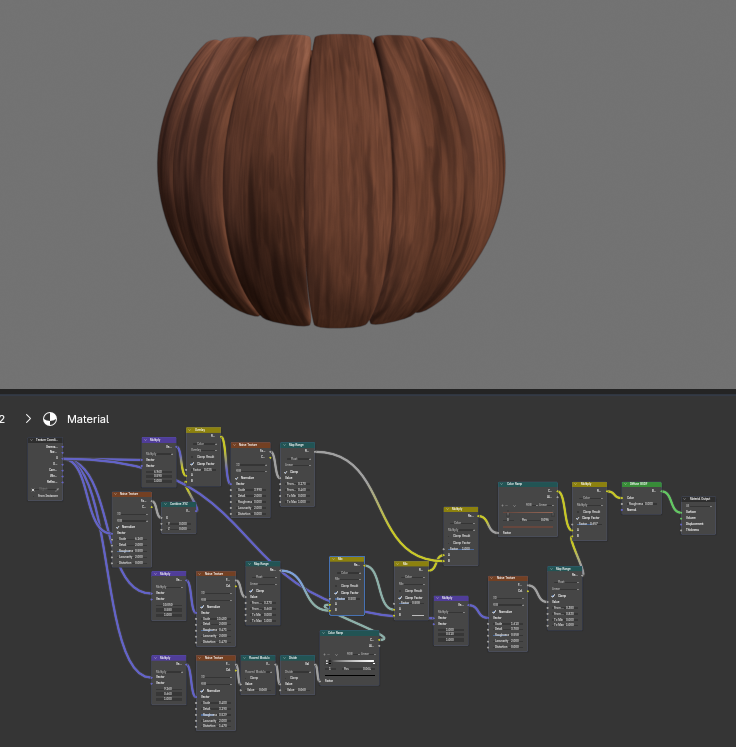
The specific setup I have there doesn’t matter, it’s no good anyway, so I’m not sharing the file, but the idea is to take some noise and adjust it in various ways:
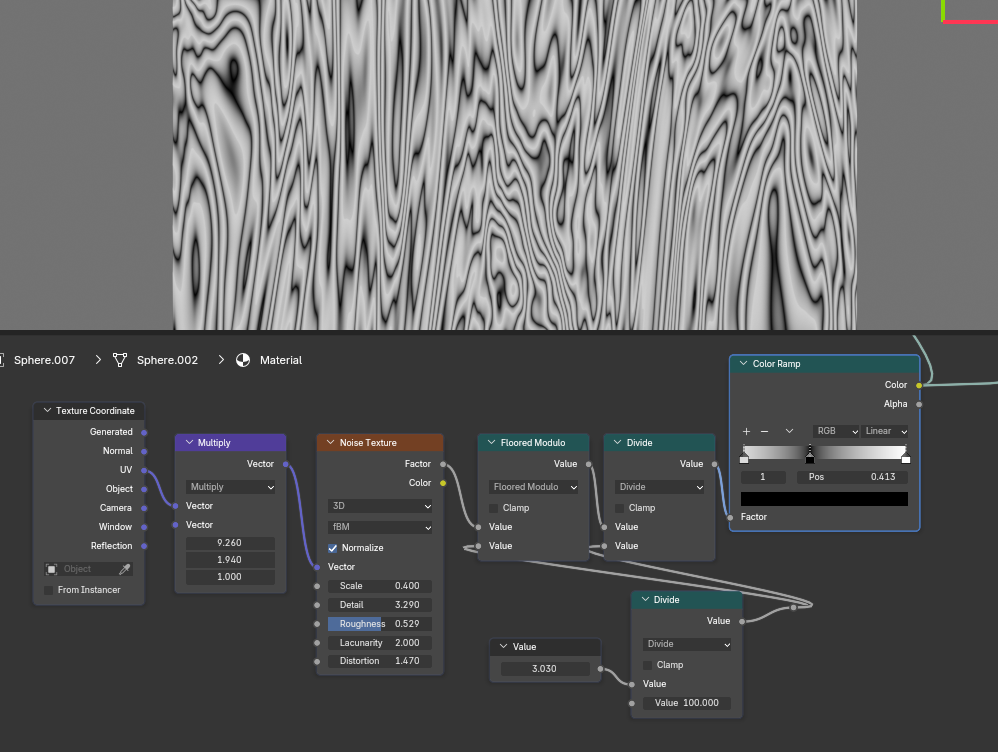
You can add textures to the coordinates of other textures in various ways, use range or color ramp nodes to choose the output range, do math operations like modulo for example:
And then you can combine various textures to make some texture that has many various features.
It’s not like this doesn’t need learning and figuring things out… But that’s something to consider in addition to the idea to paint them.
Textures are also made with image editing software that may not include actual painting, but manipulating other images, photos and whatever you can get your hands on.
Hi. Thanks for the comment. So, where I can learn more about this more complex material nodes for textures? I mean, I tried to search updated videos that explains each material node, but many Youtube videos just show nodes like noise texture, color ramp, the BSDFs and other simpler nodes (Not to mention that YouTube also has a lot of videos on Geometry Nodes, but I haven’t gotten that far yet).
You can start right there, with the images and examples Martin posted. Create the node setups, exactly has he did so you can see and study his final example.
Then start changing node values, connect and disconnect to see how it affects the visual result.
Part of learning material nodes is playing around with them, seeing what happens. You’ve got quite a bit there to start working with.
I have already tried to explain the way I understand learning shader nodes here. There are other awesome answers in the thread as well.
You can definitely find loads and loads of video tutorials on creating procedural wood in Blender. I don’t think you need to create real complex procedural wood for this, but you can find some great tutorials for it and some of the wood techniques are really great for learning procedural texturing in general, especially the ones that show the technique with simulating tree rings, like this one for example(but I haven’t watched it just skipped through to see the volume with the rings, so no idea how good it actually is, but I suspect it’s going to be good). So I don’t think you need to use that technique here for what we see in the reference(actually I am not sure what we see there I would look for better reference as well if possible) and simpler techniques will work, but I think it’s worth watching. And it’s also quite interesting. I mean simulating tree growth rings with math? That’s awesome if you think about it, isn’t it?..