And all those things have RAM or RAM type/based technology. Have a look at storage, SSD prices have also jumped. The M.2 drive I purchased 12 months ago for my current system at $210 is now $400.
Many things have ‘RAM’, tho at least in generally smaller amounts, so with luck the price increases won’t be as big. Think, modem, TV, smart watches, etc and then of course there’s all the various web/internet servers/services that aren’t AI but still need some of this stuff, from streaming services, to email to websites (this very forum is running on a server that needs RAM and storage and over time those servers fail, need upgrading, etc).
So this really has the potential to have a much wider impact. Crypto for example mostly just hit GPU’s, but as you say, smartphones, tablets, Chromebooks, etc don’t need dedicated GPU’s, but they all need RAM and storage.
They maybe cheap if it all comes crashing down, but no, AI cards are mostly crap for Cycles, etc. They have way more focus on the ‘tensor’ cores and a lot less of what matters to us, even if they do have a mass of VRAM.
Perhaps if consumers got wise to the point of realizing that there is no need to have computers crammed into everything from toilets and toothbrushes to appliances, TV’s, watches, light fixtures, and even beds (which came with the ‘internet of things’ craze). Every one of these products might only have a small amount of memory compared to a PC, but they quickly add up once you realize the volume of product being sold.
Watches that just tell the time are still a thing for instance; they have no need to access Youtube or contain a digital assistant. There is also an actual movement now that is increasing demand for dumb phones and landlines as people begin to question just how much digital connectivity they actually need.
To conclude, there is a way out of rising prices for everything electronic, providing that consumers are willing to accept that there is no need for every product to do everything, and providing that there can be a rediscovery of the incredible things that companies were doing with analog and mechanical technology at the time before everything switched to using computer chips (which is now becoming a lost art).
Yeah, and there’s the rub. While I can see adjustments, delays, lower specs then one would like, etc, but totally giving it all up, especially ‘digital natives’ that have known nothing else, I just don’t see happening.
To put this a bit further, there is really no need for electronics at all, period. When I was young there were none and everyone was better off for it.
It is a pain though if you’re livelihood depends on your computer and it quits. However there is always used gear available and I’ve gone that route a few times. Not as exciting maybe but not the end of the world.
Investors are currently piling billions of dollars into something they know nothing about. What could go wrong? Eventually they will figure out they are investing in rapidly depreciating assets that will never get them the returns they expected and there will be a sharp reversal. It could take time though so be prepared to wait.
In the mean time, use what you have to it’s max as others have mentioned. People have done great things with 1/100th the compute power available now. In fact, there is diminishing returns with more compute power. It doesn’t always equal better results or more money made, sometimes quite the opposite. Having less makes you think more which is often good.
This is already applying to game creation, there are various Youtubers who have gone in depth with how much more computing intensive games in general have gotten while adding little in return in terms of both gameplay and graphics. Graphical advances have really slowed down in terms of visual quality since PBR workflows matured (with many improvements requiring a close look at how the rendering actually changed) and several Xbox 360 games actually continue to set the standard for gameplay in their respective genres.
Examples, very few AAA titles even today offer the same level of interaction and dynamics as The Force Unleashed, Crysis, and Battlefield Bad Company despite them being nearly 20 years old at this point). I recall a promotional video from Intel for instance on what computers would now be able to do in games with the introduction of its new Core 2 Quad processors, but with the exception of a few indie titles the stuff that was shown 20 years is still not commonplace.
Granted, offline rendering is not quite the same since there is no maximum time budget to stay under, but there have been cases where the Blender developers have had to weigh whether there was enough of a difference in a new technique to be worth pursuing.
Now while I am not going to go as far as to promote the elimination of all digital technology, I do believe that it is time for people to start evaluating how much of it they need and whether it can be seen as important enough to be worth keeping (ie. reducing the influence of the digital age, but in a way that promotes a more balanced approach to life).
Many in recent years are coming to realize that it does not matter how advanced everything digital becomes, it simply cannot replace the things that are real and tangible, not because they wish it was so, but because of the emerging evidence that the human mind is simply not meant to consume so much visual and informational content in such short order without the risk of serious emotional and mental strain from overload. It is the great irony of today’s world where people are more connected than ever and have more power at their fingertips than ever before, but at the same time there is a great wave of loneliness and lack of incentive that nullifies all that and converts it into a net loss.
So that leads to the other primary way to play the game when there is no easy victory for the consumer, and that is not to play. The financial viability of the huge data centers going up depends on the will of consumers to integrate AI into their lives. No AI use means no tokens enabling their use are sold, no tokens sold mean the centers end up becoming white elephants that must be offloaded ASAP.
You could absolutely add GTA IV to that list. It’s something that annoys me to no end, honestly. These days, most games focus on looking pretty but end up feeling really static. When Crysis came out, it blew my mind how interactive everything was. I really thought that level of physics and environmental interaction was going to become the new standard, and that games would only build on it from there. But that’s clearly not the direction the industry took…
There are a few modern games trying to recapture some of that magic, though. For instance, I thought the procedural destruction in AC Shadows was really well done. And maybe GTA VI will be another step forward. I expect Rockstar to keep refining their Euphoria based body simulation. The hair, cloth, and soft-body physics in the trailers already look impressive. Control also had some really satisfying, believable destruction.
As for the RAM pricing crisis. It looks Asus is planning to enter the market. We’ll see how that goes
Thinking about game history here and noting that even Space Invaders (which is nearly as old as Pong) had some sort of destruction in its environment that was not a pre-baked sequence. It was delightfully crude, but it was enough to create a difference in the ability of the player to survive. This was for an arcade cabinet containing a CPU less powerful than what comes in a Lego Mindstorms kit.
Fairly static environments as a common feature in titles is actually a fairly new phenomenon amid 50 years of gaming, and that was just one of many mechanics that mysteriously went backwards in craftsmanship, care, and even optimization despite having tons more processing power to work with.
Well there is no need for playing games either or entertainment of any kind. It’s not essential to survival, so maybe consumers should get wise to the point of realizing this as well. We would save a lot of RAM if consumers realize there is no need to play games. We would also have to realize there is no actual need to create 3d content though… So that’s sad…
Have you seen some of the board games coming out lately?
As much as I would like to see the AI bubble pop and bring memory prices down, it is not considered world ending if machine upgrades end up being difficult at the moment. There remain avenues for entertainment and pastimes, and there have even been recent news stories of young people turning off social media and putting away the controllers in favor of purchasing Pickleball paddles and Gym memberships.
With the current business models commonplace in software, board games are actually becoming more popular again since there is no possibility of attaching DRM or subscriptions to them. Want to change the rules or add your own pieces, knock yourself out, as it is not like the game company can just send an agent to take the box if you do so.
Even then, there is still the possibility that Cycles will join the large commercial solutions in having highly sophisticated caching so as to render scenes far larger than what can fit in RAM now (Arnold, Hyperion, Clarisse, ect…). We are seeing the first step on that with the Texture Cache, and once Microdisplacement Cache comes the BF will have really begun to address the constraints for the two largest sources of memory consumption. There is still a lot of room actually for the BF to explore in lowering the pressure to always upgrade every few years at least.
This honestly should not be about being forced to choose between a full embrace of computing and the complete avoidance of it, because there are honestly things that are simply not possible with tangible, physical items, yet tangible items are not subject to the possibility of being edited or deactivated from a centralized source. Since there is some variance regarding the theories on what the RAM supply will look like in a few months (which actually include price drops by the way), we will just have to track the market to know for sure and come back to this later.
This made me laugh. You are so surprised by what happens around. Yes. People play board games or card games, or just any games that you don’t actually need any props or products for. Some go to the gym, yes. I’ve heard that some even go for walks, can you imagine that? Like… Outside… They really just walk aimlessly, like in parks or nature. I have seen this happen. Even tried it myself. I didn’t expect this to be shocking breaking news to anybody. Where did you read those stories? On social media? Maybe you should put down the phone and go out some more.
That’s not true at all… Environments that could change in real time with player interactions are a product of the early 2000s generation. Nvidia Physx was a huge leap forward in those capabilities, anything before that was just decals or object instances being destroyed. I wish you would choose to present uncited and unsubstaniated opinions as such as rather than facts, just once. A New Year’s resolution, maybe?
Are you sure you’re remembering that right? Nvidia PhysX didn’t really become a thing until 2008 and even the original Ageia hardware only goes back to 2006. That’s definitely not the early 2000s. Unless you’re talking about the tech before the Nvidia acquisition.
I remember running those old Nvidia driver demos myself. Arkham Asylum came out in 2009 and had some cool physics eye candy, but nothing revolutionary. By then, GTA IV was already out and was a way more impressive showcase thanks to Euphoria. And before that, there was Half-Life 2, and even before that was Jurassic Park Trespasser which was so ahead of its time it’s not even funny. I don’t remember PhysX ever being the revolutionary tech it was made out to be
I am not so savvy on all the technique stuff but my computers seem to last way longer than they say it should. I am just real careful with these things. Also, my son gave me is older gaming computer and made his new computer. He told me it is way cheaper to make it yourself. He also repairs his own computers too. He is just naturally handy. I have heard that the main reason all these things for computers are getting really expensive is because of what political stuff is going on in the world. I think what some have said are important. back up everything. I didn’t and lost pictures of my cats that I wanted to use to make a game. So I hope this information from a simple woman helps.
From my experience, most computers are usually capable of lasting a few decades longer from the time they become irrelevant because of technology advancing. Let your son clean the dust from the coolers once in a while and you should be fine long enough for RAM prices to become reasonable again.
That’s actually my own plan for this issue.
Actually I just cleaned my clogged CPU cooler like 5 minutes ago Oh my… from 89°C to 43°C as it should be… That was some negligence on my part…
Makes sense, as dust is proven to be the number one cause of overheating PC’s, yet at the same time there are reports that careless use of things like compressed air cans can destroy hardware as well (so make sure any dust blowing is in short bursts).
Though there is another common cause that fortunately is not something many of us would be concerned with, and that is the use of PC’s in the vicinity of tobacco users, smoker’s PC is an actual thing, and the internals can end up looking every bit as bad as their lungs. In fact, anything that produces smoke or is a source of dust should be kept away from the PC if possible.
PhysX mainstreamed large-scaled physics simulations, but it was not the first heavy-duty physics engine in existence. Havok for instance was around longer than that. What I mean by dynamic environments is not necessarily related to true physics simulation (as games made using the Doom and Build engines over a decade before were known for maps that saw changes in the layout and in their lighting effects, and in the 2D realm you had games like Worms, Digdug, and Lemmings which had pixel-level environmental construction and destruction in some cases). It might have been limited in comparison, but it was enough to clearly change the situation inside the game.
While destruction might be coming back in some titles, the evidence of increasingly static environments over the last 20 years is clear. I played a lot of Command & Conquer when growing up for instance and what was once a fairly dynamic environment where most things could be destroyed became more of a diorama where many of those same objects became indestructible and acted as walls to complicate missions. That is not to mention the secondary regression in collision detection in some similar games (Age of Empires 3 from my experience) where the high ground was useless for defense and walls could not protect your base from cannons.
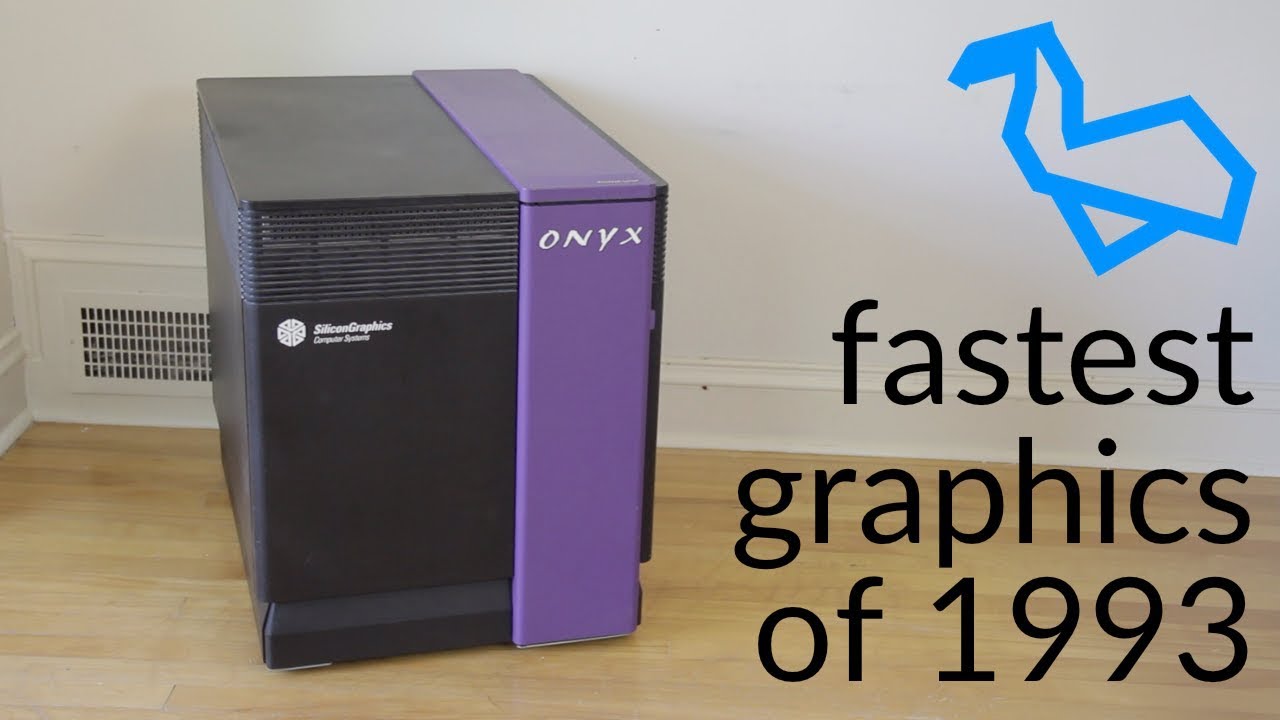
Just stumbled across a video of what a higher-end creator machine would’ve cost you back in the 1990’s.
I knew these machines were pricier back them, but it looks like I seriously underestimated just how much pricier they were. Forget about machines approaching the price of a used car, how about machines that once approached the price of a house instead.
Though the most impressive part is how much RAM is in the thing (which is a pretty decent amount even by today’s standards), that would’ve required a lot of chips with the fab processes at the time.
In comparison with the machines you can get today, last I checked it is not even possible to spec. a build on higher-end specialty sites like Maingear and Puget Systems that come close to 250K as far as what can fit into a single box.
Case in point, the price hikes might be bad compared to where they were, but when history is factored in, we discover that there is plenty of room for it to get worse before it can be declared as historic. Fortunately, if some tech. analysts are to be believed, the initial runup is about done and prices may begin to slide a little as the new year begins.
 We would also have to realize there is no actual need to create 3d content though…
 So that’s sad…


 Oh my… from 89°C to 43°C as it should be… That was some negligence on my part…