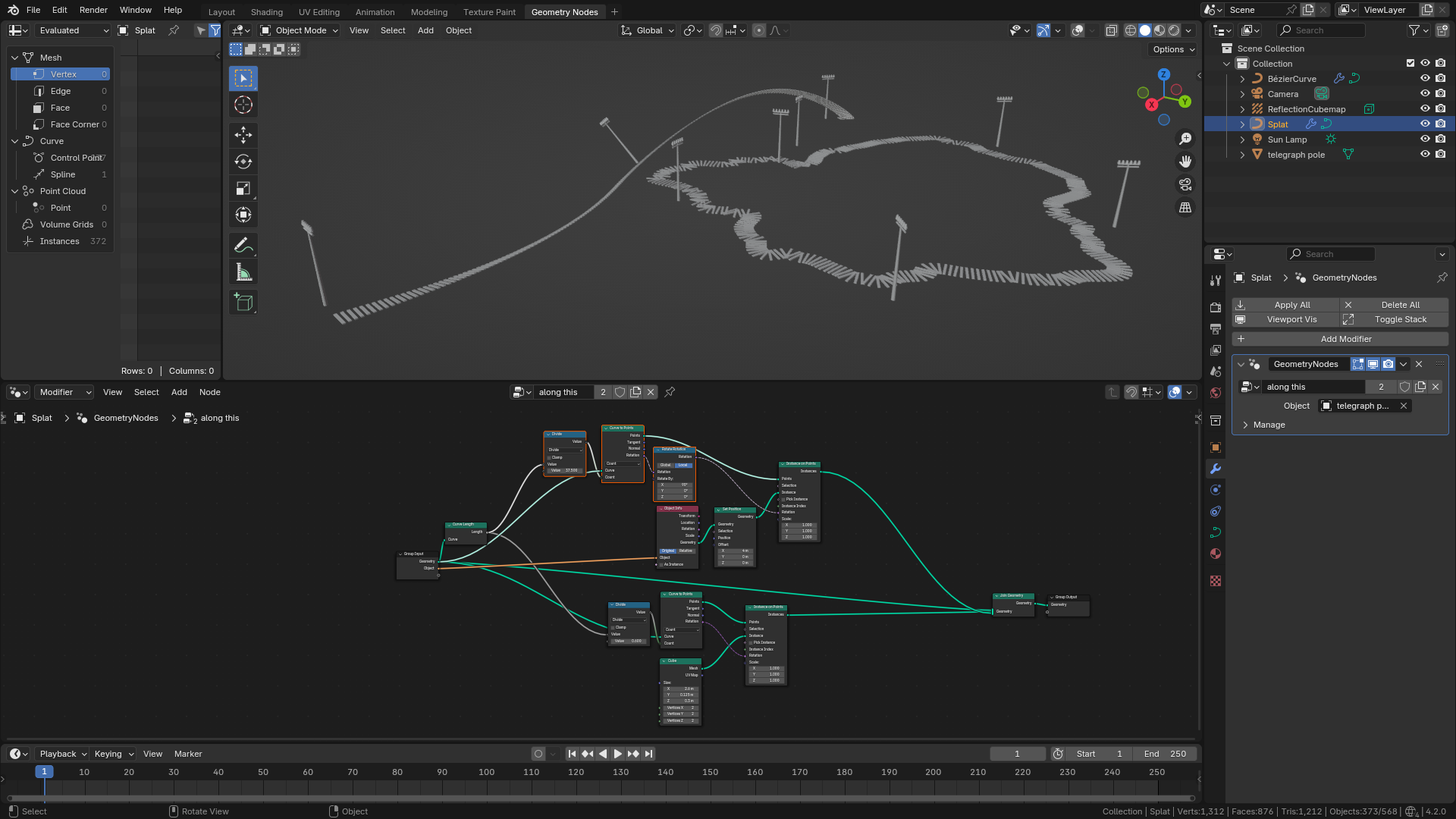
Never understood any GeoNode tutorial. I’m not AI averse when it comes to crunching research results and asked it what my problem was. I approach problems visually and GeoNodes has always felt like a language. My little tutor will help me create a VR game environment as the long term goal but is also dumbing me through GeoNode nodes by relating things to plain language where I hope to learn the Nodes and their purposes…
AI isn’t feeding me any geometry or nodes, just plain language instructions for the most basic of actions. So it’s up to me to poke around and stumble my way to meeting the goals:
Lesson 1: Make 100 sleepers from one sleeper.
Lesson 2: Scatter telegraph poles along the track.
(Not here yet…) Lesson 3: Generate station platforms automatically.
All basic, obviously train related. What I hope is to get your feedback because I don’t know if there are numerous ways to achieve any single result - if so, can my simple beginnings be more efficient so I get even betterer when I’m better? iykwim
Hello ! It’s a good start ! Best way to learn IMO is to focus on even simpler exercise first !
To keep the language analogy, you first learn letters , then words and eventually form understandable sentences.
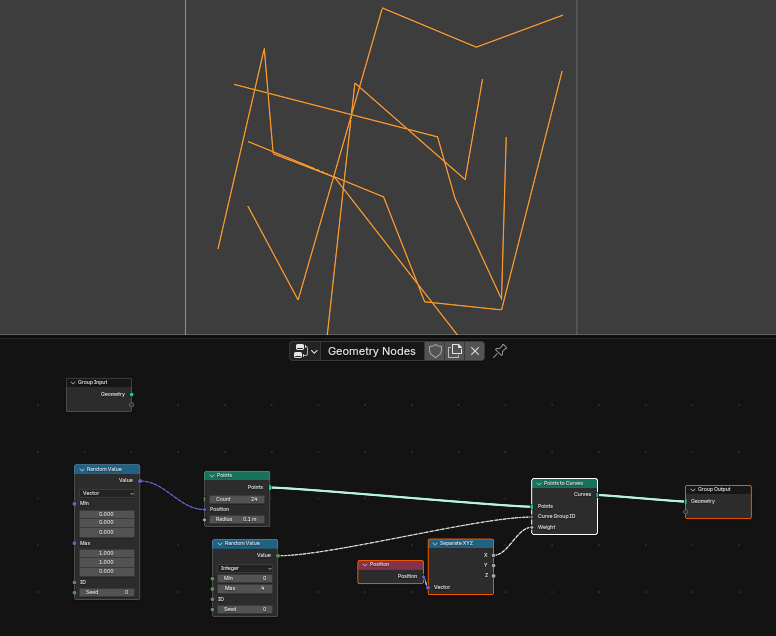
What helped me is to do very simple scene to just understand one node, or one simple routine, this doesn’t even have to look finished, for instance this is me figuring out point to curve node :
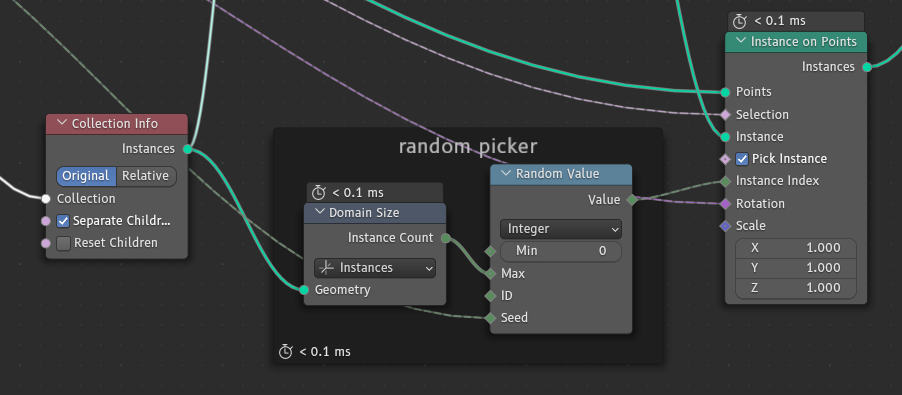
I was going for random - random things of random colors from a collection placed randomly on a platform every 100 meters of curve length. “Things” could be people, mailboxes, houses, whatever in time…
I feel like I might be picking the most Kindergarten ways of doing this but I liked seeing the SEED randomize points and collection instances and Material Nodes were used to randomize the colors. “Random” has been a golden goose or white elephant in Blender for a decade at least. Are there specifics I should know so I’m picking the ‘one’ that’s appropriate for the usage?
The points are the same and random scale of the instanced collection is the same on every generated platform. The Material Node random color came through, but how can I truly make each platform do its random points and instances of the collection?
I actually think you’re taking a really effective approach. Geometry Nodes can feel like programming at first, so translating each node into plain language is a great way to build intuition instead of just copying tutorials.
For your first lessons, I’d focus on understanding why each node is there rather than trying to make the graph as compact as possible. Once you understand concepts like Instance on Points, Curve to Points, Resample Curve, and Realize Instances, you’ll find that many seemingly different setups are just variations of the same workflow.
Also, don’t worry about efficiency yet. A node tree that’s easy to read and debug is far more valuable while you’re learning than one that’s highly optimized. You can always simplify it later once the concepts click.
Your train project is actually a great learning exercise because it naturally progresses from repeating objects, to placing them along curves, to generating more complex procedural structures. Keep sharing your progress—you’re building a solid foundation.
also don’t worry too much about doing things the Right way. if it looks good then it is good. I’m looking at my early node trees now and boy are they gnarly. not fixing em though! they work!