I’ve heard that in the industry, they use Maya as their DCC, and it handles large and complex scenes easily, is blender good for it also? I’ve seen few animated movies which are made by Blender, but I’m not talking about the animated movies, I’m talking about Live action feature film or series. And feature films require so much details, like CG characters, environment, simulation, and recently I just tried to made like 10 mountains and used PBR material but it crashed my Blender on cycles render.
If any studios adapt it as their main DCC, it will definitely save cost of the software but what about the quality, will the final result come out like the industry standard quality?
1 Like
Turns out, the most powerful tool is experience. People have made cg mountains for decades.
That being said, blender does start to bog down earlier than other DCC in several contexts. But I have full faith in the ability of a noob to crash them out regardless.
That is to say, if you think getting a different DCC will remove all obstacles between you and your wildest CG dreams, brace for dissapointment.
14 Likes
It used to be that performance correlated pretty good with the price of the software in many areas. The industry leaders had the best performance, the midrange was next, and FOSS sat at the bottom. Open source movements were long stereotyped as people who did not understand what performance was or get why it was important.
Now though, the dynamic has changed and it is not as clear cut as it used to be. Maya and Max handily beats Blender in performance regarding some areas, but Blender now compares pretty well in other areas. Optimization and performance has been a major development theme for the last few years and it is showing, stuff you could not do so much in Blender 2.79 can now be done far more easily.
Regarding your crashing issue, highly detailed 3D in general requires a lot of memory regardless of the application. The Blender developers have often looked at ways to trim Blender’s footprint in the area, but it is not exactly an easy job without trading away performance or causing other bugs.
8 Likes
well, it would be interesting to run a comparison with current blender and other DCC. But yeah, handling complex scenes isn’t blender’s strong point yet…
however in the meantime it’s very easy to bring any DCC to it’s knees if you don’t know what you’re doing. Filling the ram, having too many objects, or too many poligons, too many calculations it’s not that difficult to do…
If you know what you’re doing you can bring a lot of details in blender, you can look at all the commercial projects done with it , this is also a good example with many tips that shows how to do more with less as the author said :
7 Likes
I’ve been disconnected from the mainstream pipeline for some years now…
But even then, there wasn’t a scene, with its complete ‘logic’, imbrued in just one pass!
Knowing where to split your workflow is something that books won’t tell you. Only experience.
The tools (aka, software) all have limitations, and it’s up to you to pick the qualities of each, for whatever stage.
8 Likes
Yeah, I know Autodesk has so much investments for their products, but my main concern was the quality, From what I’ve observed, much of the work created in Blender seems to be focused on animated projects rather than live-action productions. I could be wrong but I haven’t come across many examples of Blender being used for live-action VFX or CGI, most of the work I’ve seen tends to be in commercials or animated projects. I’m curious, is this trend driven by quality concerns, or are there other factors at play?"
1 Like
You can look at VFX on man in the high castle to see where blender is at for VFX, blender bob channel is also interesting as he works in VFX too.
For now blender isn’t the best tool for VFX but it’s not about quality/realism or the complexity it can handle …
As other stated, if this question is related to your work, blender isn’t the issue here… feel free to try with maya and arnold, you’ll get similar results…
7 Likes
Do not forget just what the big VFX studios use as their hardware, a lot of AAA blockbuster movie scenes today are rendered on huge server farms with terabytes of RAM. Even the latest in rendering technology is not going to allow for a 1:1 match on home hardware (unless you are willing to pay for cloud rendering).
4 Likes
For big scenes, it can be useful to know about instancing. When you duplicate an object, there is a choice of how to to it: you can use shift+d or alt+d.
If you use shift+d, you get a normal copy with nothing special. If you use alt+d, you get an instance (aka linked duplicate).
Instances are objects that reuse the same mesh, so it can be stored only once in memory. If you have multiple objects that will be identical in a scene, you can instance them and save on memory use. There are just two constraints to doing this:
-
The object will be completely identical. Editing the mesh on one of them will change them all at the same time.
-
The object being instanced must not have any modifier. If there is a modifier, the instance will have to be treated separately and you lose the performance saving effect. If you instance an object correctly, you will notice the polygon count of your scene doesn’t increase in the statistics.
With instances, you can build yourself a small bank of highly detailed meshes with subdivision pre-applied, then make a large scene out of them at much lower memory cost. Cycles especially benefits from instancing and can even get in the billions of polygons using this, to the point of making a forest with fully modeled leaves (though the objects would have to be hidden or set to display as bounding boxes in the viewport, as the viewport doesn’t take instances as well as Cycles).
Objects scattered using geometry nodes and particle systems will also be instances, allowing lots of them to be used without crashing.
That’s in large part because big studios already had their well established pipelines and tools with other softwares. Blender would be capable of making a lot of it.
One category where you won’t see Blender being used is physics simulations. Blender is good for modeling and rendering, but simulations are its weakness. That space is dominated by Houdini.
3 Likes
Every software has a strong point, and a weaker point. And based on those, it can sort of draw a particular type of interested user.
Blender excels at animated content; that’s why it’s most of what you see.
Live-action productions are often done by a studio of some size, which also has a budget of even larger size. Those types usually gravitate towards the software used by like-minded people - Maya, Houdini, etc.
3 Likes
Yes, Also I’ve heard that in the industry, different software is used by different departments, such as Maya for animation and Houdini for simulations, etc. and they have thousands of employees, so it would be silly to compare small studios with big studios. However, I was curious, while I know skills are crucial, but now, is the blender strong enough to play a big role as the primary software in the smaller studios for live action cgi, and vfx.
Yes, I believe so…and I do it all the time.
Having said that, IMHO one of the limitations of Blender is Cycles, in the sense that its strength is more stylized renders, and even the most realistic renders to come out of Blender tend to have a stylized look to them…if you know what I mean.
On the plus side, you have access to a number of third party render engines such as Octane, Renderman, and most recently VRay…so if you’re going for absolute photorealism that integrates with live footage you might want to look into those solutions.
Beyond that, Blender is pretty capable of handling a good amount of geometry. Instancing is the key for wide scale renders like cityscapes or natural vistas. As someone who was previously using Houdini, I can tell you that Houdini can struggle just as much with high poly counts, and even there the use of Instances is highly recommended.
Before they went out of business, Clarisse was a good solution for large scale scenes, but apparently the business model didn’t quite work out for them!
Not sure why you’re crashing, but you might be running into non-Blender related issues that could be the cause of it.
3 Likes
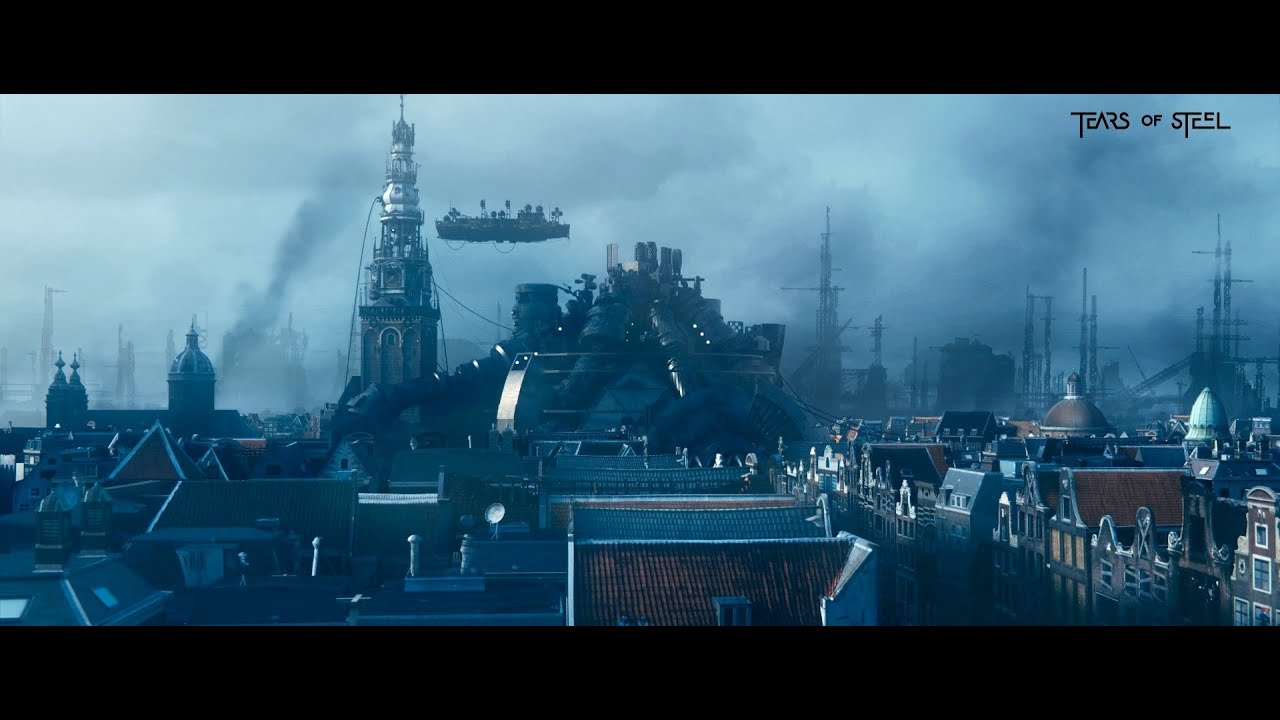
Note the time stamp.
2 Likes
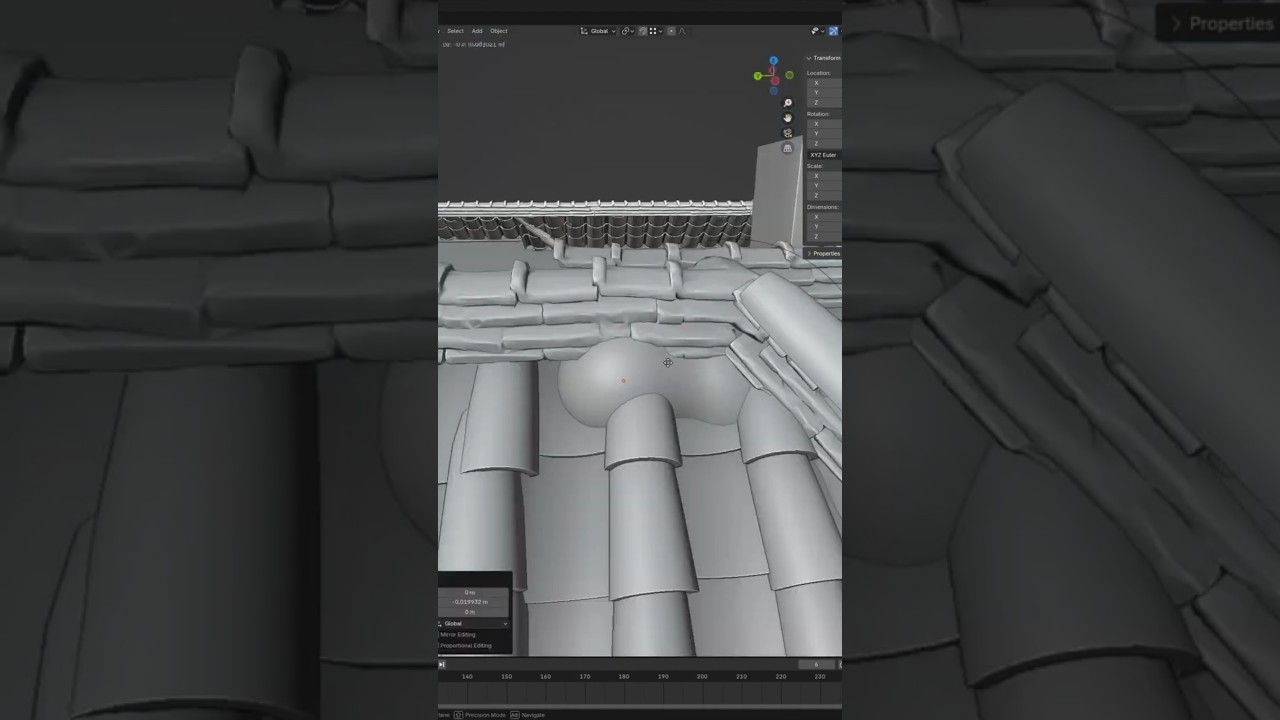
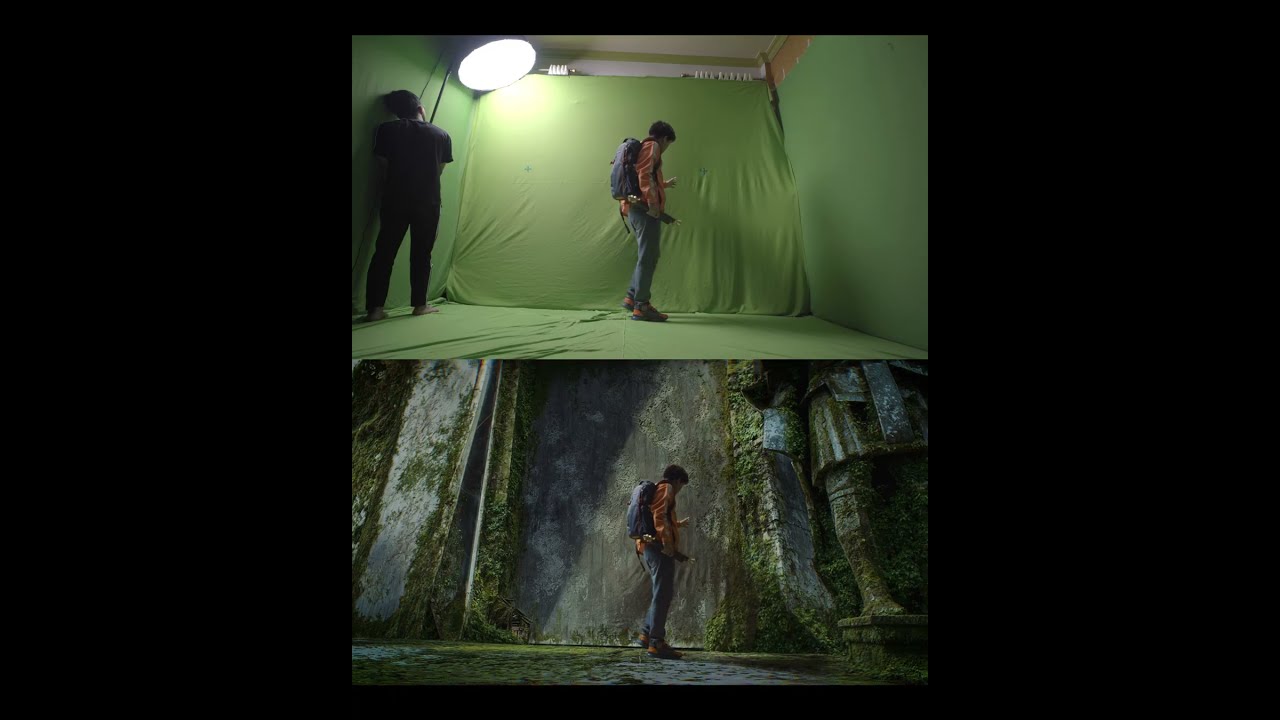
Just a few things.
We did a couple of shots for a shark film last year. It’s in our reel:
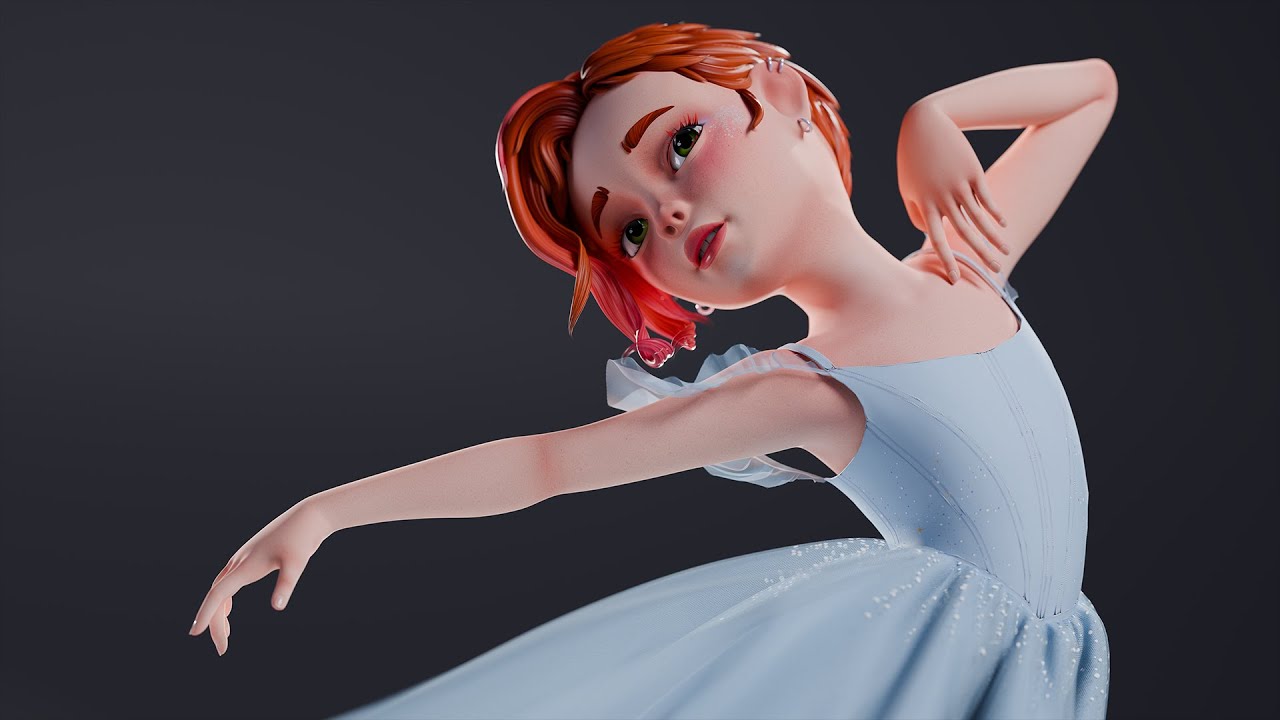
6 Likes
Cool work!!
2 Likes
well yes completely , on the overall each DCC got all the major functionality to deal with any regular 3D jobs. Then there are more specialised stuff like simulations or advanced creature where blender lack tools, but I don’t think maya or 3DS got these tools built in anyway.
There are other points to consider when choosing a DCC for a studio that is how your DCC will comunicate with other software and how easy it is to share work with other studios.
Lastly if you invested years of in house tech for maya it’s going to be difficult to threw all that to swtch to blender.
However if you start a small studio right now I think blender and houdini will have much more weight compared to well established studios.
But also even if all DCC share similar core functionality they also have their own philosophy , blender is tailored for small tezms and individual and is quite nimble. Maya is more suited to massive teams so in the end it goes down also to what you’d like to do, how you’d like to work and so on…
4 Likes
Yeah, that’s the point and I think big studios doesn’t work on vanilla version of Maya and Houdini, they have their own propriety plugins/softwares which they integrate them with Maya or Houdini so they can get higher result.
Additionally, a key factor is customer support. Established software companies have dedicated engineers who assist large studios whenever they encounter challenges, ensuring smooth workflows. Of course studios are paying thousands of dollars.
And blender doesn’t have customer support yet, and time is money for large scale studios so they don’t want to take any risk.
And I’m seeing many mid size and smaller studios are adapting blender as their main software. Also heard that Maya is not getting very big updates from the last few years, they are just fixing and adding minor things on yearly versions, so people are just moving to blender.
Industry use Maya for rigging and animation, modelers have the facilities to work on their preferred tool, and Houdini for VFX and simulations. Infact Houdini is giving so many updates but modeling in it is pretty time consuming, only procedural modeling is good to do in Houdini.
By the way what is your perspective on the future of Blender?
3 Likes
Actually, there is enterprise grade support from Canonical. This is really something that external companies need to do and can’t be offered by the foundation because of the resources required. But these do exist.
4 Likes
Well since the industry is in turmoil currently it’s hard to tell . And just like with everything we tend to project our own fears and fantasy in the future.
It’s clear to me that blender is going to stay considered as one of the main dcc available.
In 2/3 years it’s likely that many pieces of the puzzle will be in place :
Viewport compositor + NPR + Eevee + VSE + Grease Pencil + geometry nodes all working together which should allow to produce content all in blender in an interactive fashion. Without jumping between 4 apps, and without the need to hit render until the final …
This should allow some small teams / studios to produce very interesting content in a very efficient way. We could say that Flow is a good example of a new way to produce content which is likely to became more common with time. This is at the opposite of blockbusters workflows, and that fits very well blender.
So, is blender going to stay only the best DCC for these kind of project and new ways of working, or will it stay adaptable enough to find it’s place in more standard , bigger sized pipelines, it’s hard to tell…
Needless to say that we are only talking about the entertainment industry and not even about video games or all the others application for a free 3D app that can also do 2D, Comp, tracking…
1 Like