No, you shouldn't "steal" art

There a growing trend of this false contrarianism spreading around in the blender community where people think it’s cool and against the grain to say that great artists “steal” work. Blenderguru has touched on this a few times but I don’t think he truly understands what differentiates a plagiarist or a “copier” to an “artist” or rather he might intuitively know but hasn’t talked about it in depth. Yes, I’ve seen the posts and I’ve seen the documentary “Everything is a Remake” but people keep missing the actual point of the message.

Here is one misconception: artists cite work and copiers don’t. This is only sort of true. It’s only one of the aspects but believe it or not crappy artists can cite all they want and it won’t make their work any less of a copy and great artists often don’t cite because it’s not feasible. This is confusing but I’ll explain it later. Understand though that the difference between a copier and and artist may be on a gradient and therefore it’s difficult at times to distinguish but nonetheless, just because there are no clear boundaries doesn’t mean there isn’t a difference.

Art has always valued originality and this hasn’t changed and will never change and I absolutely hope that it never changes. The real reason why people tell you it’s ok to steal and sometimes encourage it is because you don’t have a choice. It’s mostly a compromise not a feature. You don’t have all the time in the world to craft all your assets so you download an asset pack, nor can you avoid the use of tropes, symbols and themes which needs to be used. Art in many ways is like science, You can’t just wholesale rip people off even if you cite them. A good scientific paper advances the field even incrementally and the quality of the paper rests on how far it advances the field in question. Scientists rests on the shoulders of people before them but if they had the choice of making insane breakthroughs without the need of anything else, they’d do it and they’d be considered to be the best. But of course they can’t do it in the real world due to constraints in resources.

You, as an artist is expected to advance the field. How far you advance it will determine the quality. So if you take just one single piece of work and just add some random flair, then you are more of a copier than an artist. For example, if I like someone’s character concept and I just add a hat to it, you are less of an artist than someone who manages to create a character from their own imagination.

So why is it that people actually tell you to “steal” more? Well one reason is that if you take an asset pack with hundreds of resources and combine them the chances that such a combination will be a copy decreases substantially with each asset you add. The chance of you getting the exact same shuffled deck of cards is infinitesimally low. You are in fact, making your art slightly more original even by slamming assets together. Notice that originality is still the goal here. This is the reason why great artists can’t feasibly cite, it’s because they often use multitudes of diverse skill sets and objects to create something totally new. Those skills and objects, is not likely original but their final product is. Like an engineer that crafts an invention out of wood. They didn’t invent the wood, or even certain mechanical aspects of their invention like gears or pulleys and such.

The reason I’m making this post is because it is apparent to me that people don’t understand this. They’ll take a single concept art or reference image and think it’s appropriate to just practically rip it off without advancing the concept whatsoever. They barely add anything to the art and think it’s ok because there are these people who spout this now cliched platitude of “stealing art is good”.

EDIT: If you think this post has anything to do with copyright or Intellectual Property laws, reread the post, this has nothing to do with the current laws. All IP laws can be abolished tomorrow and everything I say will still be applicable

3 Likes

OK, I’ll bite.

Well I read the whole thing. And I am not really sure what it is you are so upset about. It seems like there is a point in there someplace but it is kind of lost. You have touched on so many aspects of the creative process, but have also seemed to fuse that into plagiarism and being original. Neither have much to do with the other.

As a point of morality, I am lost. As a point of copyright law, well, that is another issue. And I am not going to speak to that here.

As far as emulating other artists, that is probably the most misunderstood part of the growing process as an artist.

And I have heard people tell me that using reference material is “bad”, that artists should be fully original. That is a load of bullocks.

First of all. All of the great masters where brilliant at emulating. Emulating, copying, duplicating, whatever you want to call it, is an extremely high skill. It is not a low level thing to do. It takes extreme ability to “become” the other thing sufficiently enough to then emulate it. Not to mention the technical know how.

That some artists are hired into jobs of duplicating things over and over again, is another issue.

But it is usually not a well known fact that most of the master original artists, such as Picasso for example, were brilliant artists. And could copy any style. And often started out with very traditional techniques.

In fact I would go as far to say that if an artist is starting out and purely focusing on “being original” this is not going to get him very far. He/she will probably disappear into obscurity before ever doing anything worth much.

Probably the greatest songwriting team of our time, started out doing nothing but copying other works. Performing every night in clubs for years before even writing anything. It took writing scores of songs before they even did anything worthwhile and years recording before they were recognized as brilliant, original artists.

So as purely a technical point, as a point of growth of an artist, it is vital to be able to duplicate other works. At least in nature if not almost exactly.

Plagiarism, derivative works, profiting on other’s intellectual property and all of that belong in the subject of law and ethics.

But if a person is a student of the craft they should be encouraged to duplicate and learn and thus grow. And do it a lot. Only after years of mastering your craft will you ever accomplish anything original.

Leave copyright issues for those with the common sense to steer a straight course and deal with those without the scruples to care. But that is legal, law and good common sense as far as profiting from your own original work or trying to profit from others. It has nothing to do with good practices in the process of being great and original over the long term of a career.

5 Likes

i agree with you
the least thing this people should do is , provide a link to the original artsit

but i think this is coming from ther lack of imagination, thats why so much skillfull artsit work for studios !! and not for themselfs ,

i always say that there are 2 peoples in this world the originals and the copy people,
the originals are the ones who creat write and maneg things
copy people, are the imployrs !!

1 Like

I totally forgot to mention anything about artistic studies and that was my bad. Studying is good to improve your skill but studies should be treated as a means to an end not as an end to itself.

As I’ve already mentioned emulating and certain amount of copying is good but the goal should be to at least make some progress on the thing you are “copying”. The more you advance or improve upon it, the better it is. The 3D community is plagued with people who just do 3D conversions of 2D concepts without adding anything else and sometimes making it even worse. It’s why there’s a bit of a backlash against the new Lion King. I’ve even seen people do 3D conversion to 3D and also make it worse. Not that it’s totally bad since they are learning but too many people get into that habit without leaving their safe zone.

Take a look at the post about how to copy properly. The artists you mentioned eventually improved and advanced their field and didn’t just stick to copying. Or they made a recombination of various styles, skills, and objects to make the piece original.

1 Like

It’s what intelligence is about. Observe what nowadays is called AI…

Either way it’s a Very $pecial group of People that sell and buy - profit from such activities and nobody here is capable to get near their radar - it’s a business thing - alike when thieves & murderers were not criminals, if they gave credit to the King or the Pope :stuck_out_tongue: to bless’em all (ie. Siege of Zara)

That’s why art is not to be judged, especially as it’s based purely on biased opinions.

PS
Intellectual property is IMO another modern way of discrediting common sense in appreciating the work done, knowledge shared for the sake of “God given right to own.” - delusion.
What is concept?
Who owns nothing? Since everything is from nothing :wink:

It’s just as it always was - “Winner takes it all.”

You know the expression: “Steal, but steal from the best.”

An excellent way for an artist to improve is to study – by copying, or rather, copying from – other people’s work. When they do this, what comes out will always somehow be their own … will not be “a copy” at all. They will have efficiently picked up new ideas by careful observation and put them through their own “muscle memory.” What they produce will not simply be “a derivative work.”

As long as they are ethical about what they are doing, and do not trespass into the world of “infringement,” this is an efficient way to learn new skills and to gather new perspectives. Artists have been doing this for hundreds of years.

Obviously, you should be extremely careful about making any use of what could possibly be seen as “someone else’s material.” If you are in the business commercially, you should retain your attorney, and obtain his-or-her “written sign-off on their letterhead” on everything that you produce. (It’s a tax-deductible business expense …) Keep that letter on file – forever. You should always diligently err on the side of caution, being pro-active to show to other people’s work the professional courtesy (and legal respect) that you expect with regard to your own. This is simply “the right thing to do.”

In the context of Blender, many people encourage you to find an existing short that matches what you’d like your short to be, and then to “copy it exactly, shot by shot,” of course using your own material. When you do this, you will learn by example how a short that you admire was edited by a professional. Your short will carry-away many of the same strengths which might not have occurred to you at all if you were “feeling your way in the dark.” But, in the end, it will be "your cut." Your film. Not a copy at all. This is, indeed, a very efficient way to learn – learning by emulating the examples of others. By observing them carefully. Learning the skills and the tricks. Developing the ability to do them yourself.

The good artists who do make a rendition of another person’s work will do it completely from scratch and make it clear that it is not original, but instead based on another work with the author mentioned. They will also make sure not to sell the work for profit or use it to market their skills.

The less ethical artists meanwhile may use material taken directly from the other person’s work and pass it off as his own. They may even try to profit from it on the idea they won’t get caught.

For less skilled artists, it might be taking another person’s work and adding their own flair, adding filter magic, or mixing in other elements, but how ethical they are in it depends on what of the above two points apply.


Regarding the 2D to 3D conversion of the Lion King, if you’re trying to say it is stealing, it is not because it is done by the same company that owns the IP (Disney).

That is an often misunderstood quote. Picasso probably wasn’t talking about copyright at all.

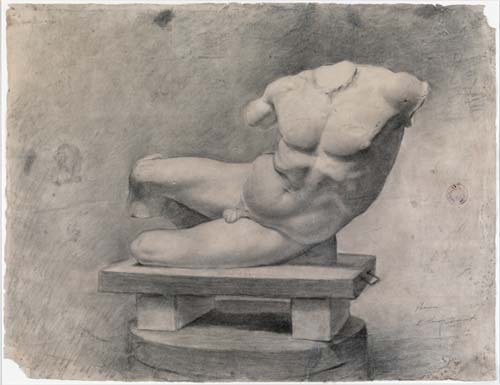
Here is a Picasso life drawing. He is copying what he sees. You can be a good artist doing this, but you’re at an artistic disadvantage. In order to do art, you always need something to copy.
picasso_lifedrawing

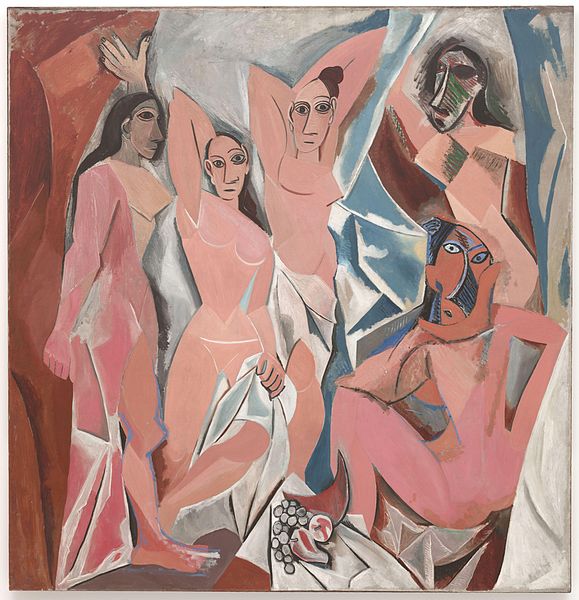
Here is one of Picasso’s most famous pieces (Les Demoiselles d’Avignon). He had seen some African masks, and stole the idea of them for his own work.

All Picasso was getting at was: to become a better artist expose yourself to more stuff. Creativity is a byproduct of all the ideas and things you’ve been exposed to.

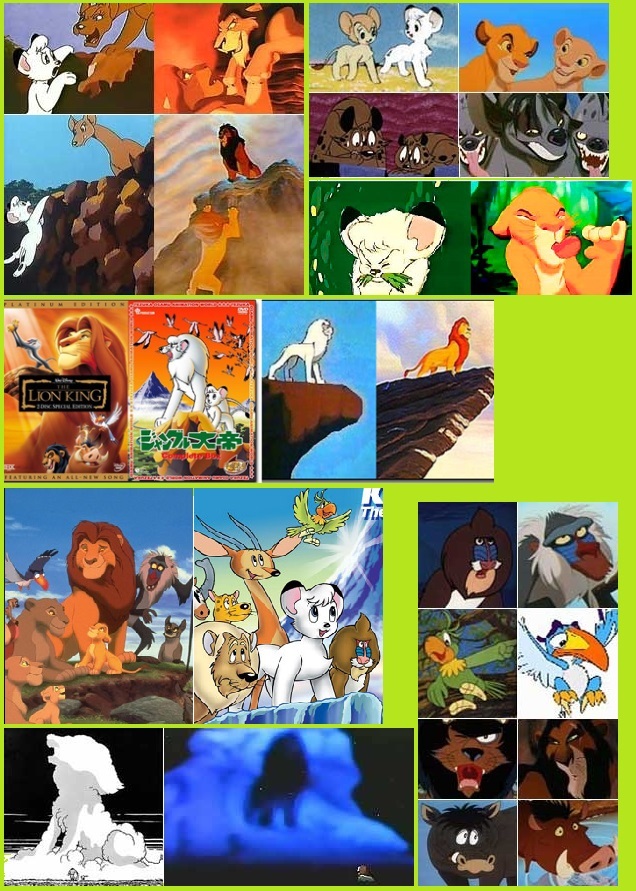
Since it was brought up: The Lion King seems to draw inspiration from Kimba the White Lion. Kimba the White Lion is from Osamu Tezuka (most famous for Astro Boy). Interestingly, Tezuka was a huge fan of Disney, so a bit of a cyclic influence. It’s the CIIIIIIRCLE of LIFE!

2 Likes

For what it’s worth, it was always my impression that the 3D-art colloquialism that it’s “okay to steal” referred to using reference material and other works for inspiration. I don’t think anyone intended it to mean literally using others’ work as components in your own without citation. I’m a firm ideological supporter of Creative Commons.

There’s “stealing” (as in presenting someone’s work as your own), and then there’s “stealing” (as in using the same ideas and procedures). The two shouldn’t be confused, accidentally or deliberately.

Not everything needs to be turned into a rallying cry for a crusade or a “learning experience”.

1 Like

No what I’m saying is that the CGI Lion King is facing backlash because it’s (probably) not an improvement on the original.

You’re missing the point. All those artists you mentioned improved upon the thing that they were “stealing”. Contributing and advancing the field of art is still the goal here.
I haven’t seen Kimba the Lion but I bet the animations and plot lines are sufficiently different, enough for most people to say that Disney has made their own improvments. The older disney films were all based on old stories but they improved upon them by making careful changes to the plot and aesthetics to make it a “disney film” (Sometimes for the worse IMO but at least they tried to make it different).

I think you’re the one missing the point, but whatever, I don’t care enough to argue. Cheers

If you started making serious commercial use of a mouse-character with two big round ears and four fingers, Disney would probably want to have a talk with you (and slap you with a cease-and-desist). But no one could seriously say that Kimba is Simba, even though both of them have anatomically impossibly-large eyes. (Except, of course, that their lawyers did say it.)

In another form of art, a case went all the way to trial that the distinct chromatic chord progression that is a hallmark of the song Stairway to Heaven represented plagiarism because another artist within possible earshot used a similar chord progression. The trial was a very short one, however, because the writer pointed out that he had learned such things “at University,” where indeed such things are taught. (The plaintiff likely learned it at the same place, or in the same manner.)

Unfortunately, money has a lot to do with it. Simba was backed by Disney-level marketing and so it made Disney-level money. If you could snag even a small piece of that, you could retire very comfortably. Same for Stairway. And of course, every now and then an infringement case is quietly settled among artists for undisclosed sums. Companies have developed, and use, “similarity software” to detect potential claimants before a new property is released to the public. In every movie-trailer that you see, you note the presence of the “Clearances Department.”