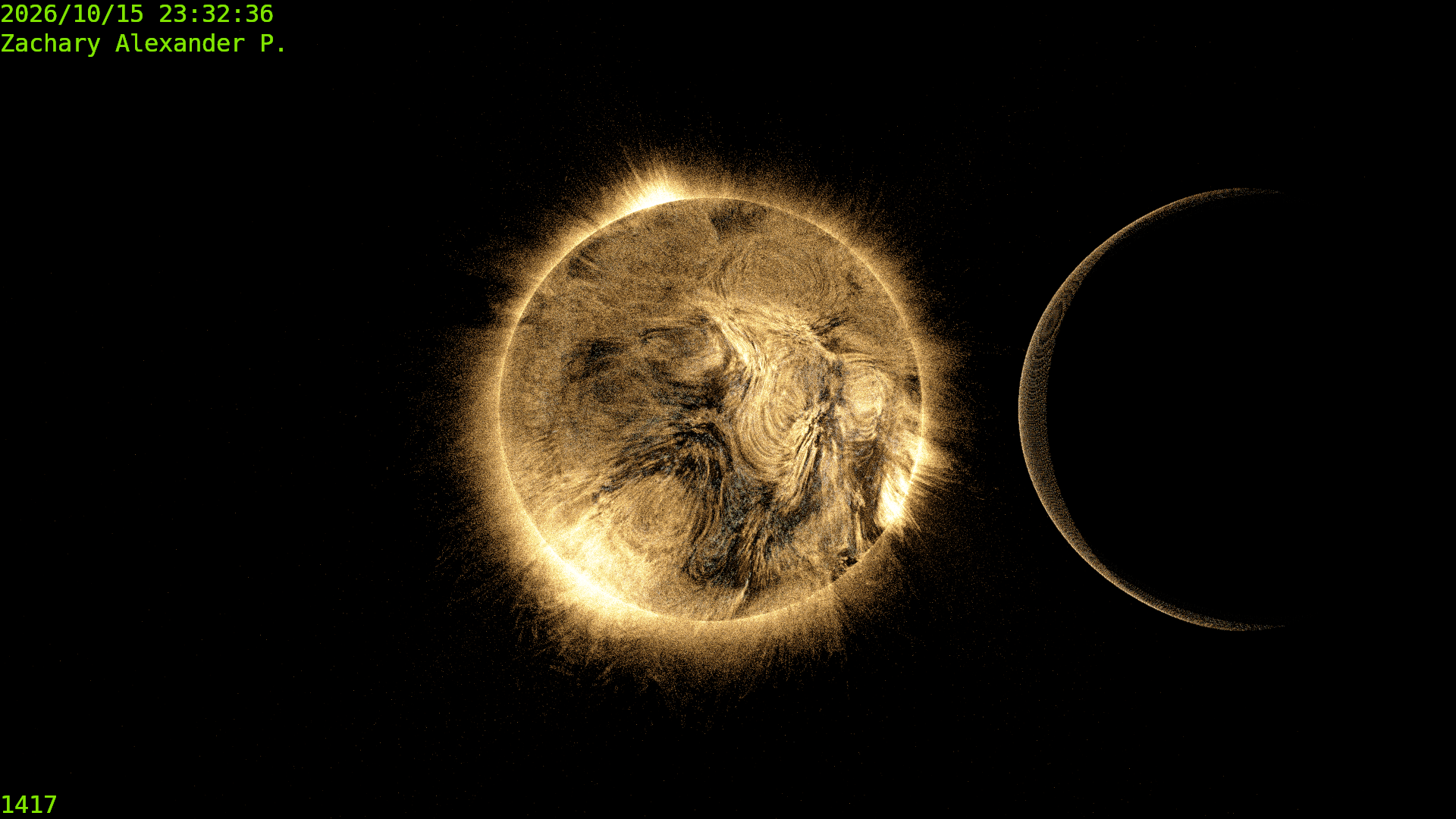
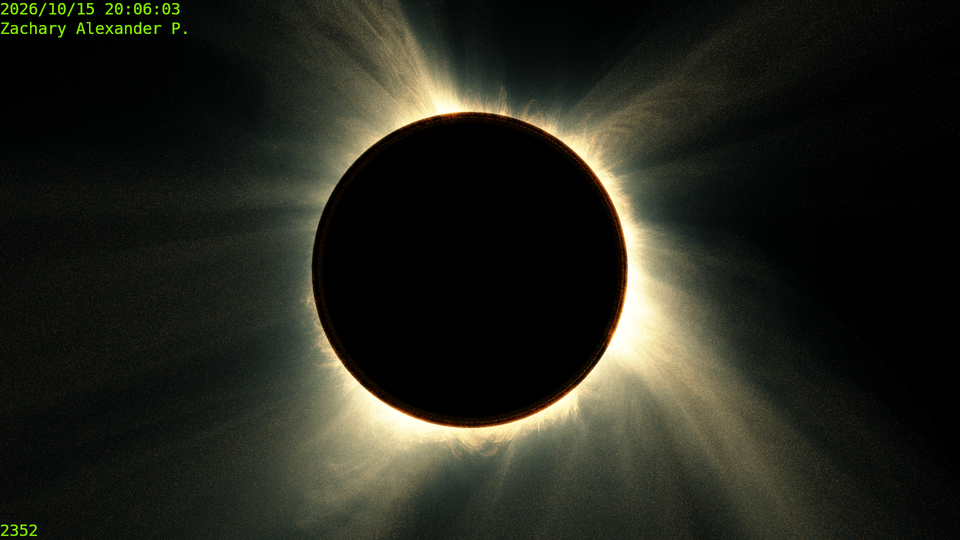
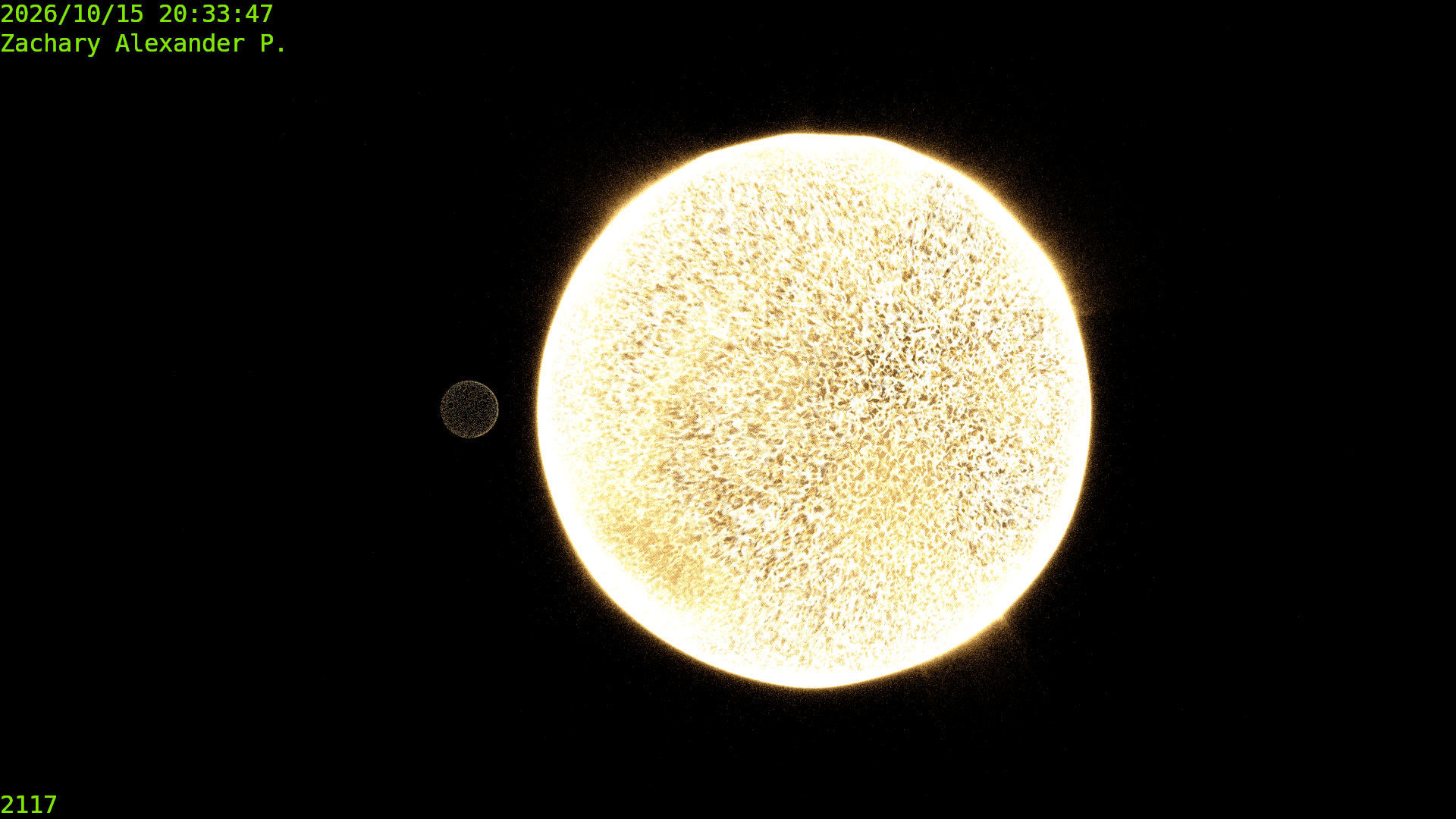
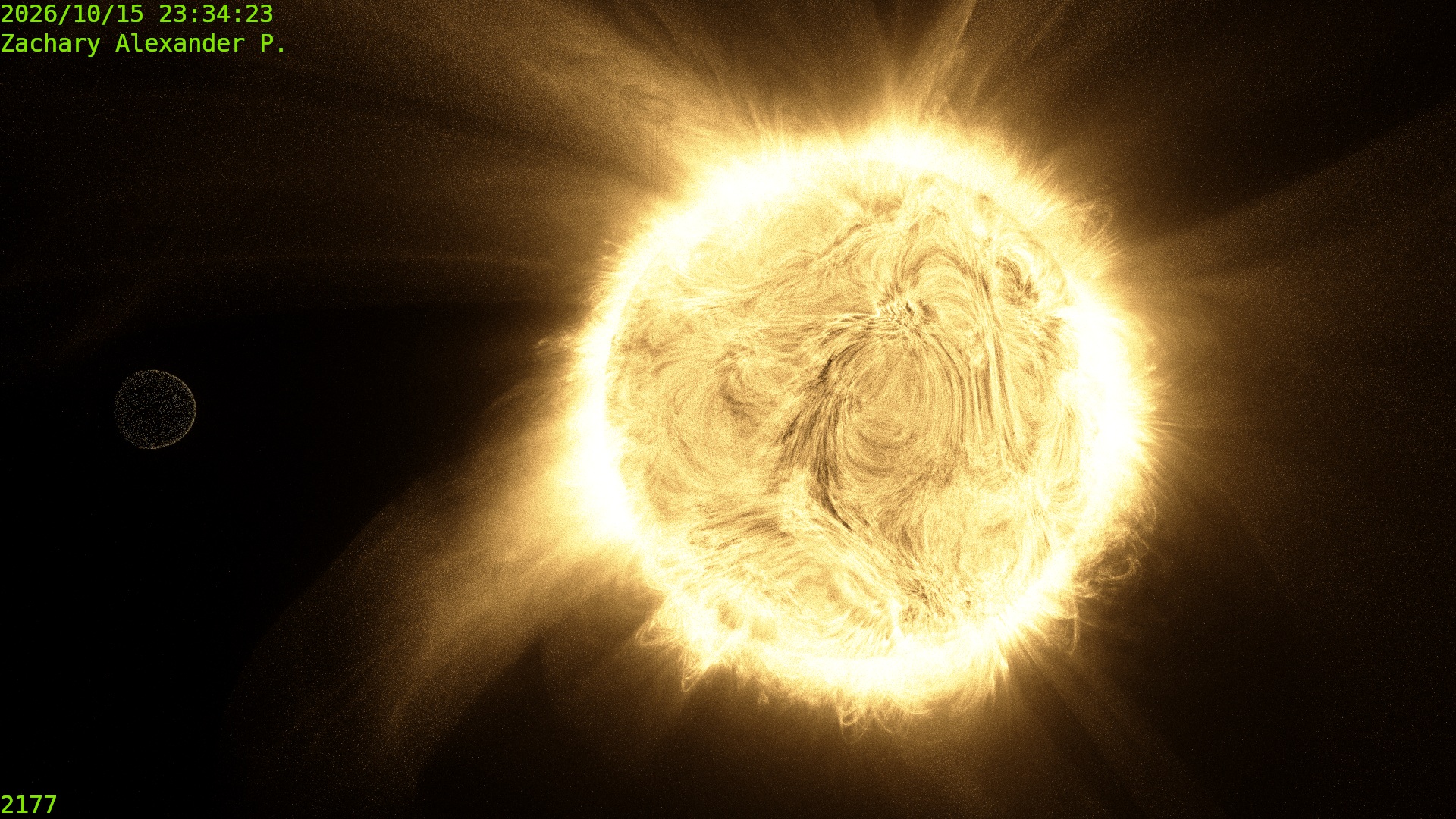
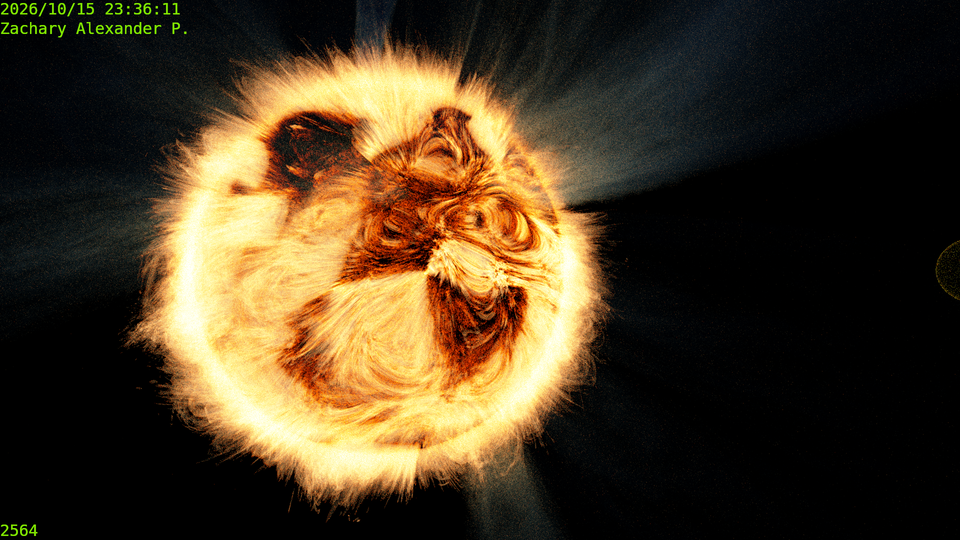
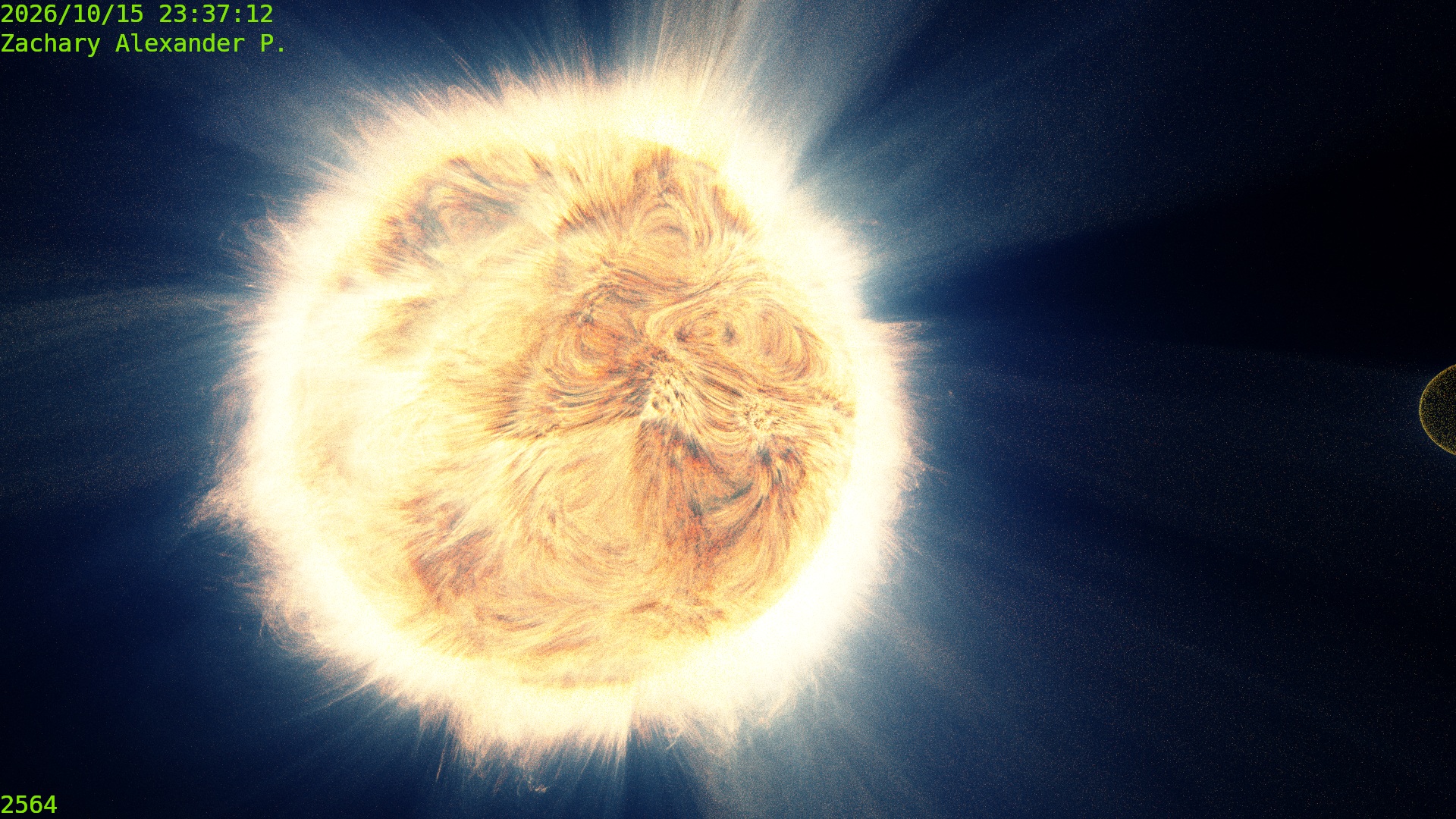
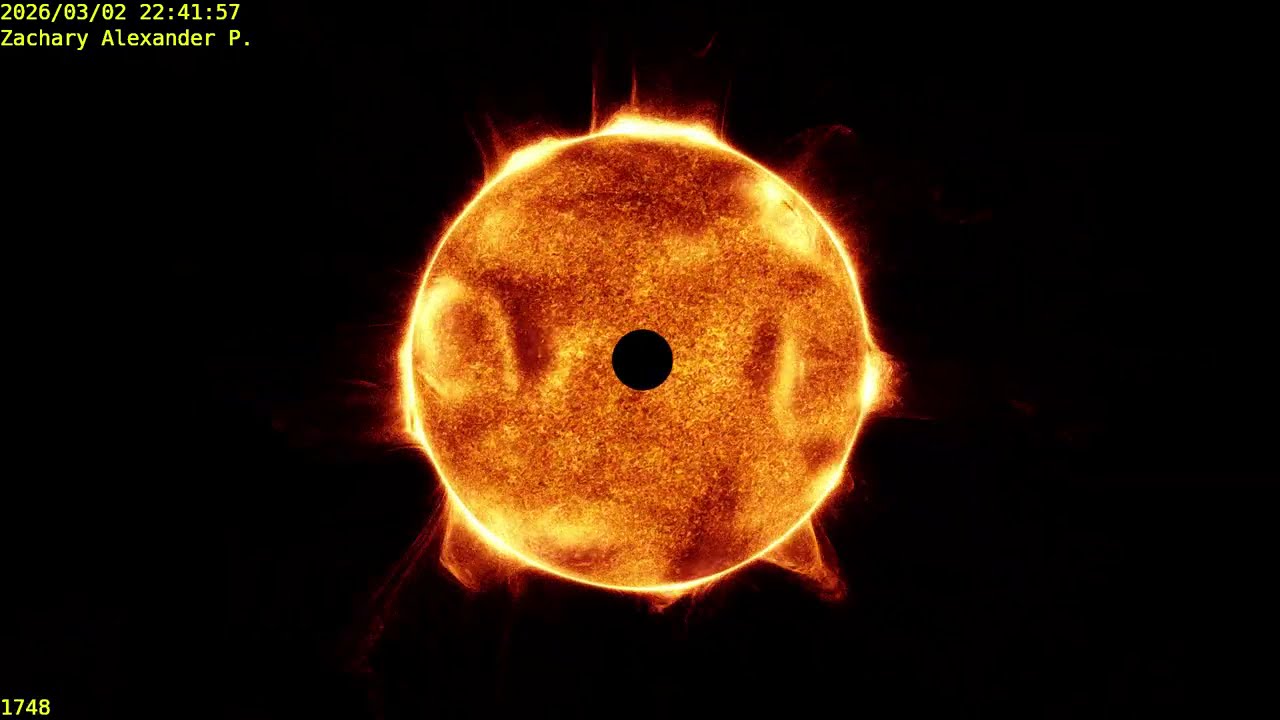
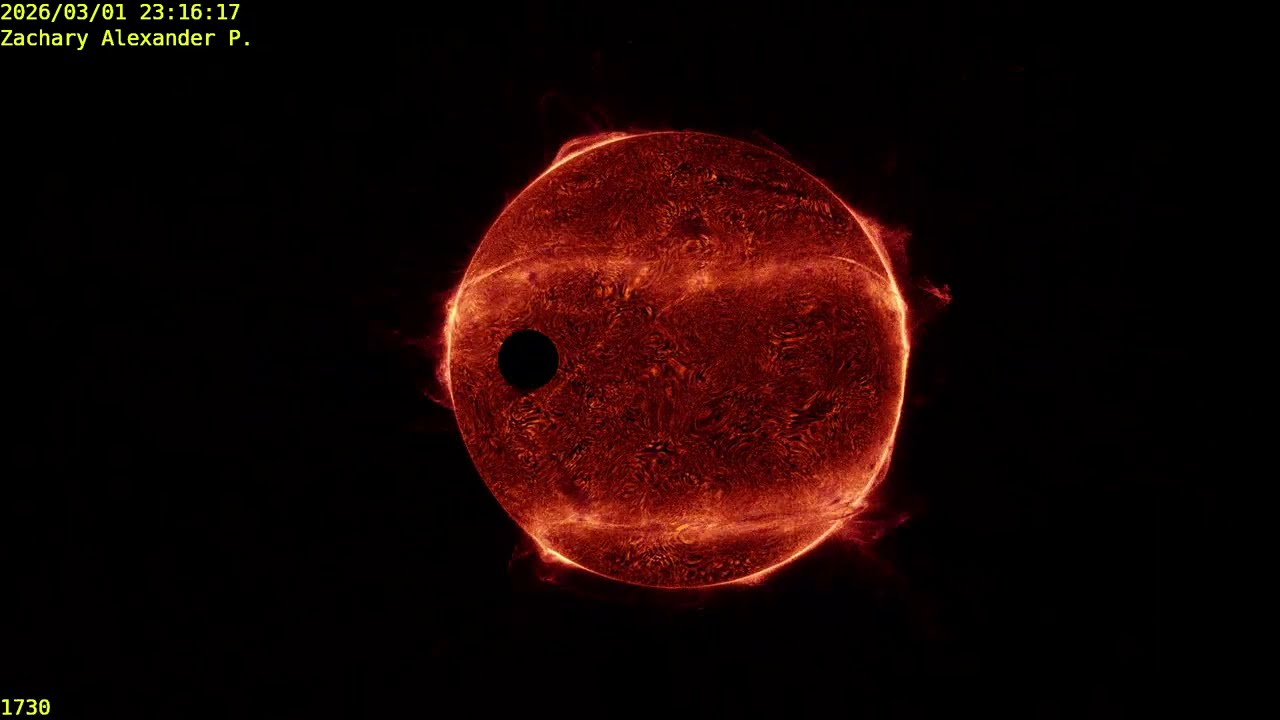
Greetings! This project has been an honor to work on. Without the Blender Foundation and all the hard work from developers, this would not have been possible.
On an XYZ coordinate graph, this is a 3D viewport function plot with 100% procedural math in 1 unified node shader volumetric output. No particles, polygons or image textures were used. Only a unified vector wave field equation.
I plan on adding more planets and showing how they interact with solar dynamics. I also plan on making a custom node with sliders that can be used to morph the star into different stellar classifications. From Main Sequence, Red Dwarfs, Red Giants and Super Giants. Then I will give it to the scientists at ESO and NASA to help them map the sky and understand our Universe. Then maybe we can understand why it all began. There is much scientific phenomenon I can predict with this astrophysical model. The physics revelations I am witnessing are beautiful! Please leave a comment and tell me what you think.
I can’t tell how beautiful this is. Not an expert but once I wondered if we could make electric field based on noise texture where black pixels are negative charge and white ones are positive charge. But this one just an idea and I didn’t think shader nodes could done such a thing. But you have made similar results with shader nodes.
If you don’t mind sharing this knowledge with us. I would like to play it with. At least breakdown of nodes would be nice too, like how you done it, what are equations are.
I would share the nodes, but it is not complete yet and I don’t want 99 other people on the internet rendering strange variations of it burying my original work. I’ve been honing in on this procedure working on 7 years now. I’ll give you a hint on the fundamental field math:
The Fundamental Equation
Given the input coordinate vector u = (x, y, z):
Scaling and Transformation: Let A = 10u and B = sin(10u).
The interaction Product: Let C = A X B.
The Resultant Field:
D = ((A X B) · (B X A))⁻¹
Yes, all this elegant detail is built upon very simple field wave physics.
Hi, really good work… I have always wondered if Blender can be used as a go to tool for scientific simulations/visualizations from astronomical scales to molecular levels. .
It’s good to know about such implementations like your’s. I will be waiting for the final results that you will be shipping to the scientific community and it’s role in their work.
Thanks guys! Its great to get feedback. I revised the formula again. A lot of this is uncharted territory, but I am using the math, testing possibilities and playing with variables to help intuitively determine how stellar physics might operate. The theory I am playing with concerns the angular velocity parameter affecting the stars oblateness which pushes the corona flux toward the equator. Who really knows for sure?
I have no idea how you did this, but I do know it’s pure insanity! Really cool!
How was the render times for this? Cycles or Eevee? From experience I know that detailed volumetrics in Cycles can take reaaally long to render, so I’m curious how this was handled?
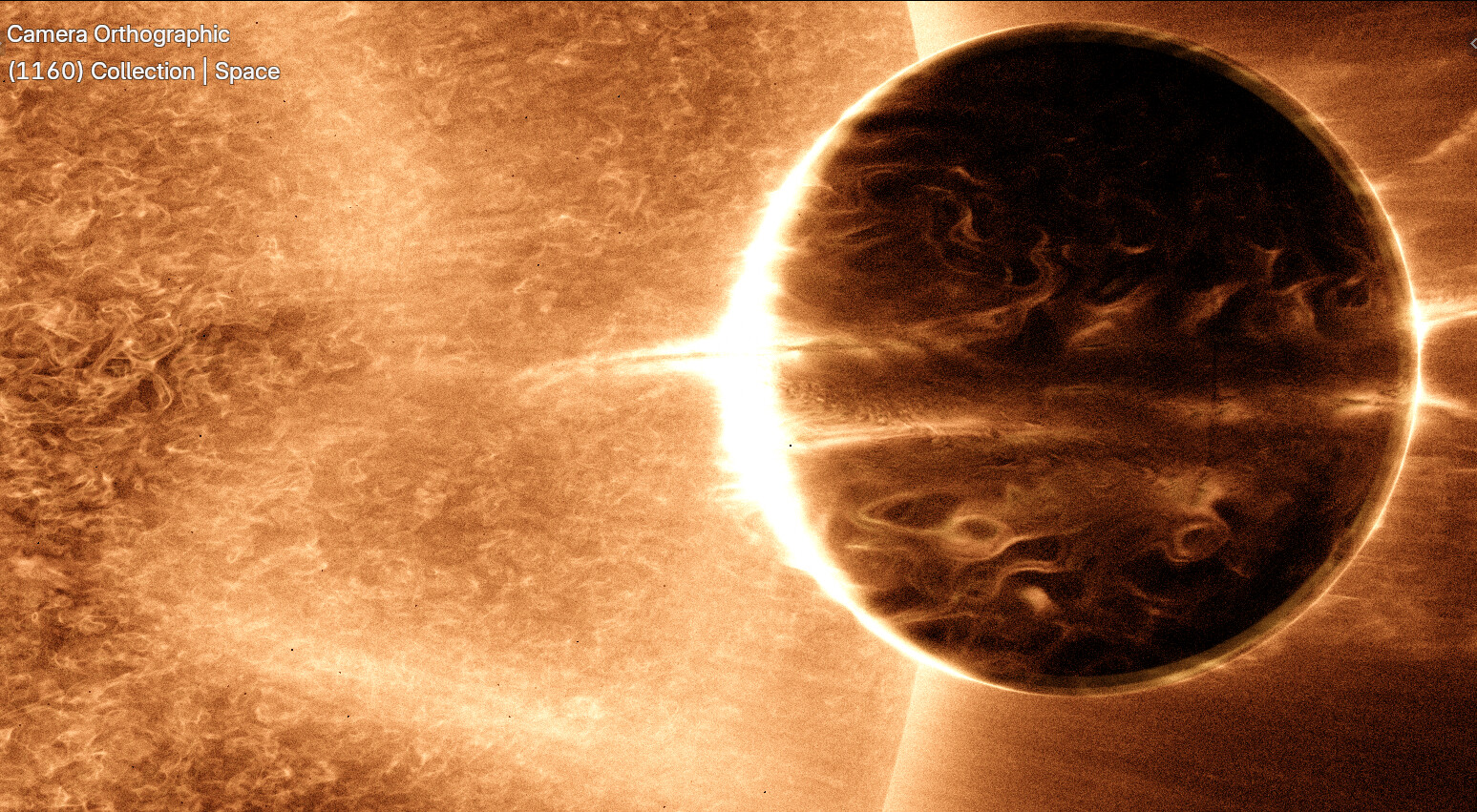
Here is an image showing my progress on the gas giant interaction with solar field dynamics. The cloud patterns on the planet are generated by the field from the star.
I am currently working on a black hole simulation for my next project. I am mirroring this star system around it and multiplying it into a full galaxy in a cosmic web.