The skppy toolkit
For the past 8 months I worked (using AI, sorry) to reverse engineer the SketchUp .skp file format.
Using the official SketchUp C SDK and creating small very simple examples to map file changes, we could map the entire file structure of .skp.
With this knowledge we created the skppy toolkit. A pure-python library to read/write .skp file format. The code can handle both modern post-2021 zip-based format and the old CArchive pre-2021 format.
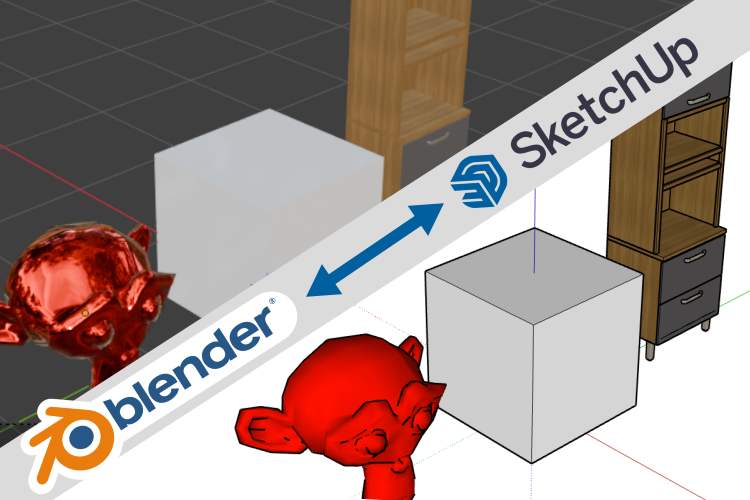
Together with skppy, we created a Blender addon to import/export .skp files.
What is the difference to other skp importers?
My importer works with a standalone python parser, that do not rely on proprietary SDK binaries. So it is available for any platform Blender works, even those ones that are not supported by SketchUp SDK.
Also, this make possible to, in the near future when the code is stable, to be uploaded to Blender Extensions platform.
But… as written in pure Python it can be considerably slow with large files with tons of objects.
Status
Currently the code is likely 75% written by AI and is fully reviewed by me. It is in a beta stage, so it is being polished yet.
While skppy supports every single data container inside skp file, the importer/exporter plugin are able to handle:
-
Import: any SketchUp .skp file version up to SketchUp 2026.
-
Export: versions 2026 and 2017 (SketchUp Make).
-
Import/Export meshes, objects, groups, maintaining the proper hierarchy.
-
Import/Export materials, including VRay.
-
Proper geometry tessellation, n-gons, smooth/hard shading and transforms.
Download and Install
Ready-to-use plugin bundle can be found at Github skppy releases. Install it as any other Blender plugin.
Issues/Suggestions/Requests
Users can report bugs, suggestions and requests here or in Github issues. Please, test it.