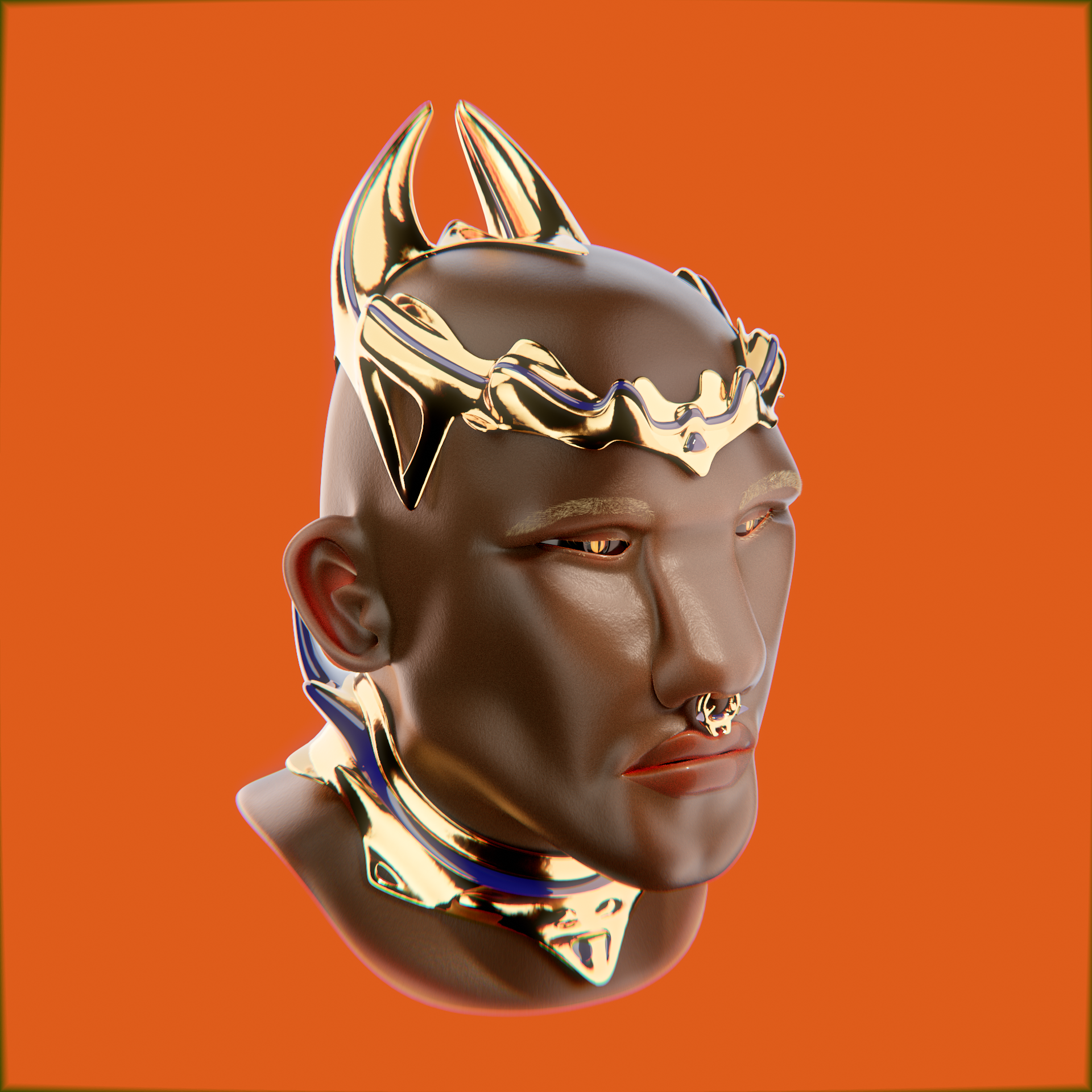
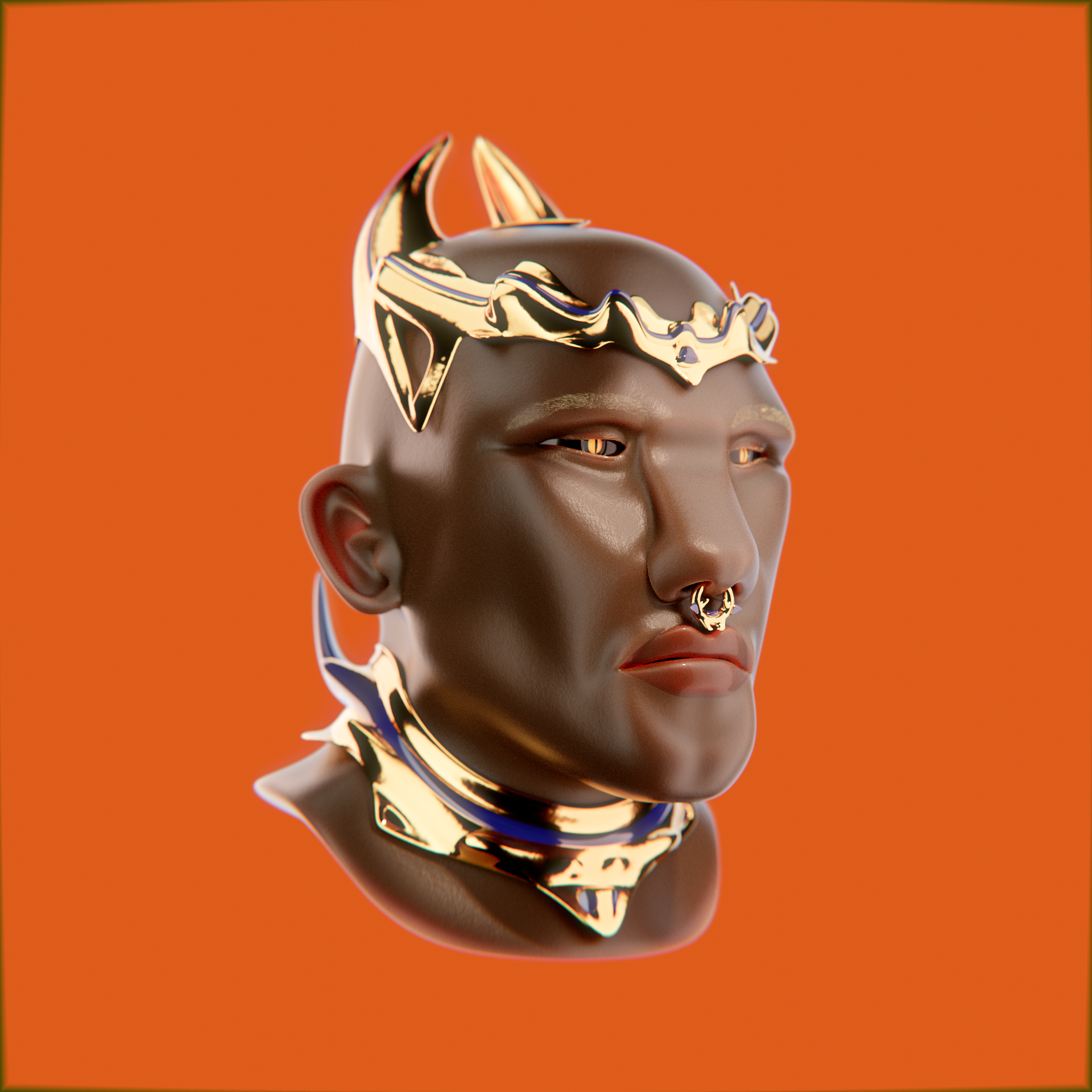
This is my first post here, I would like to share this bust I made to put into practice the head topology technique I studied recently. Very interesting content by the artist William Vaughan, the book The pushing points topology workbook volume 02.
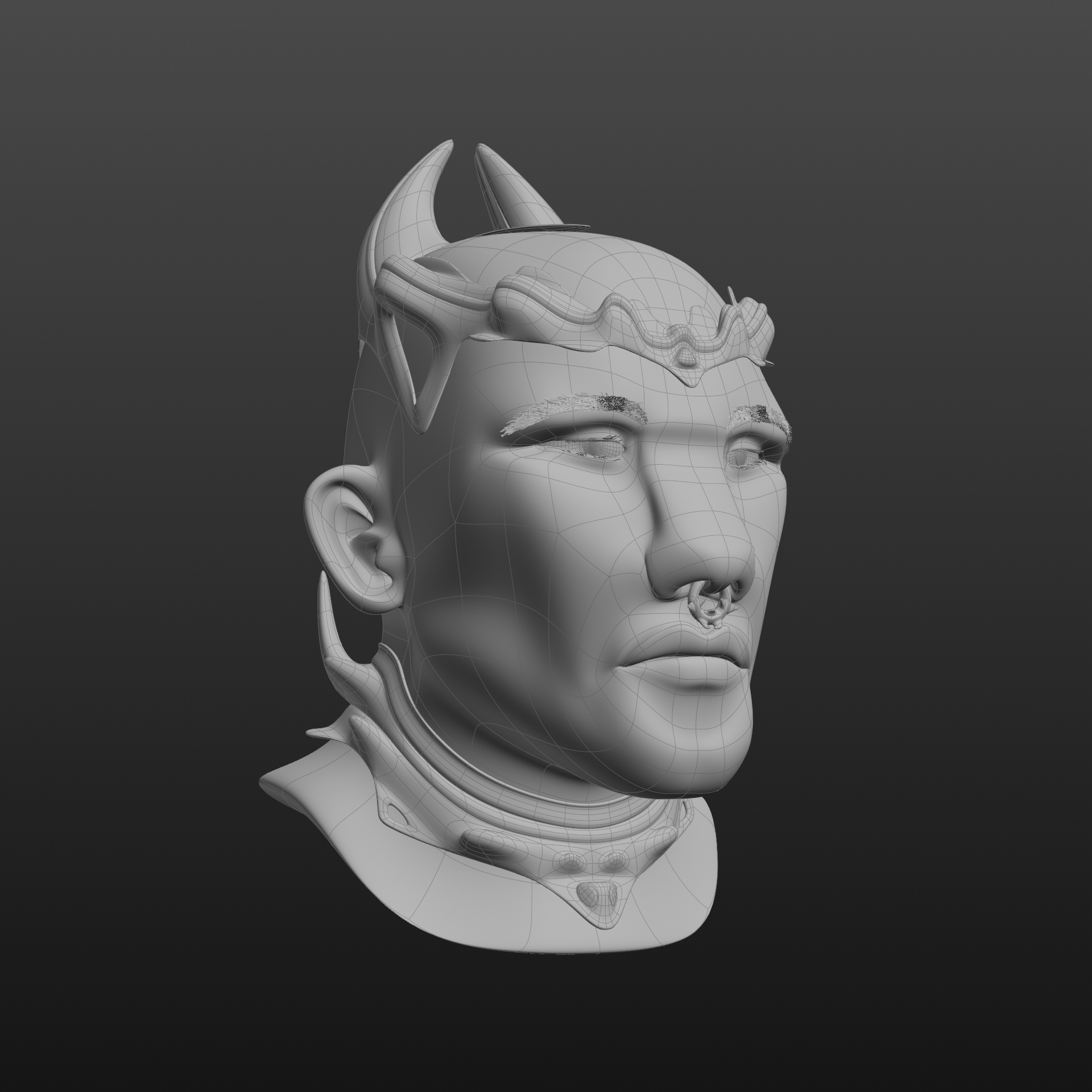
This technique aims to optimize the 3D mesh (lines that appear in the third image), modeling by subdivision, to reduce the number of polygons, reducing the complexity and weight of the object, in addition to obtaining a better result in the deformation of the face during animation.
As the focus was not on anatomy, I felt free not to pay so much attention to faithfully reproducing the anatomy of the human head.
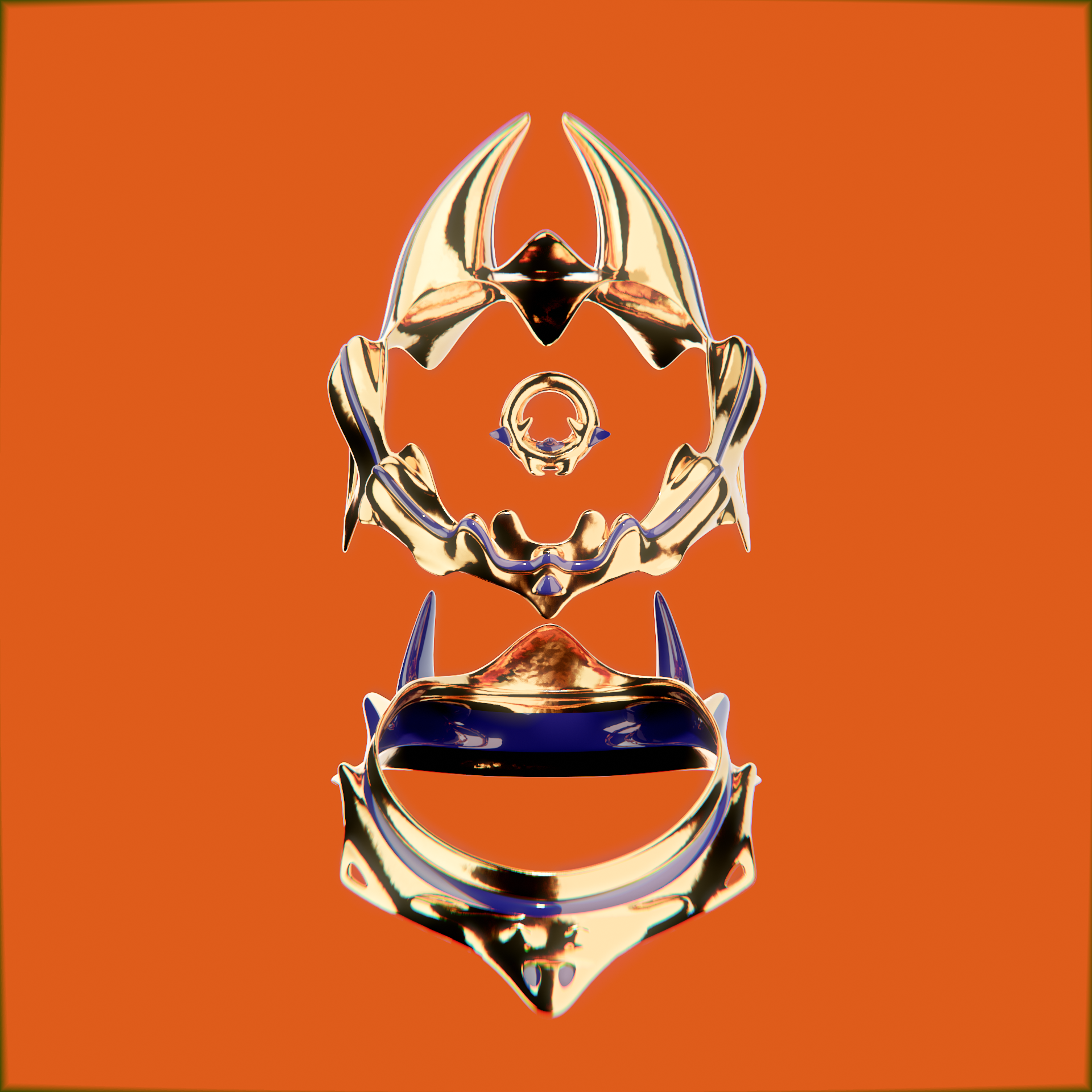
I was inspired by an Egyptian aesthetic and imagined someone with features close to a feline, playing with the thought that this person would be the source of inspiration for an Egyptian hieroglyph with a human body and an animal head. I also created curved and metallic accessories.
I took the opportunity to dedicate some time to the lookdev of the scene and use blender 3.5’s real-time composition.
Render in cycles with procedural shaders nodes that I made.
Anyone else familiar with William Vaughan’s topology technique?
To be honest I didn’t read it, but I think it’s a great resource if you’re looking in modeling for animation and facial rigging.
I’m familiar with this one :
Which was a best seller back in the days that inspired many riggers.
It’s mainly about facial rigging and animation, but it covers also head modeling with correct topology.
It’s super cool to get the big picture since you can see in action the topology you just modeled.
But while I feel bad criticizing these two experts, the mesh density they came up with is pretty dense since they aim at being quite realistic. So I tend to reduce the polycount to get closer to what you did.
But since they focus a lot on the theory it’s possible to keep the ideas and make them simpler.
There used to be a lot more resources in the Hippodrome web page, unfortunately he took them down.
I recommend his channel on Vimeo.
Brian has a fascinating video explaining exactly why he puts his edge loops and poles where they are and why there are so many of them. It is the one that is like a lecture “modelling for articulation”
Thanks a lot ! That looks like an amazing resource !
As said, I feel a bit silly to try to contradict giants like that !
It’s just that the more I try to add subdivision and details to a face, the more difficult it gets to make something clean when rigging.
I mean it’s possible but I get the feeling that it takes much more time and energy to get to something that works.
Therefore I’m asking myself if it’s like always the way to go in every situations, that makes me even more confused since most of the rigged face I saw have a fair amount of mesh density too …
I was not criticizing your position, I just remembered that video when you mentioned the mesh density.
I am a fan of Boom & Pimento. To me you are one of the giants.
Hahaha thanks and sorry if I overreacted !
When I see his reel with all these Pixar’s shots Everything is spot on, It’s hard to be confident when claiming to do differently !
I should study these videos more carefully and keep working on that !


 Everything is spot on, It’s hard to be confident when claiming to do differently !