Ok ! Let me add a few more things :
Humane Rigging, is a course by Blender Foundation distributed under Creative Commons licence :
https://www.youtube.com/playlist?list=PLE211C8C41F1AFBAB
It covers basics and advanced stuff, at some point it really helped me to even out my rigging skills. What is super cool about it is that it’s approaching rigging from a problem solving perspective rather than building a complex rig without explaining the underlying logic and technical choices.
This one is key if you want to learn about facial rigging :
it’s really amazing and while it’s mostly about rigging and shape keys , it also covers modeling a face with good topology, facial animation… And how to approach different style (realistic / cartoony).
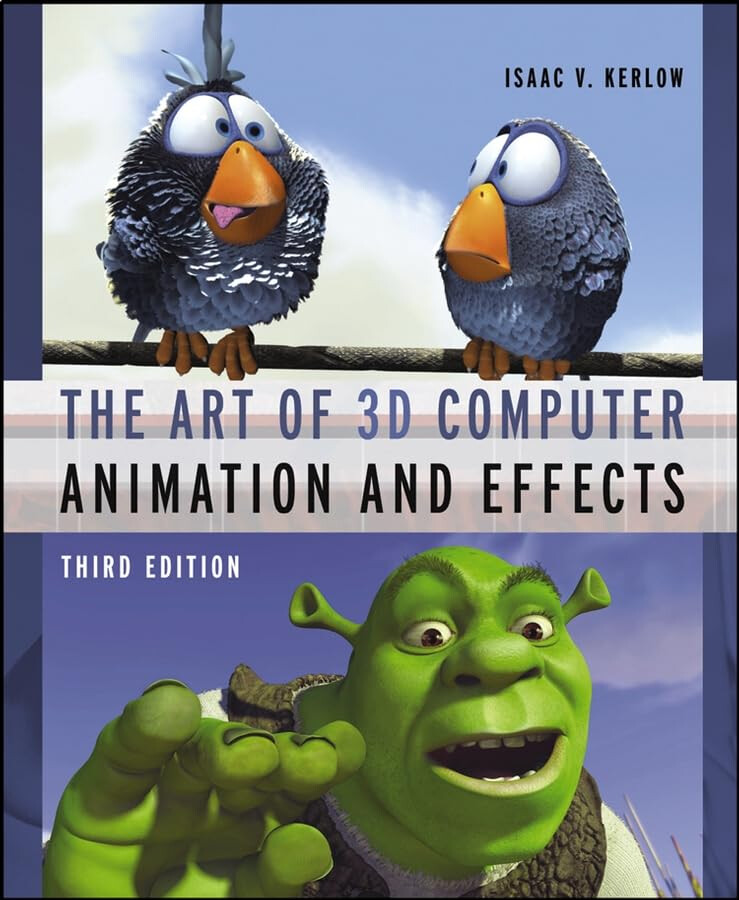
And obviously it’s hard not to mention this one :

Which is basically one of the most famous book about animation. What is great is that it’s covering many aspects that you can use to learn and refer to when working. But it’s also an auto-biography and it explains how the author created it’s own studio when he was around 40 and hired various masters to learn from them. It’s a very good book you might enjoy even you’re not an animator yourself, as there are some principles that can apply to more than just animation that I find super inspiring…
Maybe this is also time to mention that while there is a lot of resource available on youtube or else, and this is mostly what this thread is about, at some point you might consider investing in some courses or books because there is obviously a lot of gems here that go deeper in specific subjects.
Ok ! So again thanks a lot for your contribution ! You posted super cool links and I find your views on the subject very interesting !
It seems to me that if we start digging here it’s going to unfold in many layers worth discussing so let’s do this while trying to not derail too much 
First I would say that there is different ways and reasons to look for knowledge about 3D just like with going to the gym or doing sports in general. I really don’t like the “no pain no gain” approach to things even if on the other hand I believe that any practice needs commitment to get somewhere. I’m having the feeling that I’m on your side with what you’re saying, but I understand that I might be biased…
Then as we said earlier we relate to CG in very different ways. For some people here it’s about blowing out steam a few hours in the weekend. Some other it’s what they do 8h per days. Some people have their gigantic movie project, some other prefer more contained stuff… so yeah different people, different needs and it’s hard to sum up all that with generic rules.
What I think is also worth mentioning is that we obviously need some balance in life, and while I’ve seen people that do 3D at work and they keep doing their side projects or hardcore Zbrush training at home, I’d say it’s clearly not good on the long run. As you mentioned in the beginning, learning needs time and personally I always have breaks between 2 projects and I use parts of that free time to do personal projects and learn new stuff. And when I work I could find myself doing CG (or learning stuff) for a few hours in the weekend but then being away from blender and CG is what works best for me in general.
But also I think it goes down to how you’re wired as I’ve seen some art-director coming like 2hours early to do one illustration each day and they seemed very happy… And I’m not sure that something I could do but I’m sure it’s possible without ruining your heath/ life…
Another thing I like to mention is that I find amazing to be able to see behind the shoulders of rock star artists and understand better how they do things, that could be at work but it’s hard to find time, and youtube for that is amazing. To me CG is a bit like magic and I really love to understand the tricks behind it. But again it’s very personal.
In the professional world you can really find some artists that don’t do CG besides work. And some that also do CG or art as a hobby. And there is basically a place for both. But in the meantime, artists should assess that if they want to do different things like moving from a modeling position to animation they’ll need to study that first on their own time and while some studios might help a bit or you might find some state’s help to learn, you’ll have to make it by yourself for the most part.
Also, by being interested and keeping practicing and learning on the side you start to get a much broader understanding that makes quite a difference, but that’s not mandatory either and work can compensate for that also but it’s way longer.
Now what about when CG is your hobby ? Then I think the only thing that you should be doing is enjoying. Some people like to use gut feeling like you do and do what they like and it’s great. Some others are more diligent by following a course step by step and I find value in both.
Also while the professional world enforces some quality standards, that’s not the lens I’m using when looking at other’s work. Unless it’s something someone is after.
That’s perfectly valid and a good strength, I’d say gut feeling is the foundation of creation. In the meantime it can be super interesting to be able to elaborate why some creative choices works better than others. At least that’s something I find amazing. I started by thinking that visual art is like 90% subjective and gut feeling, to latter realize it’s close to a science with principles that you can rely on. Frankly I don’t think there is right or wrong here, especially if you work on your own.
On the flip-side, when working within a team it’s great to be able to elaborate why you do that creative decision to make it something objective rather than the opposite. I’ve worked with both kind of directors / art directors and while both approach works it makes a world of a difference when you get the logic behind it.
Because you don’t have to rely solely on gut feeling either to make sure your work is fitting the project. It’s much simpler for everyone and that saves a lot of time that can be better spend. Anyway, after working for month with someone you starts to get a feel about what they are after. Sometime you realize that it’s a bit random, or people have phase like for a month they’ll focus on one particular detail, then the other month it’s something else…
But in the meantime an instinctive and a more visceral approach to creation is amazing, can’t deny that. Again I think it’s more a matter of context and personality, and especially if it’s about having fun there should be only the rules that you like to set for yourself !
Thanks for reading if you get to this point


 )
)

