Those who are interested in renderers may want to check out my list of free Blender renderers.
Hi
I am new to Blender 2.8 and i found your posts very useful for me and you are doing great job. Can you please share this file …
Unfortunately, I don’t have that file right now. And now I’m working with Octan. Which I can advise you on, too.)
Excellent comparisons…could you please add Octane render version, too?
Without looking at the name on the image, I like Cycles best.
Thanks for this. 

Hello. Unfortunately, there is no time and opportunity to deal with this scene. I can share my findings and opinions on the engines. By the way with the release of blender 3 and cyclesX I switched to it. But I will still try octane when the version with blender 3 comes out.
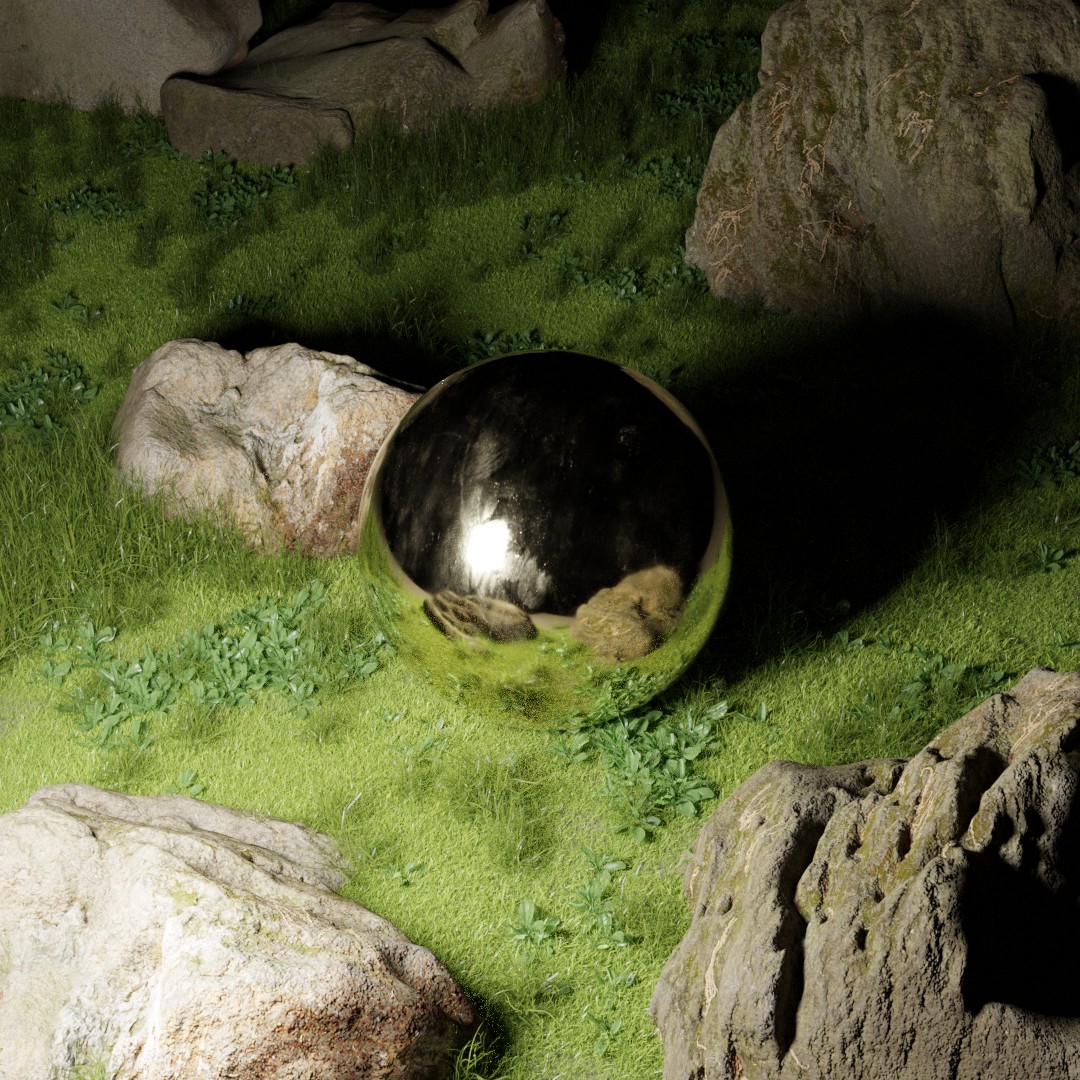
I was recently comparing cycles with luxe for myself, in a scene with grass and a ball of metal. The conclusion is the following - they differed in two things in terms of visuals - the shadow on the ball in lux - on the edges of the ball dark edges, when in cycles absolutely light, and normals in lux looked different.
This is as far as the experiments are concerned.
As for my conclusions and experience - rendering engines, if we do not talk about the obvious differences, such as the presence or absence of cache, or when using different methods of rendering - they are very similar to each other, the final result will be virtually identical, with the proper skill and desire. The question will be another one - what is the process. What are the goals, the desires. Is the project for work? Or for yourself? Are you using assets, addons, is there extra time, or is it necessary to use everything as laconic as possible. And also, simply convenience, taste - they differ in how to work with them, the main shaders, how much effort you will have to invest to achieve similar results, what is the rendering speed. I’m not ready to conclude definitively, but I think the octane is still in the matter of volumetrics faster - in general, this is just as an example, when one renderer can be objectively in something better.
But speaking of the maximum possible rendering quality - I’m a supporter of the fact that they are all ± the same. If we’re talking about the practical component of the issue - I’m not a researcher, not a scrupulous scientist, so if someone wants to send me a renderer, where the shadow behind the curtain in one rendering, lighter than in another - you’re at the wrong address.
Oh, I also really like it when people compare the Glass Material in different renders. Thanks that they put, or say they do, the same bounce and clump settings. After all, the point is that the standard glass is different in different renders. In octane we can easily turn on fake shadows, in Corona, when I used it, the standard glass, as far as I understand it, was either similar to fake shadows or something close to it, there was no modern caustic option then, but there was a separate option for glass with caustic, as well as architectural glass and regular glass without additional options. Same with vray. And in cycles you have to achieve such options with your hands, or take a ready-made shader.
Translated with www.DeepL.com/Translator (free version)

And normally with V-Ray glass is considered that object has thickness, not single face. When handling single face glass, glass needs to be faked like single sided material.