Holy sh*t:
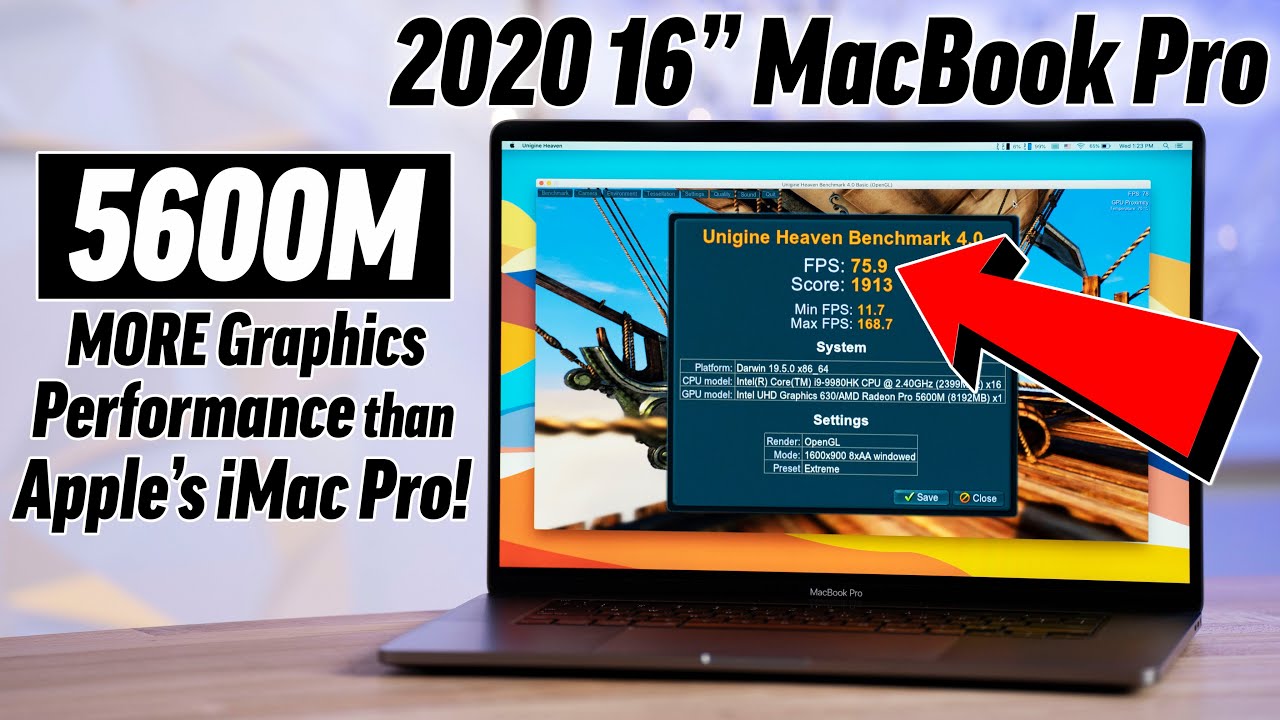
The best laptop for Blender (Octane X)?

Holy sh*t:
The best laptop for Blender (Octane X)?
If you like your wallet empty and your ears bleeding (from the fan noise at full tilt) then it looks like a good choice indeed.
Not really for Blender though - or do you want to run Windows/Linux on it? 
my student gaming laptops are not silent when rendering either.
True openCL cycles is gone
But there is amd pro render that already supports metal and luxcore with openCL
lol - this MacBook Pro cost 2100$
here example of right choise
4800H + 32GbRAM + RTX 2060
here about mentioned luxcore + optix speedUP
https://forums.luxcorerender.org/viewtopic.php?f=5&t=2283&hilit=optix
how blender users can choose GPUs without OPTIX and deprive yourself from this speed
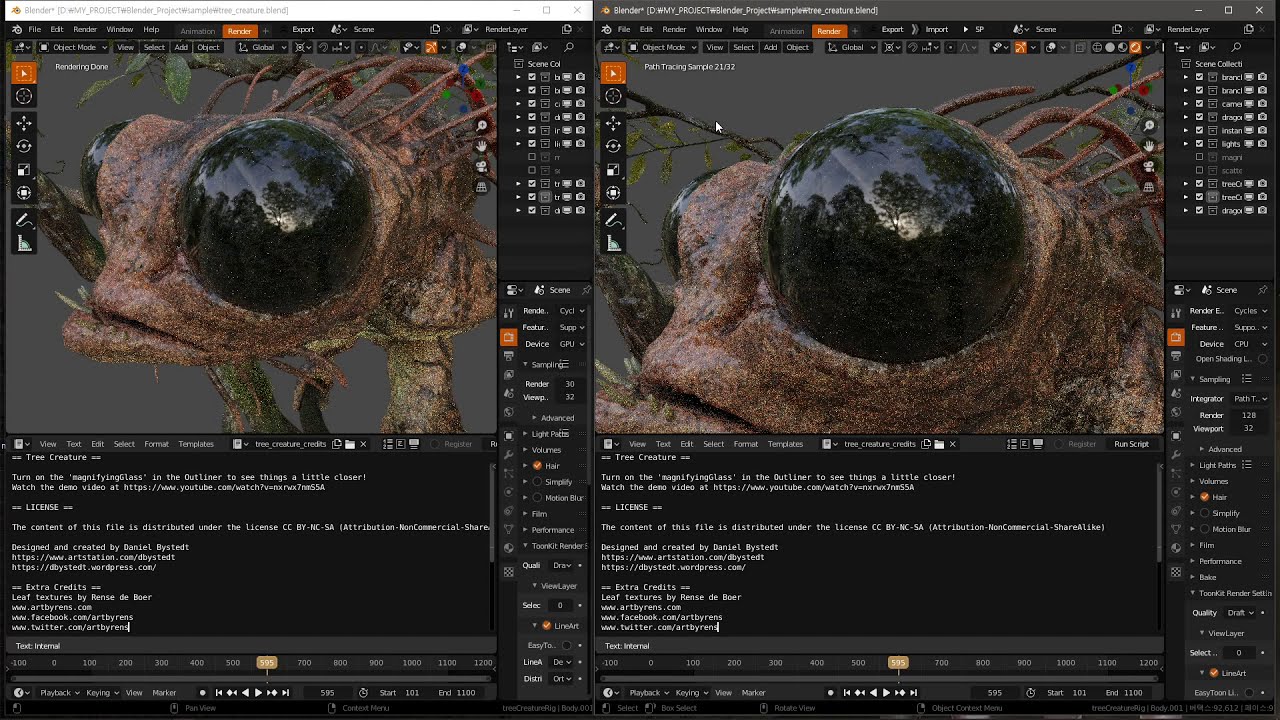
you might not understand it but is it needed to call it apple cr@p?
I agree for serious 3D work the apple platform at the moment is problematic
CUDA is gone, and if Metal API can get close is to be seen.
The new ARM technology at one point might also not allow eGPU.
The apple system has however many other advantages the windows eco system does not have.
So it is all based on what you need.
Apple confirmed that ARM based Macs will support Thunderbolt. Why would they block eGPU?
Driver - while macOS currently goes through a change to better give access to hardware making drivers somewhat different.
AMD or Apple still has to write those drivers!
Because the whole point of Apple Silicon is CPU and GPU working together with access to the same memory, heterogeneous computing. Putting a GPU on a PCIe bus then onto Thunderbolt cable to then run in its own memory completely ruins everything Apple is trying to achieve with their Apple Silicon hardware design.
AMD will be contracted to create drivers for legacy Macs but I wouldn’t expect those drivers to be anywhere near Apple Silicon Macs. It’s all Apple integrated GPUs from this point forward for the whole Mac product range.
I don’t think Apple is able to create 20 Tflops speed level integrated GPU with plenty EBM2/GDDR6 and fast hardware raytracing support anytime soon. I think it is a bit easer to create the drivers for upcoming AMD RDNA2 graphics.
Quite true - but is that really the market they focus on.
Lets be honest our 3D area is by itself a pretty small niche in the PC segment.
I think the tech will more be used for other creative devices and displays.
You need to move away from the idea that TFlops is an accurate measure of overall performance. There are massive inefficiencies with CPUs and GPUs using separate memory. If you watch this year’s WWDC videos you will better understand Apple’s whole philosophy of using the CPU and GPU together.
GPU makers have had to add fixed function hardware onto the GPU die like tensor cores and ray tracing hardware so they can share the GPU memory. These functions can just as easily be performed by CPUs sharing the same memory as the GPU cores. The philosophy is to removed absolutely every bit of inefficiency out of the system such that the CPU and GPUs work together.
Once you start putting eGPUs into the system or even PCIe based GPUs the efficiency gains are lost.
This is a very typical Apple move, it’s akin to removing the floppy drive early and the path tracing we do today requiring immensely powerful and power hungry GPUs will look anachronistic in a couple of years as we’ve moved to real time rendering. Apple Silicon Macs won’t be limited by GPU memory, the whole system memory is available for the GPUs.
Look at the next-gen consoles they’re very similar in concept, very modest hardware that will out perform the current generation of high end GPUs at a fraction of the cost. So when Apple comes to replace the top end iMac expect what looks like modest hardware to comfortably outperform the old Intel/AMD iMac.
I expect Apple will update the iMac Pro one last time with Intel and AMD RDNA2 GPUs this year and by the time that model is refreshed in a few years Apple Silicon will have developed so fast that they’ll be able to offer a significant upgrade. I’m less confident about the Mac Pro in its current guise as a huge tower making it into Apple Silicon, PCIe GPUs are not part of the plans so it’ll probably be a return to a Trashcan style Mac Pro but avoiding the mistakes which were made last time.
I think that has some validity
I actually found his reasoning quite plausible that’s Apple has actually a lot of tools ready to be forged into a single SoC chip.
While he also does not know how Apple will be able to compete with high end GPUs.
The fact is we will have to wait and see how this plays out.
I am still wondering about the macpro release. However looking at my own hardware those machines will work for years not just two.
Maybe he has a point that nothing stops Apple to go back to producing their own GPU cards like the did with their quickdraw 3d cards in the 90s considering that they currently have an afterburner card.
Apple has gone All-In on their SOCs. I cannot see any future for discrete GPUs either on the motherboard, as eGPUs or PCIe cards in tower Macs. It’s SOCs or bust.
It came across loud and clear in the WWDC videos I watched. I don’t know how they’re going to make workstation level CPUs and GPUs on a SOC probably just very big SOCs with lots of CPU and GPU cores. Their ARM manufacturing process is known to be a lot cheaper than Intel’s process so Apple maybe able to make huge monolithic dies cheaper than expected and with fewer failures.
There maybe no problem here at all in creating workstation class chips.
You need to remember TFLOPS to measure overall performance of workstation class graphic cards.
Apple has clearly admitted that the Mac Pro 2013 was a mistake. They fixed this last year with the release of the Mac Pro 2019 (with a bunch of PCIe slots).
Yes, fast and unified memory is exciting technology however there’s no way that Apple would give up PCIe and eGPU. Certainly not in the next few years.
OctaneBench (OctaneX):
Radeon Pro Vega II Duo - 412
Radeon 5700XT - 170
Radeon 5600M - 108
Apple A13 - 13
OTOY guys:
„It took Apple moving heaven and earth to make Metal api work for us”
„Does Octane X work with eGPUs? Yes, perfectly with AMD Vega and Navi GPUs - such as the Radeon VII and RX5700XT.”
„Is there an RTX on mode on AMD or other Metal GPUs? No, that doesn’t exist , but if it does, we will support it fully.”
„Near perfect linear scaling of rendering speed with multiple GPU configurations, including eGPUs connected over Thunderbolt 3”
Imagine paying $5,200 for 412 Octane points in 2019 and see single cards beat that in 2020!
I don’t need to to remember anything about TFLOPs. You need to widen your outlook, the new gaming consoles will have SOCs with integrated GPUs with ray tracing that perform better than the 5700XT.
Why do you not believe Apple can do the same if not better with their own SOCs?
Apple’s desktop SOCs are completely different to those going in iPhones and iPads so don’t take that A13 number as meaning anything useful.
The Mac Pro is only a year old and even at the end of the 2 year switchover to Apple Silicon will still be too early to update based on past records. But when the Mac Pro is ready to be upgraded Apple Silicon SOCs will be perfectly capable workstation GPUs.
Have you watched the WWDC videos on Apple Silicon, Metal and Ray Tracing?
Considering how long those machines are being used the 2 year transition plan does not mean much them in terms of a negative impact. It won’t be the case that the software will stop working or updates won’t come anymore either.
The current Dev kit feels and is a rushed intermediate tool to rather assist with software porting.
It is not to be seems even closely as a benchmark tool.
Yeah Apple helped a lot - that actually is can be seen as a good thing because for one Apple needs to make this work they out themselves under that pressure but on the other side it shows that they are serious and want to make it work.
Apple stopped supporting PPC Macs after two years there were no more OS X updates for PPC. I would be surprised if Apple did that to the Mac Pros but they do have history of doing this.
I don’t really understand, other than because users need to use other Mac only software, why people would buy a Mac Pro for 3d work right now. That aside, what can be done with Arm processors on phones with proper software optimisation is pretty impressive, and it’s incredible to see what can be done on A12 when compared to similar software running on Windows laptops. Maybe Apple are betting on Apple Silicon being enough for most 3D and other tasks, but any kind of heavy duty rendering and processing just being sent out to farms or other external computation hardware and not being an issue for most of their users.
