End of last year I had the honor to contribute to a fun project (in fact one of the most pleasant collaborations I had so far), the Affinity Steel Superbowl Ads 2023 (see below), I modelled and rigged two animal characters, a Raccoon and a Squirrel. They were my #2 and #3 character project ever featuring “real” fur and striving for realism, and it went really well.
Thought I could give them a bit more stage time, and most of all, release them into the wild again, where they belong!
Environment: rocks sculpted, Calluna modelled via Speedtree by my dear wife, background tree a Speedtree pine, small vegetation in fg procedurally distributed via geo nodes cavity map/density attribute driving 3.5 hair nodes to scatter curves.
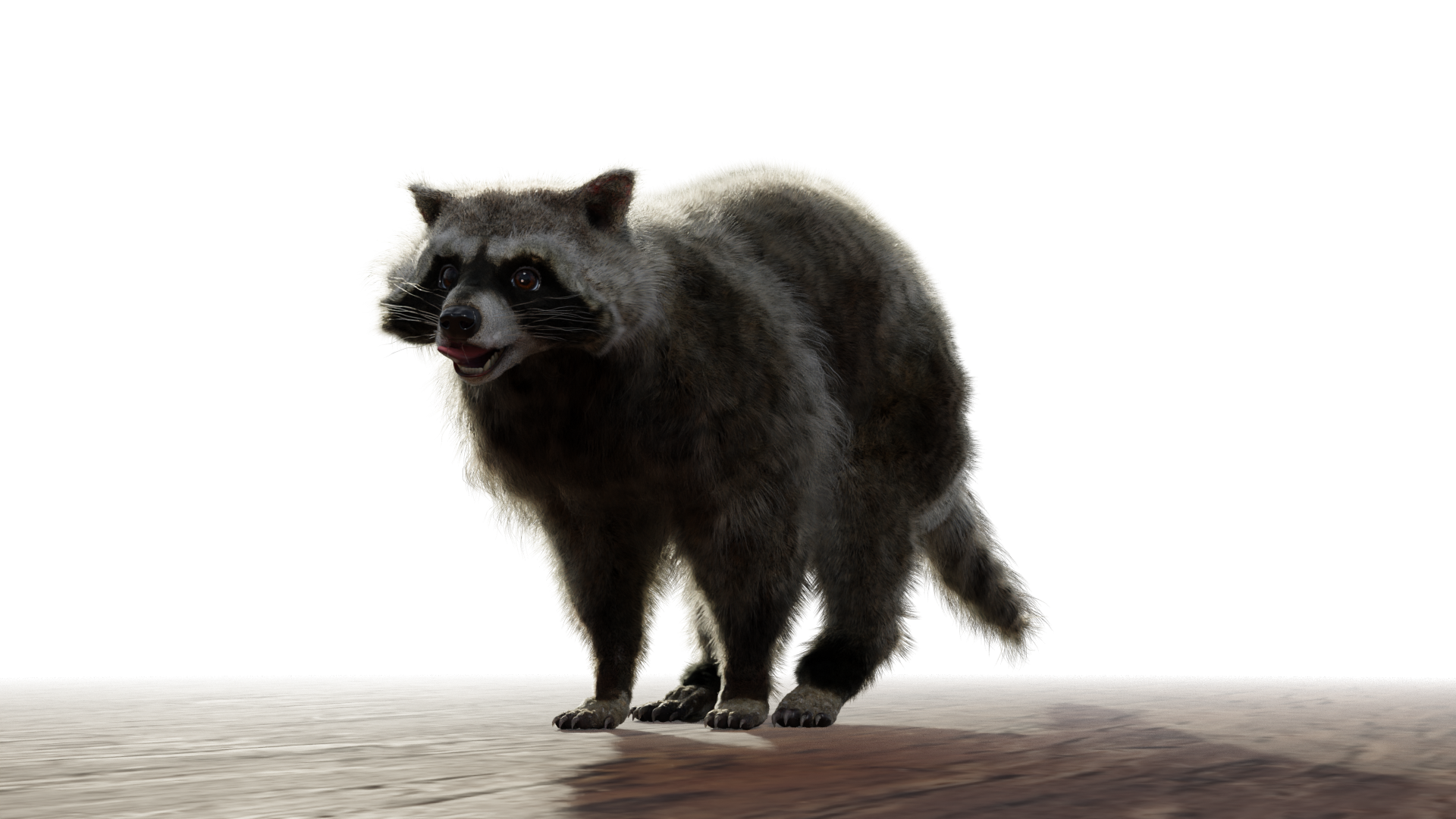
The raccoon’s fur is still particle based, I did the groom in Houdini, exported the guides as alembic, converted to particle hair in Blender and added interpolated child hair, materials and stuff there.
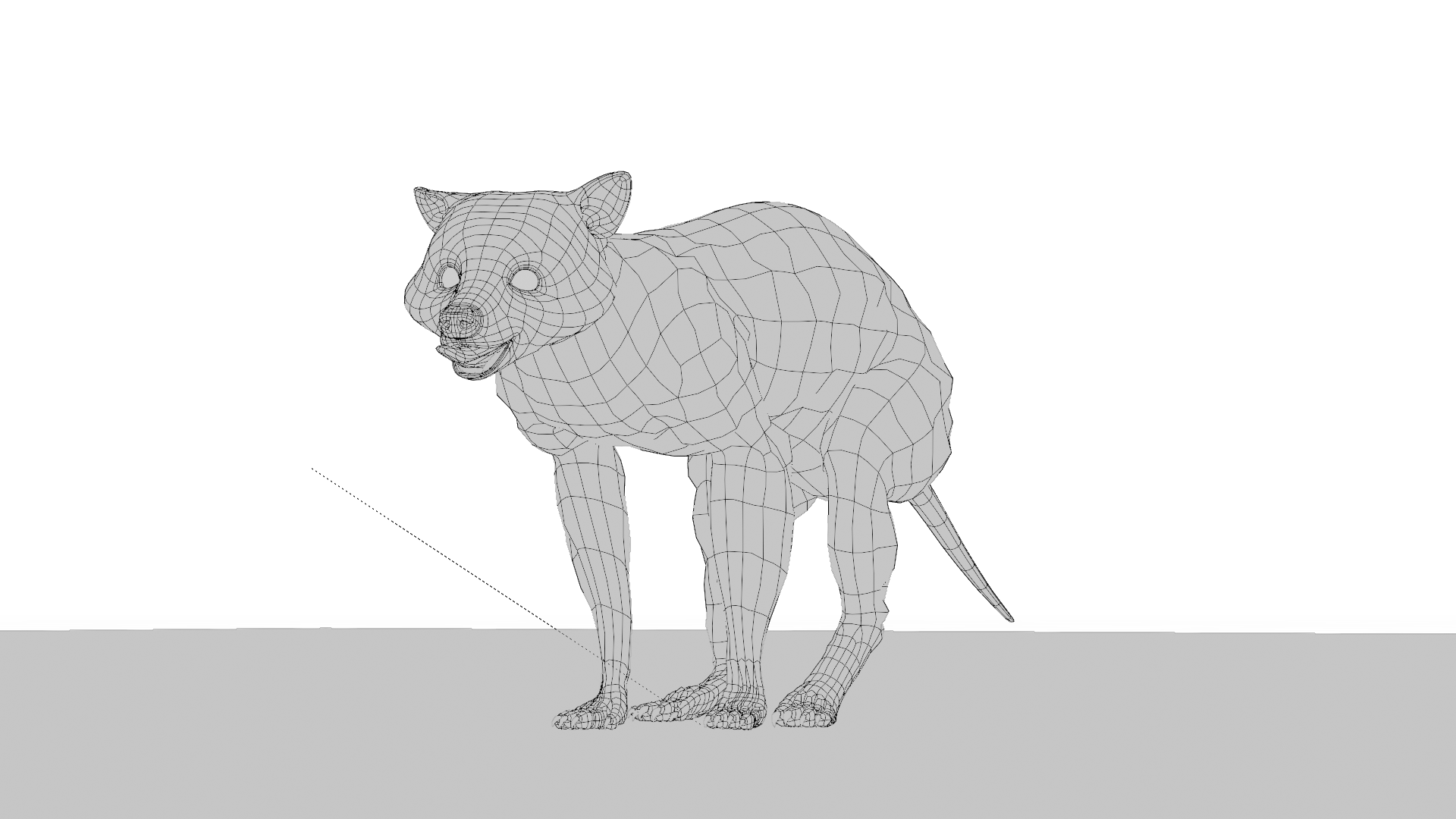
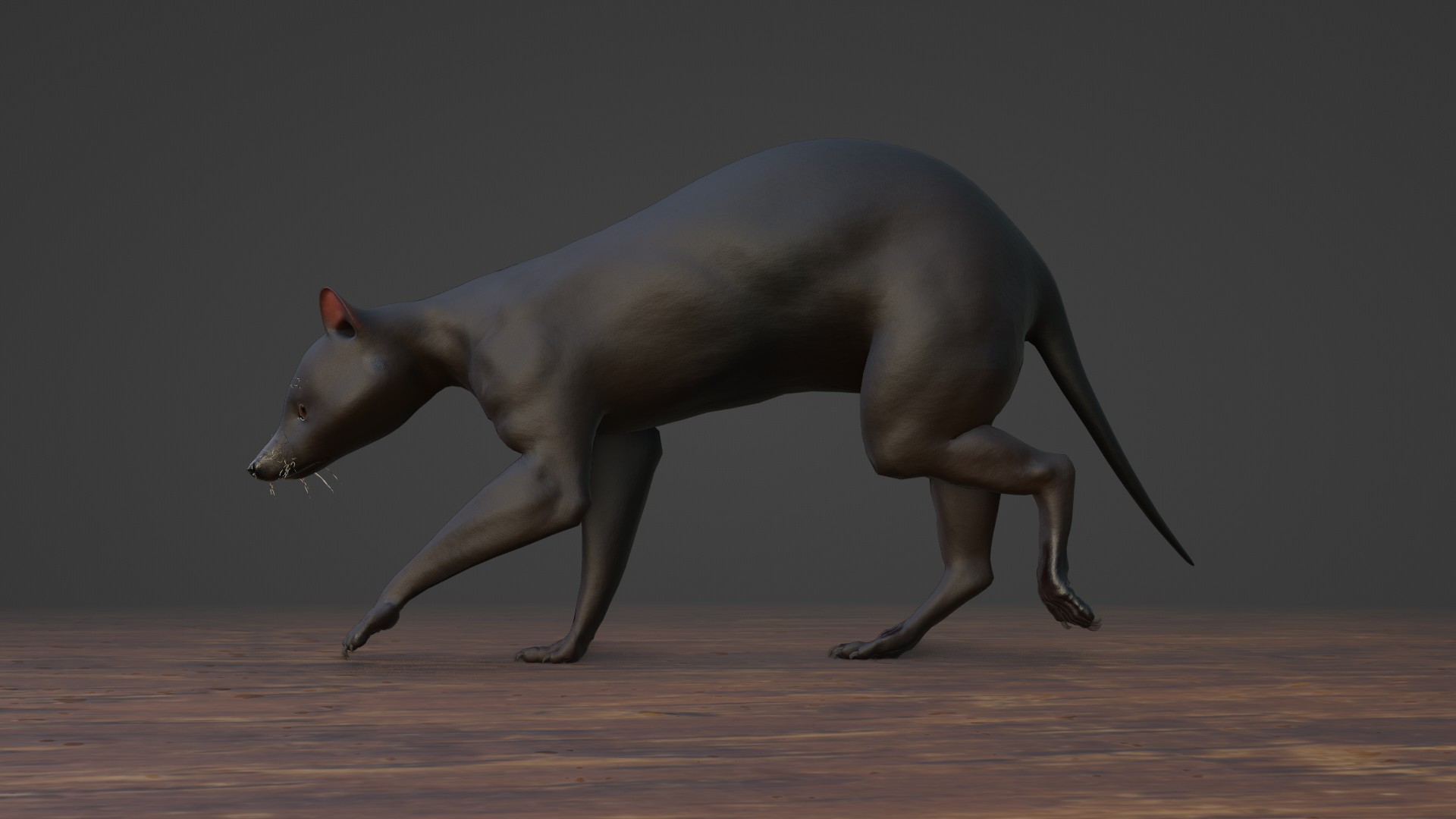
The model itself is very low poly (I like it that way, not fond of high density meshes where they’re not needed, keeps the rigging step straight and painless and files for I/O small), some additional detail added via Multires sculpting/baked displacement map later:
To animate the animals for the ads, a mix of mocap and manual animation was used. The mocap part motivated me to finally try out a concept I had in mind for a while. I love clean interfaces, and hate modelling gazillions of shape keys, and usually rely on Rigify these days to rig my characters. What if you could map those ARKit shape key based animation to Rigify standard facial controls via proxy mesh?
Here you go: basically there’s a vertex in the proxy mesh for each facial control bone, vertex transforms being mapped to controller transforms via CopyLocation. Once bone-based deform is set up properly for the character, you’ll be able to use that for facial mocap too:
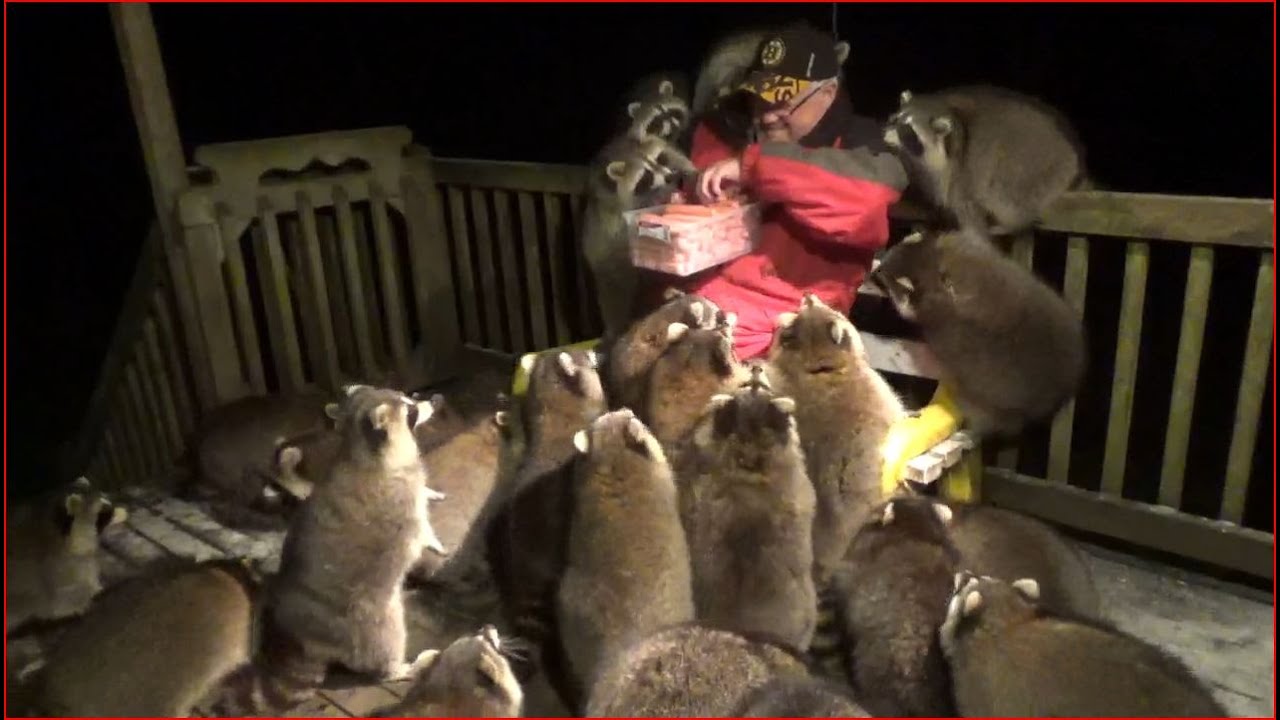
Raccoons are such beautiful animals, I definitely fell in love with them while doing my research for this model.
Apart from learning about anatomy and their very specific way to move, it was most amazing to find out how clever they are, competent users of tools, easily outsmarting man’s favorite pets, and also fiercely territorial.
Must be quite a challenge to battle them out of one’s home again once they have moved in … probably better negotiate a truce.
This is very interesting… because you can get-away with this low-poly … Just to be clear: you image with the lavender is made as-if from an animation (with maybe only some frames for motion blur or “fake motion blur”) or you also did made a “full final animation” ( independent from the walk cycle and forgot to link it ) ??
I don’t bother battling ours – fortunately they’re not actually living in the house, but they come and very noisily feast when the grapes that cover the front of the house are ripe. Quite clever in how to get at the ones that grow higher up, and definitely territorial.
We wouldn’t either, would definitely go for a truce, and maybe friendship, if possible.
We don’t have any around though so the question doesn’t pose itself …
However, from experience I’m pretty sure most people in the neighbourhood would instantly freak out and call for the guns if even one raccoon raised its head here. Only a couple of years ago I could still watch red fox pups playing during that time of the year, now they’re all gone, for said reasons …
Yes and no.
It’s a very lazy solution to get the camera-trap-like effect without any additional work - just one frame taken from the stationary walk cycle I had around already.
I suppose I’ll try a small animated shot later on, but for now I didn’t want this to inflate itself into something more than a single render - such a dangerous thing to happen.
Actually, it’s low poly on modelling (and rig) level only, there’s a subdivision modifier plus texture displacement on top of the base mesh so the end result isn’t that low poly. To me it doesn’t feel like “getting away” at all though, rather like a superior (aka: easier to handle) approach for cases where high mesh density primarily serves to smooth out evenly shaped surfaces, or brings in static detail that can also be brought in via texture displacement that’s baked from a high poly surface.
Personally, I only go high(er) poly if I want animated small(er) details in a model, like skin or cloth creases/winkles.
Thing is, if you start low poly (and are not modelling/rigging for games/real time environments) you can bring in more all kinds of detail procedurally via modifiers, and even more so since Geo Nodes have shown so much progress.
While, at the rigging/skinning stage, you’re still dealing with a very clear and easy-to-maintain structure.
In fact I’m somewhat struggling to understand why so many modellers go high poly straight away, without considering the model’s nature and purpose/style (in animation) - I have even ended up in arguments regarding that in a couple of projects where I worked as a rigger. I still wonder whether I’m getting it wrong, but as a matter of fact I can’t remember I’ve ever heard any real argument justifying it, I still have the impression it’s just done because it can be done and because it has become fashionable (or is it because people are frightened of Subdiv due to it’s bad performance in the past?), despite making things needlessly hard at subsequent stages, like rigging, or import/export for character F/X.
Basically, this is a topic I’d really love to have some discussion & experience exchange about: poly count best practices for rigged models.
Ohh… i meant this in the best positive way … It’s just a reminder to work on the things that are important (a furless animal sometimes looks… unexpected…) but in the end the movement here is properly the thing which does have to fit the most … so this looks like a raccoon; this moves like a raccoon; it doesn’t build weapons from anything ( )… so this is a racconn …
I just have to add to this (late) that this model was one of the easiest rigged models I’ve ever worked with in an animated sequence, Helmut. I hope to work with you again on a future project.
A bit of additional context information I’d like to add here:
like the other animal character I created for the ad (the Squirrel), the Raccoon, took one week, from scratch to animation-ready completion, one-person effort, ARKit-to-Rigify-workflow prototyping included. These two represent furry animal #2 and #3 in my personal record, after Sneaks whom I had done for this shot: The Melondel Cataracts
As a generalist, I was - and am still - very happy & satisfied regarding the outcome, both quality- and speed-wise.




 … Just to be clear: you image with the lavender is made as-if from an animation (with maybe only some frames for motion blur or “fake motion blur”) or you also did made a “full final animation” ( independent from the walk cycle and forgot to link it ) ??

 )